Get Full Government Meeting Transcripts, Videos, & Alerts Forever!
Get email alerts on the Geology Survey topic
No spam. Unsubscribe anytime.
Idaho Geological Survey seeks permanent state funding for database manager as grant support wanes
Summary
The Idaho Geological Survey (IGS) asked the committee to convert a grant‑funded database manager to permanent general‑fund support to reduce risk to core geologic data programs and preserve federal matching capacity.
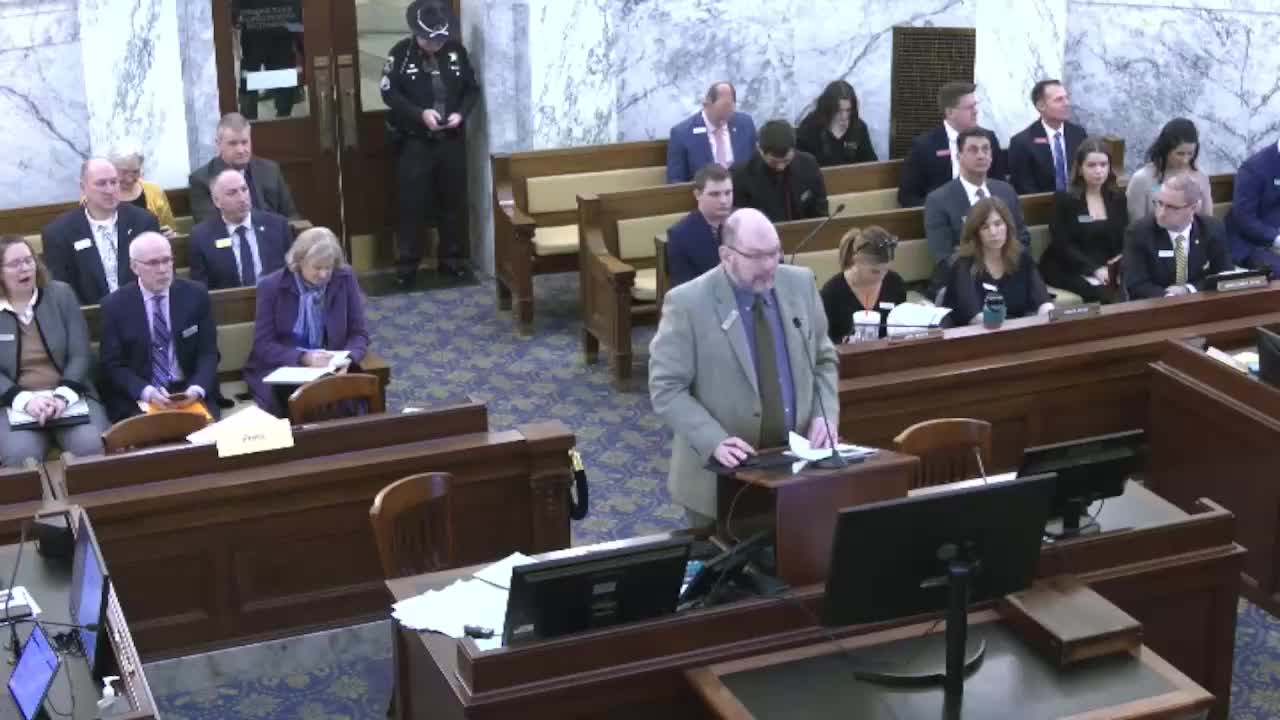
Kevin Campbell, Legislative Services Office analyst, presented the Idaho Geological Survey’s FY2026 budget request and said the agency has 12.47 authorized FTP and that personnel costs make up the majority of its budget.
Dr. Claudio Berti, Idaho State Geologist and IGS director, told the committee the database manager position historically has been grant funded and that grant support is diminishing. “This position has been with us for several years now,” he said. ‘‘We are able to support that on grants. The reason why we are asking a permanent position is that the work that this position does is fundamental to our agency. Having that supported on grants leaves it in a very precarious situation.’’
Berti said the database manager role helps maintain Idaho’s geological data systems, supports the Idaho Seismic Network (IGS recently purchased a seismometer), and leverages federal funding with a 2:1 matching ability. He said the position has been supported with abandoned‑mine lands funds administered by the Department of Lands and that the loss of that match would threaten ongoing work: “There is the chance that that position can go away at any time,” Berti said.
Committee members asked about IGS collaboration with private exploration companies and whether the survey holds or accepts core samples and other proprietary field data. Berti said the survey’s data are publicly accessible and that companies are told data provided to IGS become public record; he described a program of data preservation and said Idaho lacks a physical core repository that other states maintain. He said creating or expanding a repository and adding analytic capacity would be a strong return on investment for the state and would reduce duplicate permitting and drilling expenditures.
IGS requested partial general‑fund support to move a previously grant‑funded database manager onto a more stable funding base (IGS received 0.19 FTE for a database manager in FY2025 and requests another 0.13 FTE in FY2026). The agency also highlighted recent capital purchases: research microscopes for critical‑minerals work and a seismometer for earthquake monitoring.
Berti emphasized IGS’s role in compiling geologic and mineral resource data for public use, economic development and hazard assessment. He asked the committee to consider the long‑term value of maintaining core data and a stable staff position that enables federal match and additional funded work. No formal votes were taken at the hearing.