Get Full Government Meeting Transcripts, Videos, & Alerts Forever!
Idaho JFAC approves $415 million in Medicaid supplementals, authorizes $674 million in FY2026 enhancements
Summary
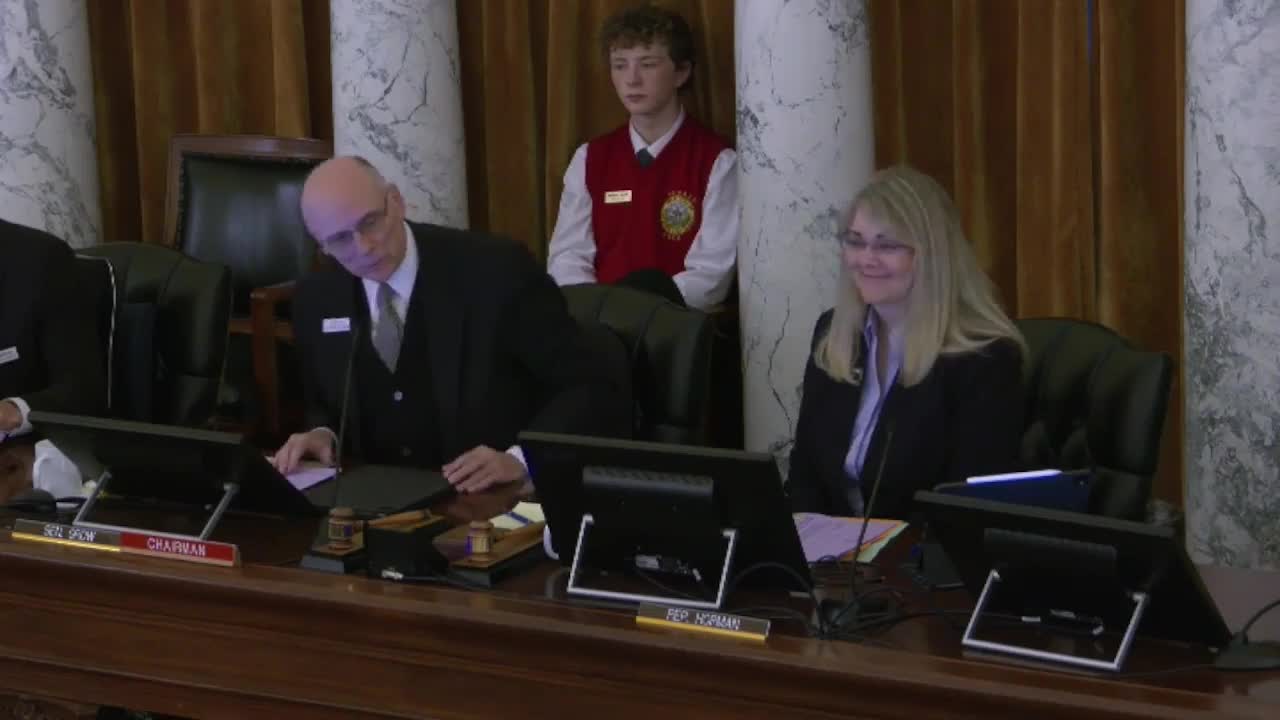
The Joint Finance-Appropriations Committee voted to approve FY2025 supplemental funding for the Department of Health and Welfare — Division of Medicaid and separately approved a package of FY2026 enhancements, including ongoing hospital assessment funding, actuarial services, MMIS spending and reporting language tied to House Bill 345.
The Joint Finance-Appropriations Committee on an affirmative roll call approved a $415,226,800 supplemental package for the Department of Health and Welfare’s Division of Medicaid and later approved a FY2026 enhancement package totaling $674,192,600.
The FY2025 supplemental motion, moved by Senator Wintrow and seconded by Rep. Handy, covered one-time and dedicated fund needs including a $1,350,000 external quality review contract for managed-care plans, $113,849,300 to cover updated Medicaid forecasts, an $108,821,400 capitation-rate increase for the Idaho Behavioral Health Plan, and $77,243,700 in dedicated hospital-assessment funds to access federal matching dollars. The committee recorded a majority vote in favor and the motion will proceed as a bill with a “pass” recommendation.
The committee then approved a related FY2026 package, moved by Rep. Furness and seconded by Senator Burkey, that makes the hospital assessment ongoing, adds funds for a CAHPS survey contract, funds an actuary contract amendment, releases previously set-aside MMIS funds as milestones are met, and increases the population/forecast adjustment. That motion passed on a similar roll-call tally and will go forward as a bill with a pass recommendation.
Why this matters: Committee members described the measures as necessary to meet federal requirements, respond to higher-than-expected utilization and cost, and to enable the state and hospitals to draw federal funds under an updated upper payment limit methodology. The actions fund current-year shortfalls and establish ongoing appropriations and reporting…
Already have an account? Log in
Subscribe to keep reading
Unlock the rest of this article — and every article on Citizen Portal.
- Unlimited articles
- AI-powered breakdowns of topics, speakers, decisions, and budgets
- Instant alerts when your location has a new meeting
- Follow topics and more locations
- 1,000 AI Insights / month, plus AI Chat