Get Full Government Meeting Transcripts, Videos, & Alerts Forever!
Get email alerts on the Indecent Exhibitions H230 topic
No spam. Unsubscribe anytime.
Idaho committee backs bill to create civil cause of action for "indecent exhibitions" and adds school/performance exemptions
Summary
The Idaho House State Affairs Committee voted to send House Bill 230 to the floor with a “do pass” recommendation after testimony from lawmakers, nonprofits, performers and residents about a measure to create a civil cause of action for certain “indecent exhibitions” and to restrict minors’ access to them.
The Idaho House State Affairs Committee voted to send House Bill 230 to the floor with a “do pass” recommendation after testimony from lawmakers, interest groups and members of the public for and against the measure.
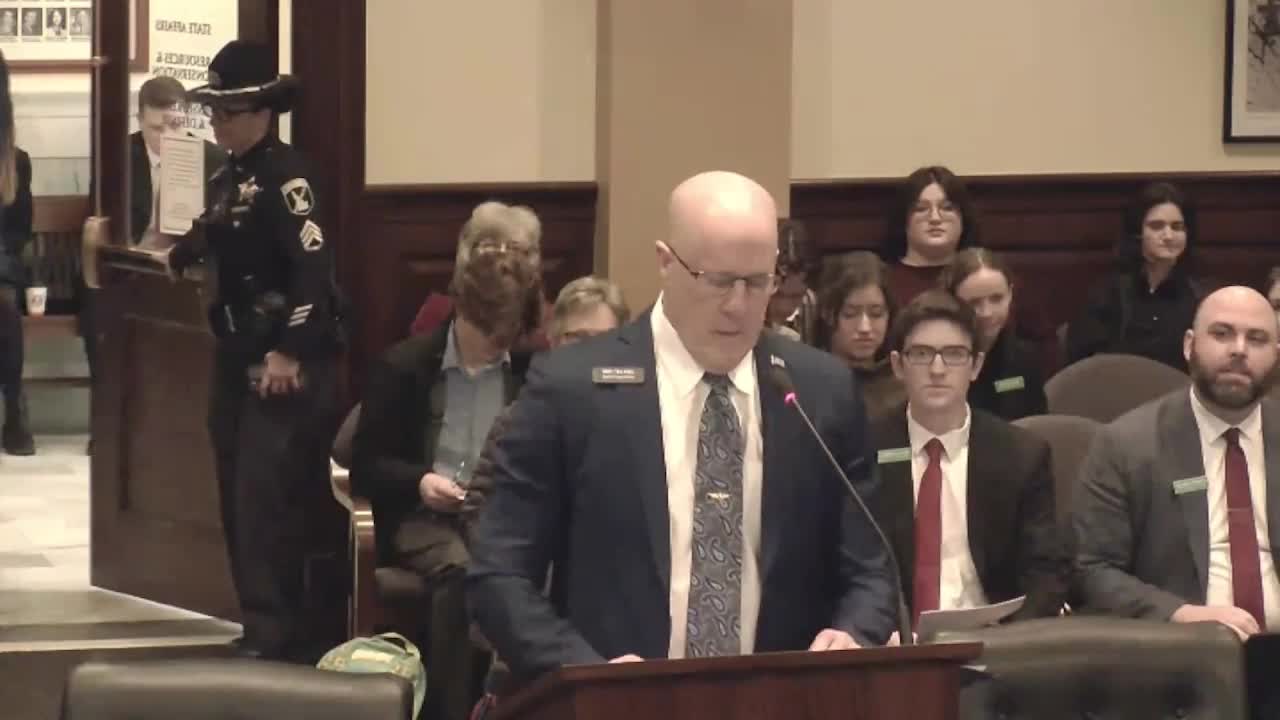
Representative Ted Hill, sponsor of H 230, told the committee the bill would create a duty of care for organizers, hosts and performers of what the text calls “indecent exhibitions,” and said the measure is intended as a time, place and manner regulation to restrict minors’ access to those performances.
Supporters described the proposal as a way to protect children from exposure to sexualized conduct at public events. Edward Clark, policy assistant at the Idaho Family Policy Center, told the committee the bill uses the Federal Communications Commission’s long‑standing indecency standard and contains two elements: that the performance include sexually explicit conduct and that it be “patently offensive” to contemporary community standards. Clark said the bill includes three drafting changes made after stakeholder meetings: (1) an affirmative defense if a host can produce a contract barring prohibited conduct, (2) a parental‑consent or accompaniment clause for minors 14 and older to attend ticketed performances, and (3) an explicit exemption for dances or gestures performed by athletic, cheer or dance teams maintained or sponsored by secondary schools or institutions of higher education.
Opponents urged the committee to reject the bill, saying the language is vague, targets LGBTQ+ performers and would chill artistic expression. Multiple public comment speakers described events they called family‑friendly and warned the bill would harm performers and businesses that stage inclusive, all‑ages events. Dr. Sarah Lynch from Kootenai County said a doctored video following a 2022 Coeur d’Alene event led to a defamation lawsuit and argued the bill’s subjective language would embolden groups that spread such content. Performer Vincent Diaz said most drag shows are adult‑only; in 2023 he performed 71 shows and only two were all‑ages, and he warned that the bill could empower “white supremacists” who have targeted events in the past.
Committee members questioned the bill’s definitions and enforcement. Representative Green and others asked for clarity about what the bill means by “primary or secondary sexual characteristics” and how juries would apply the “patently offensive” standard. Clark and the sponsor said the standard is modeled on the FCC and that a jury would ultimately decide whether a performance meets the test. The sponsor and Clark told the committee the language was developed with input from stakeholders including Boise State University to reduce unintended effects on school‑affiliated performances.
After more than an hour of public testimony and committee questioning, Representative Hostetler moved to send H 230 to the floor with a due‑pass recommendation. The motion passed; two members—Representative Achilles and Representative Green—were recorded as voting no.
The committee record shows proponents delivered a petition and polling figures to the committee. Clark said a petition of 7,665 signatures had been circulated and that Idaho Family Policy Center polling found 70% of likely Idaho voters supported restricting minors’ access to the displays referenced in the bill. Committee members also repeatedly noted the bill does not create criminal penalties; Clark confirmed the measure contains civil remedies and injunctive authority, not new criminal sanctions.
The bill’s next step is consideration by the full Idaho House. If acted on, H 230 would create a new civil pathway for alleged exposure of minors to the conduct described in the bill and would include the affirmative defenses and exemptions described to limit liabilities for hosts, ticketed events and school‑sponsored activities.
Representative Hill and Edward Clark said they believe the measure is constitutionally sound; opponents said the language is vague, will be litigated and could chill constitutionally protected expression. The committee’s vote does not itself change law; it advances the bill to the House floor for further debate and possible amendment.