Get Full Government Meeting Transcripts, Videos, & Alerts Forever!
Get email alerts on the Housing Grants Oversight topic
No spam. Unsubscribe anytime.
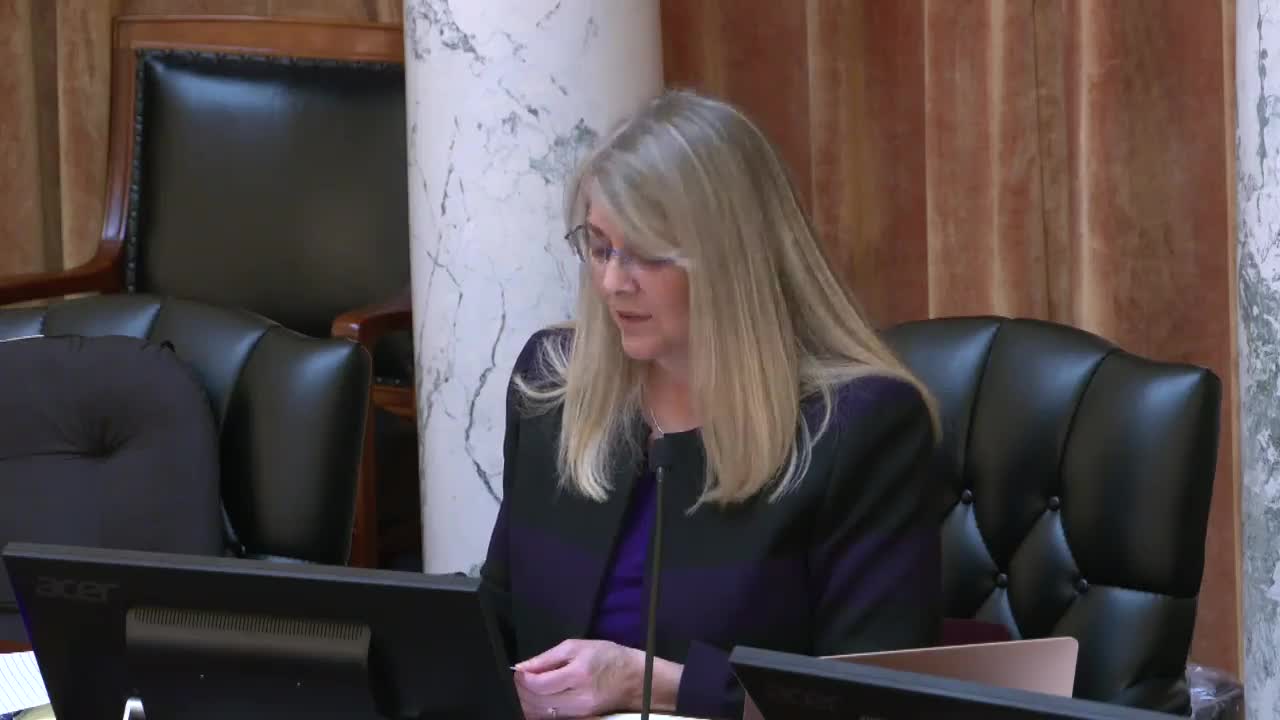
House committee debates bringing Idaho Housing grants under legislative oversight; bill retained in committee
Summary
Lawmakers and Idaho Housing and Finance Association clashed over a bill that would require new federal grants to the quasi‑public agency to be appropriated by the Joint Finance‑Appropriations Committee; the committee ultimately retained the bill after two failed motions.
A bill that would require new federal grants awarded directly to the Idaho Housing and Finance Association to be appropriated and reviewed by the Joint Finance‑Appropriations Committee (JFAC) drew extended debate and public testimony in the House Appropriations Committee on Feb. 26, 2025, and was retained in committee after members failed to agree on whether to hold or advance the measure.
The bill, House Bill 325, was introduced by Representative Cornel Rasor and would make new federal grants to IHFA “cognizable” for legislative appropriation, meaning grants awarded to IHFA after the bill’s effective date would be subject to JFAC review and appropriation.
Proponents said the change is about transparency and legislative oversight. “This just pulls a portion of that back to make sure that when they are doing these things, that we actually have that watchful eye on them,” Representative Tanner said during debate, arguing JFAC should have visibility into federal money that affects state residents. He characterized the change as limited to new federal grants and not a directive to stop IHFA from pursuing awards.
IHFA officials and other opponents said the measure would blur the agency’s independent status and could harm its bond programs. Brady Ellis, executive vice president of the Idaho Housing and Finance Association, told the committee IHFA “strongly opposes and has some concerns about this bill,” saying IHFA is a self‑supporting independent public body created in 1972 that receives federal grants directly and issues long‑term bonds. John McDevitt, IHFA general counsel, said subjecting IHFA’s federal grants to annual appropriation risks “blurring the lines of the independent status of IHFA” and could prompt rating agencies to view IHFA as a state component when assessing state credit and indebtedness.
IHFA witnesses described the agency’s work and oversight: they said IHFA administers grants for homebuyer assistance, counseling and other housing programs; that it receives federal audits and programmatic oversight from federal grantors; and that it has issued billions in financing for housing and other projects. IHFA stated it annually applies for and receives federal grants “as low as $13,000,000 per year,” and McDevitt noted “billions of dollars in financing” are currently outstanding through IHFA‑issued debt.
Committee members pressed on how the proposal would operate in practice. Sponsors and supporters said the bill applies only to new federal grants after the specified effective date and would not change IHFA’s legal designation. Critics, including Representative Petzke, argued the funds are not state dollars because they do not flow through the State Treasury and warned of the precedent of attempting to appropriate federal funds awarded directly to non‑state entities.
Two formal actions were recorded in committee on HB 325: Representative Petzke moved to hold the bill in committee; that motion failed in a roll call recorded as a 5–5 tie. Representative Tanner later moved to send the bill to the floor with a “do pass” recommendation; that motion failed on a subsequent roll call (4–6). The committee chair then confirmed the bill would be retained in committee.
The committee also heard technical questions about prior ARPA funding arrangements: IHFA and its counsel clarified that the state’s previously created workforce housing fund (an ARPA appropriation held by the Treasurer) was not deposited in IHFA’s accounts and therefore did not change IHFA’s balance sheet or credit treatment. IHFA said it performs annual independent financial audits and periodic federal program audits, and federal grantors also review IHFA’s program compliance.
The measure drew sharply divided views among committee members on whether the change is necessary for accountability or an overreach into grants that are not state funds. With the committee retaining the bill, HB 325 may be amended or returned to the committee calendar for further consideration at a later date.