Get Full Government Meeting Transcripts, Videos, & Alerts Forever!
Get email alerts on the Health Insurance topic
No spam. Unsubscribe anytime.
Health insurance increase, reserve levels and contractual risk debated; no action taken
Summary
Lawmakers debated two competing proposals to set the state's FY2026 health-insurance base rate per eligible FTE'the governor's $14,300 or the CEC's $13,960'and how each would affect the plan's contingency reserve; administrators warned falling below the 10% contractual reserve could trigger a risk charge.
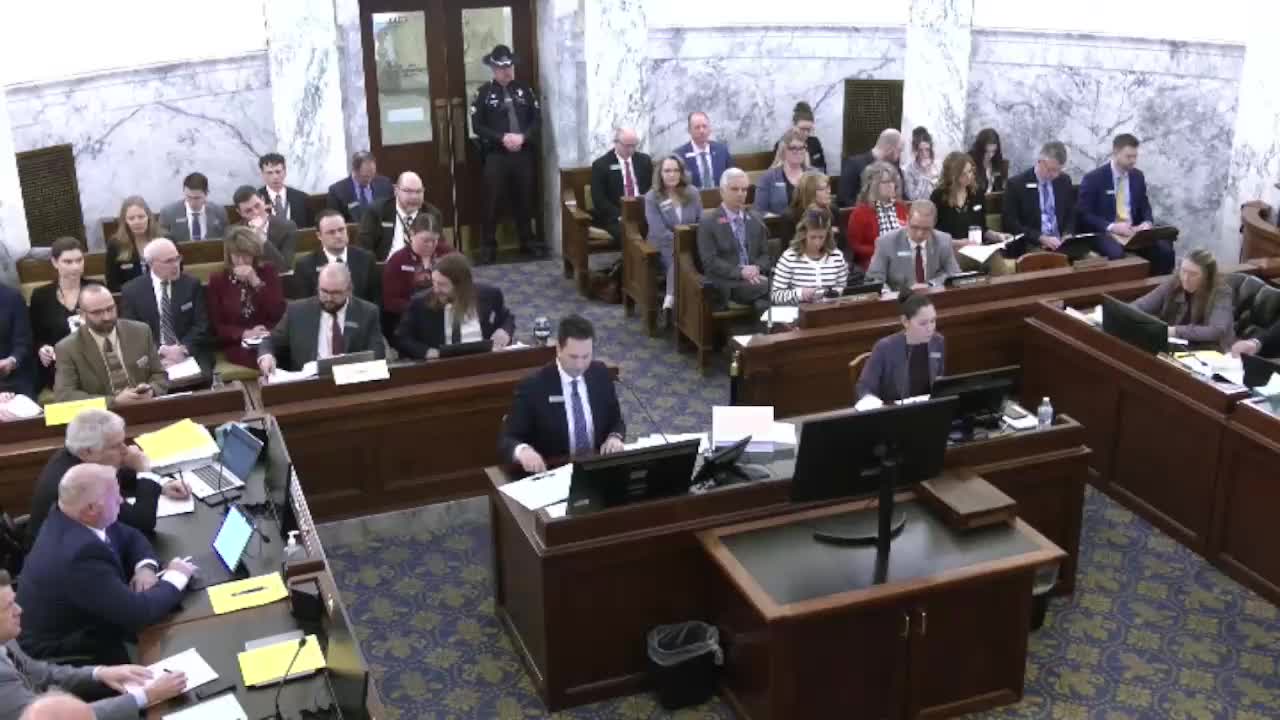
Committee members debated whether to set the state's health insurance base per eligible full-time position at the governor's recommended $14,300 or the Economic Outlook and Revenue Assessment Committee's (CEC) $13,960. The choice determines the size of the plan's contingency reserve and how much additional general fund support is needed in fiscal 2026.
Keith Bybee presented both figures and the fiscal effects. The CEC recommendation would increase costs by $29,996,000 from the general fund, $7,179,000 from dedicated funds and $3,086,200 from federal funds (total $40,261,200). The governor's recommendation would increase costs by $42,076,600 from the general fund, $9,908,300 from dedicated funds and $4,330,300 from federal funds (total $56,315,200).
Analysts and officials described the projected reserve impact. Bybee said Milliman's projections show the CEC recommendation would draw the contingency reserve down to the statutory minimum (10% of plan costs), a projected balance of roughly $51.6 million on a projected plan cost of about $482 million; the governor's proposal would leave a roughly $10 million larger cushion (about $61.4 million by Milliman's memo). Committee members and administrators noted the reserve balance today is roughly $80.5 million.
Division of Financial Management administrator Laurie Wolf told the committee the 10% contingency is contractual and that falling below it could subject the state to a risk charge from the carrier. Faith Knowlton of the Office of Group Insurance confirmed a risk charge can be assessed and said the precise assessment would depend on how far the reserve fell below the contingency.
Representative Miller moved the governor's $14,300 recommendation; Representative Furness moved the CEC $13,960 substitute. The substitute failed to gain the cross-caucus majorities the committee requires (grand total reported as nine ayes, 11 nays); a vote on the original motion likewise failed to achieve the necessary majority in both caucuses. The committee left the matter without adopting a rate and deferred further action.
Members also raised practical concerns: some said a lower increase this year could force a larger increase next year to restore reserve cushions; others pointed to the large existing reserve and argued for a lower rate now. Administrators cautioned that the actuarial projections include probability ranges and that the 10% contingency corresponds to approximately a 50% likelihood of meeting liabilities at that level.