Get Full Government Meeting Transcripts, Videos, & Alerts Forever!
Get email alerts on the Broadband Dig Once topic
No spam. Unsubscribe anytime.
Committee advances bill extending ‘Dig Once’ rules to county highway districts, including ACHD
Summary
A committee voted to advance House Bill 300 to the floor after testimony that the bill would extend Idaho’s Dig Once policy to countywide highway districts and require nondiscriminatory rules for broadband placement in rights of way.
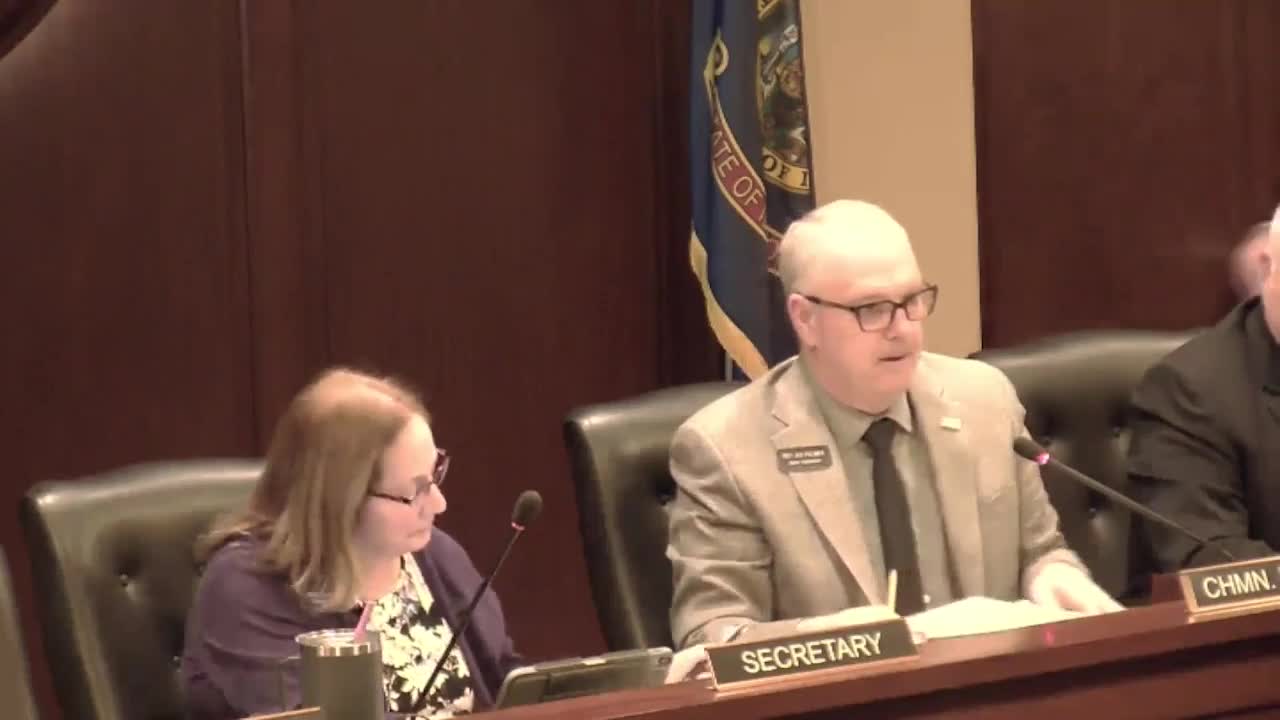
A committee voted to advance House Bill 300 to the floor with a do-pass recommendation after testimony that the measure would extend Idaho’s “Dig Once” policy to countywide highway districts, including the Ada County Highway District (ACHD).
Representative Vanduano, the bill sponsor, told the committee HB 300 would expand the existing state Dig Once rules administered by the Idaho Transportation Department to single county highway districts so that when roads are dug for utilities, other providers have the opportunity to place broadband infrastructure at the same time. He said microtrenching language was removed from the bill to avoid statutorily locking in a single construction technique: “I don't like microtrenching, but we took it out just to keep everybody happy,” he said.
Amanda Moore, senior regional director of operations for Sparklight, testified in support and asked the committee to ensure ACHD’s rules are “nondiscriminatory and competitively neutral.” Moore said Sparklight serves more than 67,000 customers in Ada County and that existing rules require fiber to be buried 30 to 36 inches to protect durability; she warned a lower standard for one provider would distort competition.
Ron Williams, an attorney and executive director of the Idaho Cable Broadband Association, and other industry witnesses described the 2022 Dig Once law and urged that comparable non‑discrimination protections be extended to ACHD. Williams told the committee the 2022 act sought to foster competition by creating a predictable process and to protect highways from repeated cuts.
Some members asked whether the bill would apply retrospectively to prior installations; industry witnesses said nondiscrimination reviews require comparing proposed rules against existing rules and investments to determine whether a new approach would advantage a new entrant over incumbent providers. Representative Clow and others questioned whether the bill accomplishes enough without microtrenching language, while Representative Gannon expressed ongoing concerns about traffic disruption and local control.
A motion to send House Bill 300 to the floor with a do-pass recommendation carried by voice vote; a single member asked to be recorded as a nay on the committee vote but reserved the right to change the vote on the floor.