Get Full Government Meeting Transcripts, Videos, & Alerts Forever!
Get email alerts on the Public Access Roads topic
No spam. Unsubscribe anytime.
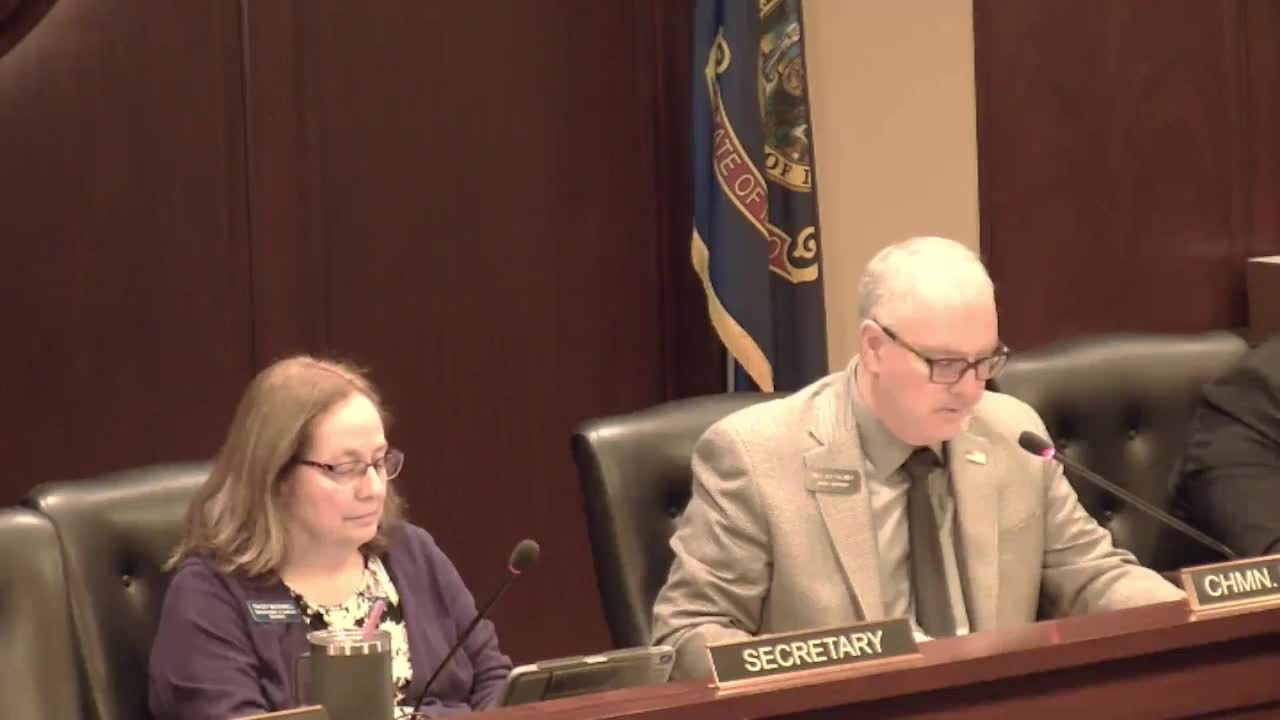
House committee fails to advance bill requiring replacement access when roads to public lands are vacated
Summary
A legislative motion to send House Bill 101 to the floor failed after testimony that the measure could tie counties' hands when roads that provide access to public lands are vacated. Supporters said the bill would protect hunting and fishing access; opponents said it is impractical when federal land management and permitting are required.
A motion to advance House Bill 101 to the floor failed after committee members heard conflicting testimony about whether the bill would protect public access or unduly restrict local authority.
Representative Cornel Rasor, R.–Bonner and Boundary County District 1, the bill sponsor, told the committee the measure would require counties, highway districts or other road authorities to provide a “suitable replacement” if they remove, abandon or vacate a road that provides access to Idaho's public lands. “The point of this law, this potential bill, this potential law is to make sure that the citizens of Idaho have access to their lands,” Rasor said.
Supporters and opponents differed on whether the requirement is practical. Cindy Bachman, chairman of the Owyhee County Commission, said Owyhee County opposes House Bill 101 because it would be a “one-size-fits-all statewide mandate” and could force counties to seek replacements that federal land managers such as the Bureau of Land Management (BLM) will not permit. “There may be issues and we may not be able to do a replacement access because of the restrictions from the BLM,” Bachman said, noting her county has struggled for years to secure rights of way across federal lands without agreeing to dozens of stipulations.
Nick Fasiano, executive director of the Idaho Wildlife Federation, said his organization supports the bill because “public access for hunting and fishing to our public lands and waters is a primary value of our organization” and losing even a single access point can remove generations‑old access.
Seth Grigg, executive director of the Idaho Association of Counties, testified in opposition, saying the bill would “tie our hands” when vacating rights of way that cross federal land. Grigg noted that much of Idaho—roughly 70 percent—lies under state or federal management and that obtaining federal easements or rights of way can be “virtually impossible.” He said federal procedures and environmental review (for example, NEPA and other federal requirements) could also impose significant time and cost burdens on counties if replacement access required federal approvals.
Committee members debated whether the state should set a uniform rule. Representative Boyle argued the matter could be handled by local county commissions, while Representative Clow said he had been persuaded to support the bill after testimony that the federal government sometimes does not provide additional access and local officials then lack tools to protect access to public lands.
A motion to send House Bill 101 to the floor with a “do pass” recommendation failed on a roll-call vote. The roll-call in the transcript recorded at least five yes votes (Representatives Shepherd, Crane, Clow, Harris and Gannon) and multiple no votes (including Chairman Palmer, Holtzclaw, Monks, Handy, Hill, Petzke, Boyle and Mickelson); the chair announced “Motion fails.”