Get Full Government Meeting Transcripts, Videos, & Alerts Forever!
Get email alerts on the Drug Policy topic
No spam. Unsubscribe anytime.
House State Affairs committee sends HJR 3 to the House floor after hours of testimony on drug legalization
Summary
The House State Affairs Committee voted 12–3 to send House Joint Resolution 3, a proposed constitutional amendment making it harder to legalize currently unlawful drugs, to the full House with a due-pass recommendation after extensive public testimony and questioning.
The House State Affairs Committee voted to send House Joint Resolution 3 (HJR 3) to the full House with a due-pass recommendation after public testimony and discussion about drug legalization, medical access and local impacts.
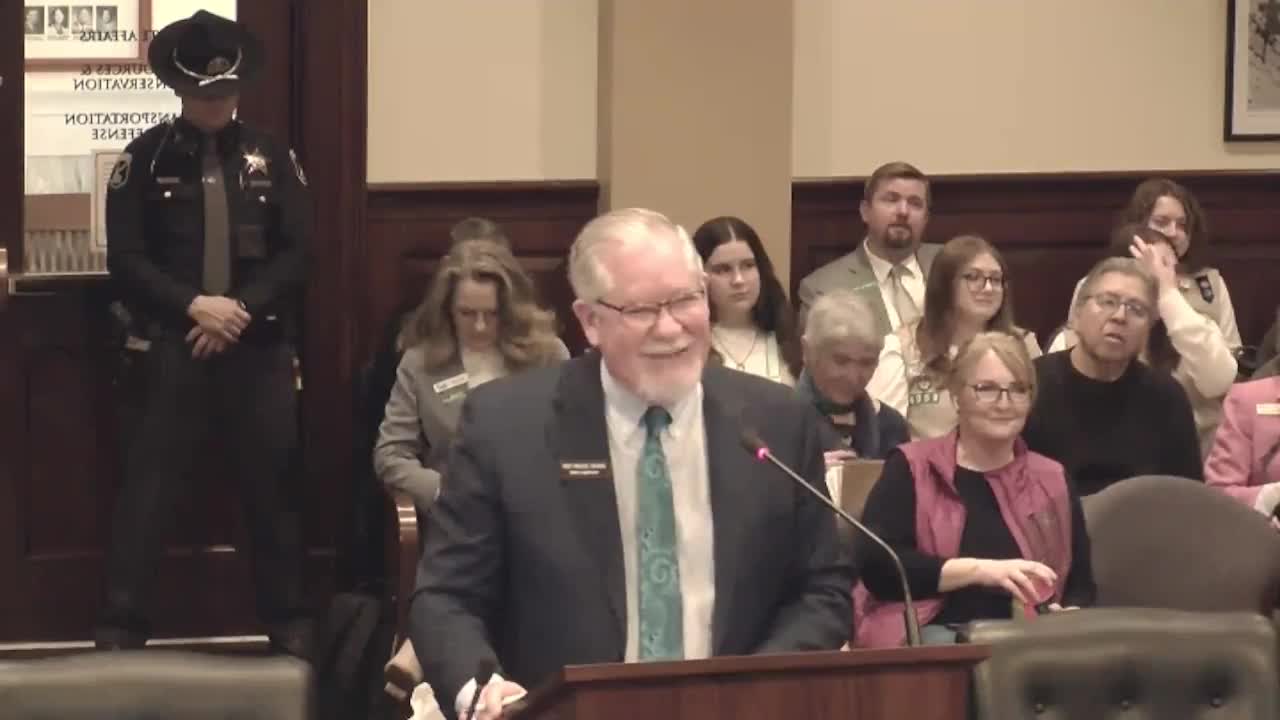
HJR 3 would amend the state constitution to require a two-thirds vote of each legislative chamber to make presently unlawful drugs lawful. Sponsor Representative Bruce Skog (R–District 10) said the measure is intended to make it more difficult for out-of-state money and policy changes to legalize drugs in Idaho and described endorsements from Idaho law enforcement groups and others.
Supporters argued that legalization in neighboring states led to higher crime and harms to communities. Victor Miller of Meridian cited reporting about Oregon’s experience following measure 110 and provided statistics on fentanyl seizures and overdose deaths. Multiple residents and law-enforcement-affiliated witnesses testified in favor of the resolution, saying it would protect families and public safety. Robert Gillis, testifying for Idaho Tough on Crime, described enforcement problems he observed in California after medical marijuana legalization and said legalization enabled criminal exploitation of the system.
Opponents urged caution about restricting future medical uses. Joseph Evans, representing Kind Idaho and identifying as a combat veteran, said some Schedule I drugs show therapeutic promise for conditions including traumatic brain injury and post-traumatic stress injury and said the resolution would make in-state access more difficult for patients who currently travel out of state for treatment. Representative Keeley (R) raised similar concerns about potential negative impacts on medically proven treatments for veterans.
Committee members asked whether the measure would affect the citizen initiative process and what “unlawful drugs” would cover. Sponsor Skog said the proposal would not change the initiative process and that the term “unlawful drugs” was intentionally not tied to specific schedules so the language would remain broad if added to the constitution; he also said exceptions for research and investigational drugs for terminally ill patients appear in the draft. Committee members asked for clarification and the sponsor said he would have an answer for the floor.
After discussion and public testimony the committee voted to send HJR 3 to the floor with a due-pass recommendation. The roll call recorded the motion as passing 12 to 3.