Get Full Government Meeting Transcripts, Videos, & Alerts Forever!
Get email alerts on the Behavioral Health Funding And Policy topic
No spam. Unsubscribe anytime.
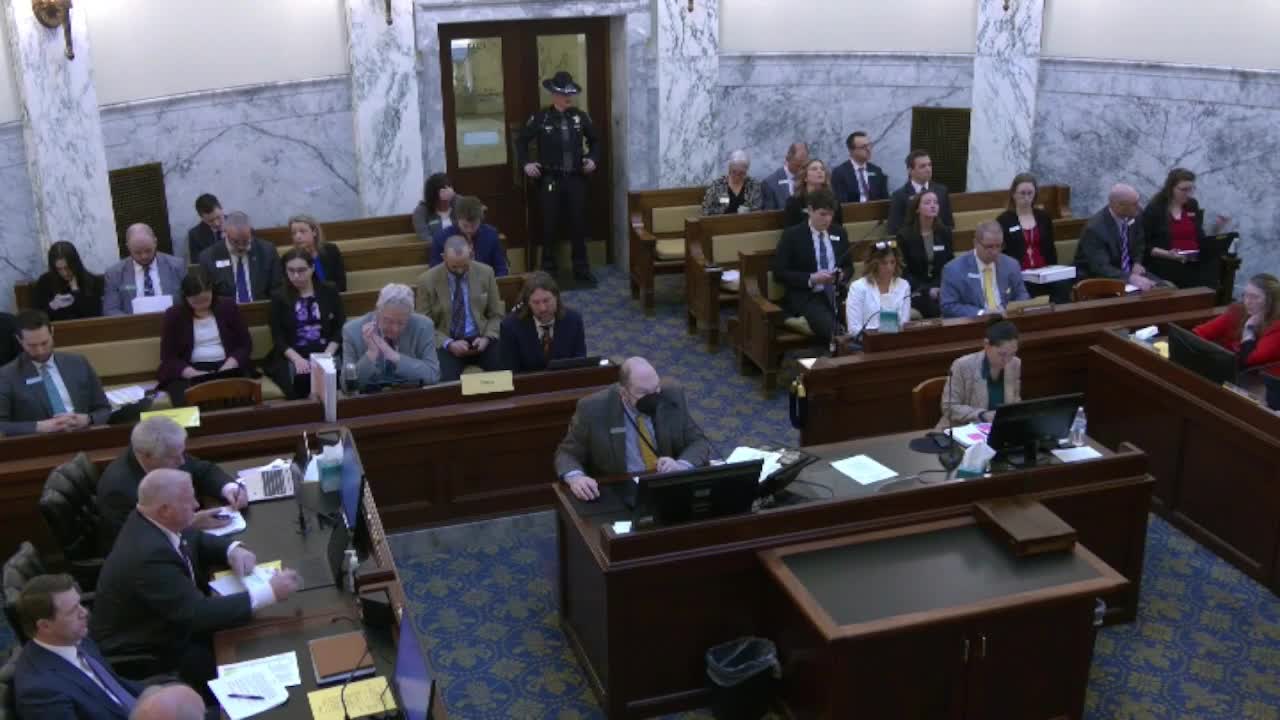
JFAC advances behavioral-health funding package; directs review of CANS assessment and adds DEI-related restrictions
Summary
The Joint Finance-Appropriations Committee approved a package of behavioral-health supplementals and FY2026 adjustments — including funding to cover delayed Idaho Behavioral Health Plan grants, civil-commitment costs, hospital accounting fund shifts, and a one-time reclassification of the Center of Excellence — and directed the Department of Health and Welfare to study alternatives to the CANS assessment.
The Joint Finance-Appropriations Committee approved a sequence of supplemental appropriations and FY2026 enhancement items for behavioral health and related program language that affects the Department of Health and Welfare’s mental-health and substance-abuse divisions.
Major budget votes and adjustments - Mental Health Services: committee approved a one-time federal appropriation of $6,743,800 to cover Idaho Behavioral Health Plan contract implementation delays (FY2025 re-appropriation to allow use of previously authorized federal grants). Vote recorded in committee as passing. - Psychiatric Hospitalization (civil commitments): committee approved a one-time general-fund appropriation of $2,663,500 for civil-commitment expenditures and community hospitalization (FY2025 supplemental). - State Hospital West and South: committee approved fund-shift adjustments moving some federal funds to dedicated/receipt authority to reflect managed-care accounting changes associated with the Idaho Behavioral Health Plan and MCO payments; net budget impact recorded as zero. - Mental Health Center of Excellence: committee voted to move the Center of Excellence funding from ongoing to one-time and reduce nine FTPs (positions) as part of program review. Committee members said the change was intended to allow the program to be re-evaluated rather than ended. - Substance Abuse: committee approved a net-zero fund shift between dedicated and federal funds to align where personnel and trustee/benefit payment costs are coded.
CANS assessment and DEI language The committee approved new intent language asking the Department of Health and Welfare to explore alternatives to the Child and Adolescent Needs and Strengths (CANS) assessment and to report back to JFAC. Sponsors said the request was limited to exploring alternatives and does not itself change practice; supporters framed it as studying questions parents have raised about SOGI (sexual orientation/gender identity) items within the assessment and possible opt-out approaches.
Senator Wintrow urged caution, saying that the CANS tool is used to determine resources and services for children with disabilities and that altering or opt-outs can affect the assessment algorithm and available services. She noted existing stakeholder work and warned against unilateral legislative action without full stakeholder input.
The committee also accepted language that, in part, restricts appropriations for programs described using DEI, critical-race theory or related terminology in the Department of Health and Welfare budget language; committee supporters said this is consistent with prior appropriation language enacted in other bills.
Outcome A series of roll-call votes in the meeting recorded the supplemental and enhancement items as passing the committee. Committee chairs said the package and language would roll up into the behavioral-health appropriation bill for further floor action.
Speakers and roles - Alex Williamson, budget and policy analyst, Legislative Services Office (presented the behavioral-health materials) - Representative Tanner (spoke to CANS and SOGI concerns; moved language) - Senator Wintrow (spoke about CANS, stakeholder input and risk of unintended consequences) - Representative Furness (moved several behavioral-health motions) - Senator Cook, Senator Bierke and other committee members participated in fund-shift and supplemental votes.
Discussion vs. decision - Discussion: committee debated program review versus termination, the operational accounting impacts of the new behavioral-health plan, and parental concerns about the CANS assessment. - Direction: the department was directed to report back to JFAC on alternatives to the CANS assessment and other items per language. - Formal action: committee approved the listed supplementals, fund shifts and language; items to be included in the behavioral-health appropriation bill.
Clarifying details - The Idaho Behavioral Health Plan implementation appropriation was presented as re-appropriation to allow agencies to use federal grants that lapsed because the state plan launch was delayed. - Fund-shift items move costs from federal receipts to dedicated or receipt authority to reflect how managed-care payments are accounted for; committee consistently described these as net-zero shifts.
Searchable tags: behavioral health, CANS, psychiatric hospitalization, Idaho Behavioral Health Plan, mental health funding