Get Full Government Meeting Transcripts, Videos, & Alerts Forever!
Get email alerts on the Foster Care topic
No spam. Unsubscribe anytime.
Committee backs bill to add 14-day director review for unlicensed congregate foster placements
Summary
Sen. Melissa Wintrow's Senate Bill 1035 would clarify the director of the Department of Health and Welfare's role in reviewing unlicensed congregate placements, requiring a review every 14 days assessing safety, treatment plan and discharge progress; committee voted to send the bill to the floor with a due-pass recommendation.
Sen. Melissa Wintrow, D, presented Senate Bill 1035 to clarify and build on reforms passed in 2024 that limited use of unregulated congregate care for foster children. The bill would require the director of the Idaho Department of Health and Welfare to review any child placed in an unlicensed group-care setting (including short-term rentals such as Airbnbs) at least every 14 days.
Wintrow told the Senate Health and Welfare Committee that restrictions enacted in 2024 — including 2024's Senate Bill 1379 — successfully reduced placements of foster children in short-term rentals and other unregulated settings; she cited a 2024 figure of 75 foster children placed in short-term rentals before those reforms and said the department currently reports no children in Airbnbs. The sponsor said the new language would preserve restrictions on unregulated group care while ensuring licensed facilities and treatment staff are not unduly pulled away from care to complete reporting tasks.
"For a child placed in an unlicensed group care setting, including Airbnb, the director shall review the placement every 14 days," Wintrow said. She said the director's review must assess the child's safety, treatment needs, facility services, treatment plan, overall progress, discharge plan and progress toward discharge; if a placement is appropriate the director may approve it but if not, the director must find a new appropriate placement.
The bill had support from licensed children's facilities, the Department of Health and Welfare and child advocates including Idaho Voices for Children, Wintrow said. Providers and agency representatives testified that they and department staff collaboratively helped draft the revised language.
Craig Anderson, owner and operator of Hinge Point Youth Homes, testified that providers and the department met regularly after the 2024 changes and unanimously agreed on the revised language before the committee. Testimony from a provider, Bridal Shipley of Haley, Idaho, supported the bill as a way to connect youth with timely assessments and community-based supports and to avoid more restrictive placements.
Sen. Zieterfeld asked whether the 14-day review requirement could increase workload for the department and require additional hires; Wintrow and a testifying representative said the department handled the workload created by the 2024 law without adding staff, and that the bill seeks to balance oversight with treatment needs.
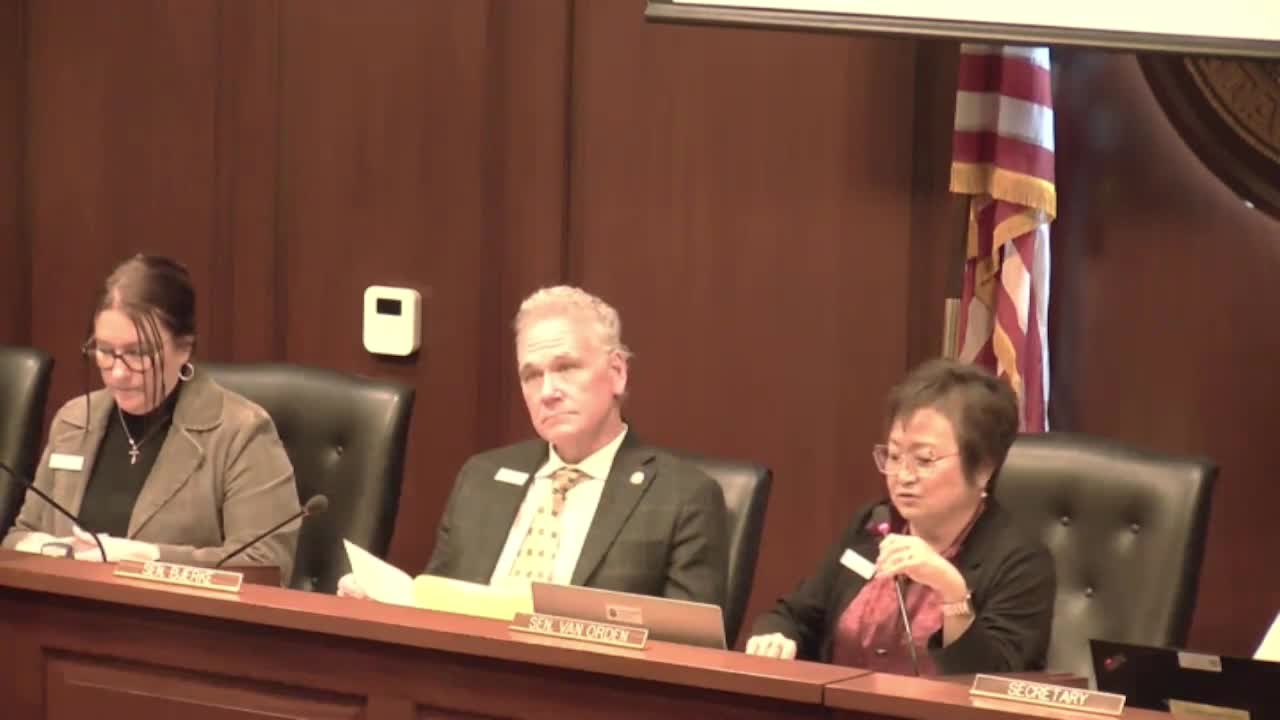
After testimony and questions, the committee moved to send Senate Bill 1035 to the floor with a due-pass recommendation. Senator Blaylock moved the motion; Senator Burkey seconded. The motion carried by voice vote.
The transcript does not record a roll-call vote or a numerical tally in committee.