Get Full Government Meeting Transcripts, Videos, & Alerts Forever!
Get email alerts on the Absentee Voting topic
No spam. Unsubscribe anytime.
Absentee‑ballot restriction bill draws extensive testimony and fails to advance from committee
Summary
House Bill 139, which would narrow no‑excuse absentee voting and require applicants to meet listed qualifying reasons, drew extended sponsor remarks, Secretary of State testimony and more than a dozen public speakers; the committee’s motions to hold the bill and to send it to the floor both failed on 7–7 tie votes.
Representative Joe Alfieri (District 4) presented House Bill 139, which would restrict no‑excuse absentee voting to enumerated qualifying reasons and tighten distribution of absentee ballot applications. Alfieri said the measure seeks to re‑center absentee voting on its historical purpose (military and infirm voters) and to address perceived chain‑of‑custody, signature verification and coercion risks associated with absentee ballots.
Alfieri described two principal components: (1) a narrowed set of qualifying reasons to receive an absentee ballot and (2) a prohibition on any person or entity (other than the state, county clerks or a direct request by an elector) from physically or electronically sending an absentee application to a voter. The sponsor listed exceptions for infirmity, active-duty military, firefighters and medical personnel scheduled to work, among others, and said the bill is not retroactive.
Secretary of State Phil McGrane testified in opposition, saying Idaho’s recent election was successful with record turnout and noting that existing procedures include signature verification training for election workers and other safeguards. McGrane said absentee voters accounted for a minority of participation in recent cycles and that two‑thirds of absentee voters would already meet proposed exemptions, so the bill would not substantially improve security but would reduce access.
Public testimony included multiple speakers against the bill (students, county clerks, poll workers, and ordinary voters) and a smaller number in favor. County clerk testimony and the Idaho Association of County Recorders and Clerks warned the bill would create enforcement and service problems in extremely rural counties and identified many legitimate reasons for absentee voting not enumerated in the draft. Supporters (including Secure Ballot volunteers and some precinct officials) argued absentee ballots are a more vulnerable pathway because of unobserved voting and postal chain‑of‑custody issues.
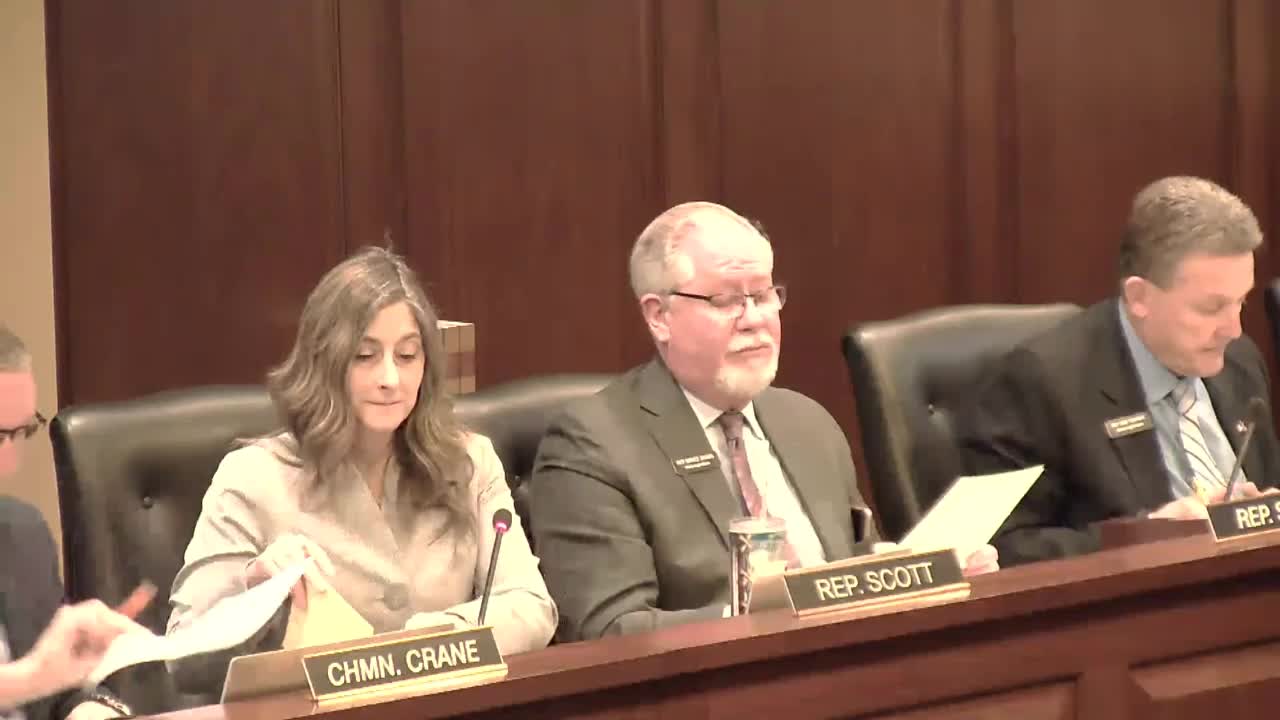
Committee procedural motions produced two roll‑call results. A substitute motion to hold HB 139 in committee failed on a 7–7 tie. A subsequent roll‑call motion to send HB 139 to the floor with a due‑pass recommendation also failed on a 7–7 tie. No action is pending from this hearing.