Get Full Government Meeting Transcripts, Videos, & Alerts Forever!
Get email alerts on the Energy Ratepayer Protection topic
No spam. Unsubscribe anytime.
House committee advances bill that would require large energy users to cover grid upgrade costs
Summary
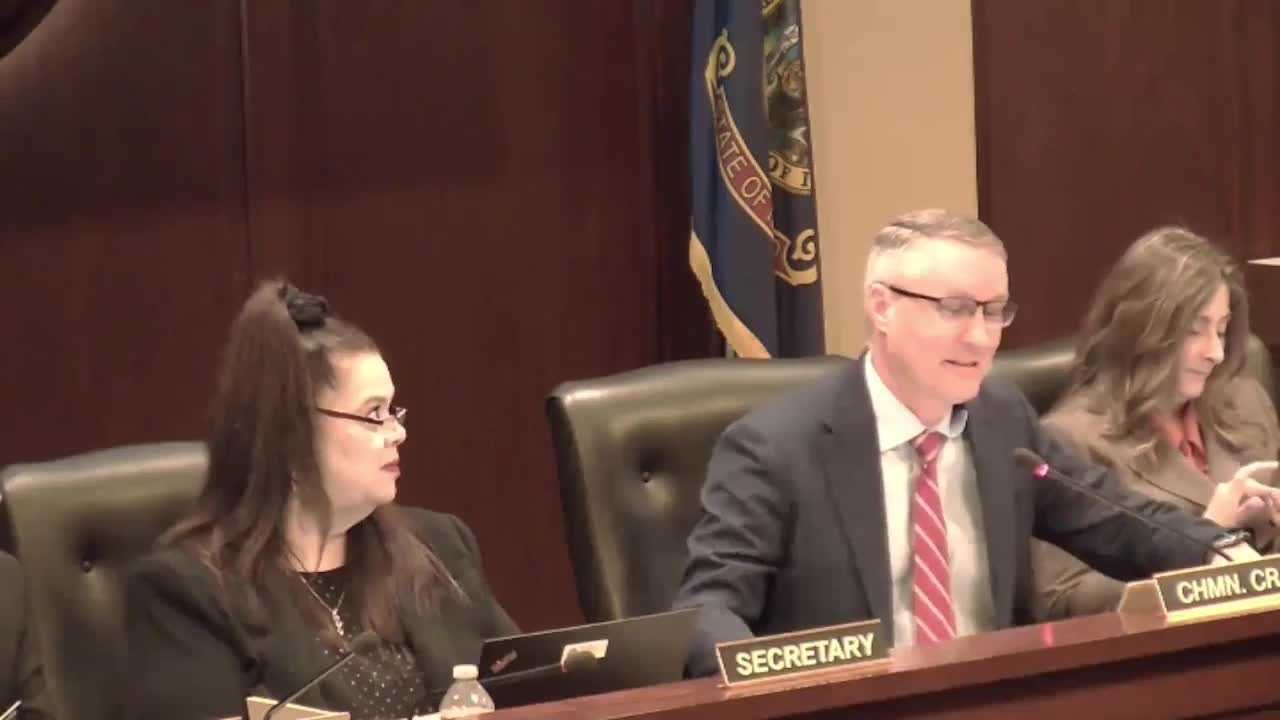
The Idaho House State Affairs Committee voted to send House Bill 395 to the floor with a do-pass recommendation after a daylong hearing in which utilities, industry groups, farmers and community advocates debated whether large commercial power users should be required to pay for new generation and transmission.
Representative Dan Garner opened the House State Affairs hearing on House Bill 395 by calling it a "ratepayer protection bill" that would require large energy users over 10 megawatts to pay for the infrastructure needed to serve them.
Garner said the bill would make large customers "do like we have the developers do. They pay their own way," and argued that without the change utility customers could be left to shoulder costs for new generation and equipment needed to serve very large loads.
The bill drew sharply divided testimony. Alex Laboy, president of the Idaho Association of Commerce and Industry, opposed the measure, saying it "would effectively end economic development in Idaho by locking down the orderly management and well planned process of power supply in the state of Idaho." Laboy told legislators that many industrial and manufacturing expansions — and new mines — often require new generation, transmission and local government siting work, and that forcing each large user to procure generation could impede projects that bring jobs and investment.
Idaho Power's Megan Ronk described the company's existing practice of negotiating "energy services agreements or special contracts" for large users and defending those arrangements before the Idaho Public Utilities Commission (PUC). "We have to do what is specifically called a no harm analysis where we have to demonstrate that there is no harm to other Idaho Power customers," Ronk said, describing the PUC review and protections she said are already part of special-contract processes.
Speakers for agriculture and irrigation argued the industry faces steep rate pressure already. Eric Olsen of the Idaho Irrigation Pumpers Association warned that the rapid growth in large loads would cause costs to be "socialized across the whole customer classes" and hit everyday ratepayers, retirees and farmers. Farmer Andrew Mickelson said his operation saw a 17% power rate increase this year and said members expect continuing double-digit requests from utilities.
Representatives of Rocky Mountain Power urged caution about setting a statutory megawatt threshold. Tom Carter of Rocky Mountain Power said he supported the principle that "cost should follow the cost causer" but called 10 megawatts "too low" and recommended a higher threshold (he suggested the 50–100 MW range in testimony) to avoid harming projects that bring jobs.
Community advocates including Justine Kravanek of Rural Community Advocates backed the bill as a way to protect farmland and household customers, arguing large data centers can consume power at scales that exceed local household counts and that new generation for such users often sits on productive farmland.
Committee members pressed witnesses on several technical points: why 10 megawatts was chosen (Garner said the number is used in other statutes and by the Bonneville Power Administration policy), why a 10-year horizon is included in the bill text, and how the PUC's existing review and special-contract structure currently allocates costs and protections.
After more than an hour of public and industry testimony and committee discussion, the committee considered motions on the bill. Representative Barbieri moved to send HB 395 to amending order for further work on return-on-investment and jobs questions. Representative Dygaard offered a substitute motion to send the bill to the House floor with a do-pass recommendation. The substitute carried on a voice vote and the committee sent House Bill 395 to the floor with a do-pass recommendation.
The hearing record includes multiple requests from committee members that Idaho Power and the PUC provide the committee with rate-comparisons, contract information and the customer-class rate breakdowns that committee members said they wanted for further review.