Get Full Government Meeting Transcripts, Videos, & Alerts Forever!
Get email alerts on the Able Accounts topic
No spam. Unsubscribe anytime.
Committee sends bill to floor to let treasurer join national ABLE consortium, lower participant fees
Summary
An Idaho House committee voted to send House Bill 26 to the House floor with a do-pass recommendation after hearing testimony that the bill would let the Idaho State Treasurer join a national ABLE consortium to lower fees and create oversight for ABLE accounts for Idahoans with disabilities.
An Idaho House committee voted to send House Bill 26 to the House floor with a do-pass recommendation on a voice vote after hearing testimony from the state treasurer and disability advocates.
Idaho State Treasurer Julie Ellsworth told the committee the bill would amend Idaho Code 56-708 to allow the treasurer to "enter into an agreement with a national consortium of ABLE accounts," create an ABLE advisory council and provide financial literacy outreach through the Treasurer’s Office and the Idaho State Independent Living Council.
ABLE accounts, created under federal law as Section 529A of the Internal Revenue Code, let eligible people with disabilities save for disability-related expenses without losing certain public benefits. Ellsworth said joining a multi-state consortium reduces per-account overhead and can substantially lower the fees paid by individual account holders. "If through a partnership, I can reduce that cost to 19 to 33%," she said, and added that current non‑partner fees people pay to out‑of‑state programs can run "45 to 59 basis points per [account]." She also said the program’s fees would be paid by account holders, not by Idaho general revenues.
Ellsworth urged the committee to approve the bill in part to prepare for an upcoming federal eligibility change: "In 2026, the law will change regarding ABLE account eligibilities. They'll increase the age to 46," she said, which would expand the pool of Idahoans who could use ABLE accounts, including veterans.
Committee members asked about fiscal impacts and program details. Representative Kaler pressed whether outreach or marketing in the bill would create a cost to the state; Ellsworth responded that account fees would fund operations and that the bill as written carries no fiscal impact to the state general fund. "It will be taken out of the fees that they pay for the account," she said.
Public testimony emphasized practical benefits and local barriers to access. Jeremy Arnold, a parent, described using an out‑of‑state ABLE account for his sons on Supplemental Security Income and the relief it provided: "The stress that was lifted off of my wife and I knowing that we can legally put money into a savings account, and it won't be considered an income is imperative," Arnold said. Tara Rowe of Twin Falls, who has an ABLE account through the Tennessee program, said account access from another state is slower and can be a barrier when she needs funds quickly: Tennessee must contact its bank out of state and then issue a check, a process she said can take about a week.
AARP Idaho’s advocacy director, Lisa Anderson, testified in support, saying ABLE accounts "permit Idahoans with disabilities to save and manage their money without worrying about losing the critical benefits they need." Several other witnesses—parents, a retired state employee and direct‑service workers—also urged passage and noted the bill’s financial literacy provisions.
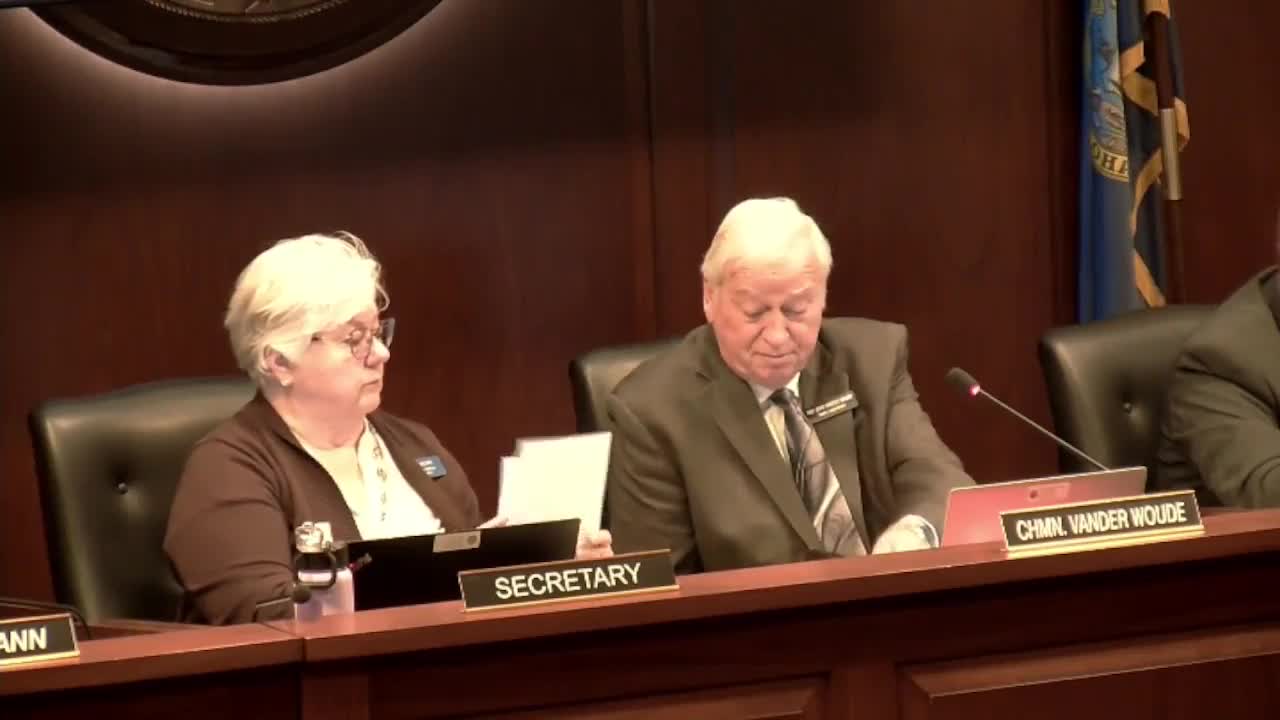
Representative Haley moved to send House Bill 26 to the floor with a do‑pass recommendation. Representative Kaler announced he would vote no, saying he favors reducing the size of government; the committee chair (name not specified in the transcript) recorded an aye. The motion passed and the chair said Representative Scoggs is listed to present the bill on the floor.
Votes at a glance House Bill 26 — Action: Sent to the House floor with a do‑pass recommendation. Motion made by Representative Haley. Representative Kaler recorded a vote of no; the committee chair recorded a vote of aye. The transcript does not list a full roll‑call tally.
Context and next steps The bill would permit the treasurer to contract with an existing national ABLE consortium rather than have Idaho operate a standalone ABLE program. Proponents said that approach lowers costs for account holders and provides oversight; opponents raised concerns about expanding government roles. Committee members were told the Treasurer’s Office would vet any contract with legal review and bring the final arrangements into existing procurement processes. Representative Scoggs is listed to carry the bill on the House floor.