Get Full Government Meeting Transcripts, Videos, & Alerts Forever!
Get email alerts on the Medical Conscience topic
No spam. Unsubscribe anytime.
Welfare Committee advances House Bill 59 to expand conscience protections for health‑care workers after hours of testimony
Summary
The Idaho House Welfare Committee voted to send House Bill 59, the Medical Ethics Defense Act, to the full House with a due‑pass recommendation after more than three hours of testimony from medical professionals, legal advocates and opponents.
The Idaho House Welfare Committee voted to send House Bill 59, the Medical Ethics Defense Act, to the full House with a due‑pass recommendation after more than three hours of testimony from medical professionals, legal advocates and opponents. Representative Bruce Scoggs, the bill sponsor, asked the committee to approve the expansion of conscience protections for health‑care providers and institutions.
The bill would expand existing state protections beyond abortion and end‑of‑life care to cover objections to other procedures and treatments, provide notice requirements and include enforcement mechanisms such as injunctive relief, damages and reasonable attorney fees. Representative Bruce Scoggs of District 10, the bill sponsor, described the measure as one that "protects the conscience rights of healthcare professionals and entities," and said it also "protects them from discrimination when they exercise those rights of conscience." Scoggs asked that the committee recommend the bill "go to the floor with a due pass recommendation."
Why it matters: supporters said HB 59 safeguards clinicians who object on moral, religious or ethical grounds and helps retain and recruit providers; opponents said the measure is broad enough to let nonclinical staff or insurers refuse care or information and could limit patient access, particularly in rural areas.
Proponents' testimony: Catherine Hartley, an attorney with the Pacific Justice Institute, told the committee that "this legislation provides a much needed expansion of conscience rights not provided in current federal or state law," saying the bill would let health‑care workers rely on state law and would protect free‑speech rights tied to professional licensure. Greg Chaffin, senior counsel with Alliance Defending Freedom, said the bill is narrowly focused on procedures and "is about allowing doctors to not be forced into doing a procedure that violates their conscience," and that the text exempts emergency care and allows employers to require advance notice of objections so they can accommodate patients and staffing.
Several clinicians detailed experiences they said show the need for broader protection. Dr. Rodney Story, a family physician from Moscow, recounted leaving a hospital job after being required to participate in a transgender program he could not support and said he has known other clinicians who lost positions or faced administrative discipline for religious practices. Nurse Joy Huffman described staffing losses during the COVID‑19 pandemic and argued that conscience protections help retain providers.
Opponents' testimony: Maddie Tolman of Planned Parenthood Alliance Advocates Idaho urged rejection, testifying that "HB 59 makes it possible for nearly all health care practitioners and even payers to refuse treating someone for any reason" and warning patients may not be notified when a provider or insurer objects. Nixon Matthews, speaking as a patient, said the bill would permit health‑care workers to "take the title but reject the duty" of care and warned of consequences in communities with very few providers.
Committee discussion and legal points: Committee members questioned how the bill would apply to nonprocedural workplace policies (mask or vaccine mandates), prescriptions and pharmacy refusals. Legal staff answering questions said the bill focuses on procedures and treatments rather than ordinary workplace rules, but noted that if a particular vaccine or prescription raised a conscientious objection tied to the nature of the treatment, the bill could be invoked. The bill contains an exception where it "shall not apply if an employee is unable to perform any essential function," and uses an undue‑hardship standard to define when an employer must reasonably accommodate an objection.
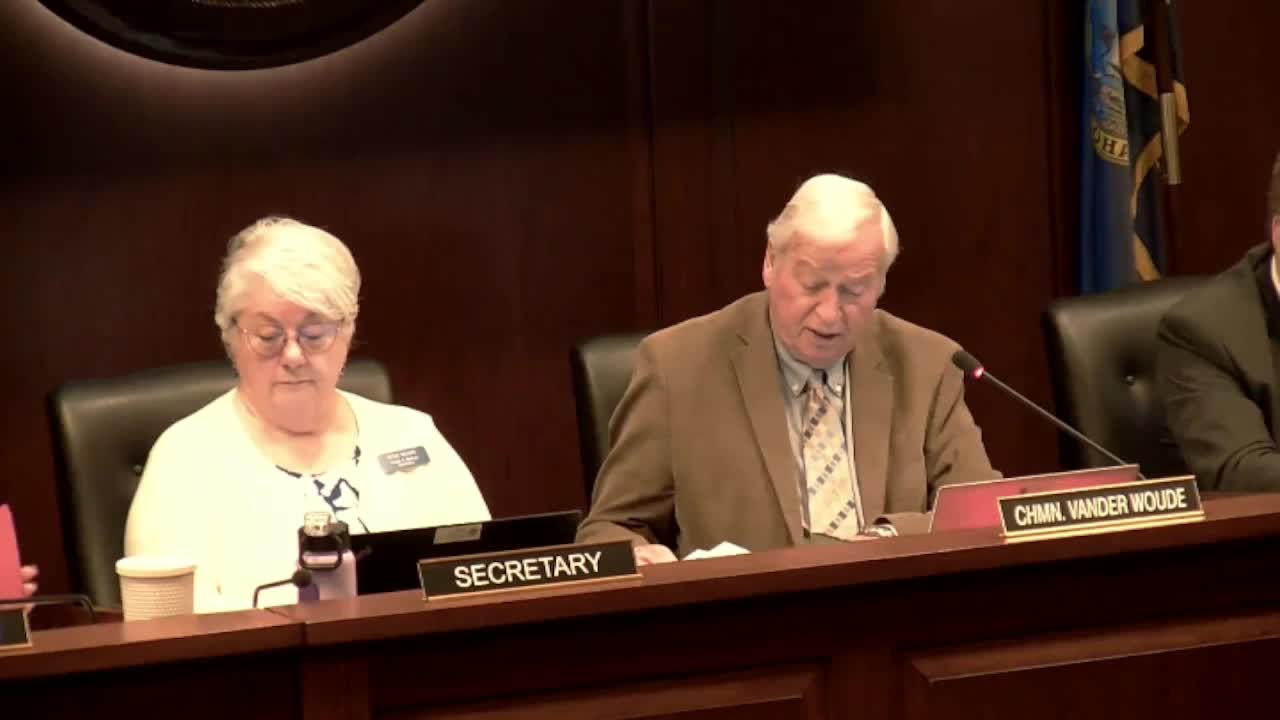
Floor motion and vote: Representative Redmond moved to send HB 59 to the House floor with a due‑pass recommendation. The committee recorded a roll‑call vote: 13 in favor, 2 opposed. Members voting yes included Chairman Van de Wauteau, Vice Chairman Erickson, Representatives Healy, Redmond, Goody, Beissinger, Bergoyne, Kahler, Furnham, Levitt, McCann, Rasor and Thompson. Representatives Rubel and Egbert voted no. The committee chair declared the motion carried and the bill sent to the floor with a due‑pass recommendation.
What the bill would do (as described to the committee): supporters and counsels identified key provisions — it expands conscience protections beyond abortion and end‑of‑life care; it covers institutions and insurers as well as individual clinicians in some circumstances; it includes a private right of action and whistleblower protections; it allows courts to grant injunctive relief and awards of damages and reasonable attorney fees; it exempts emergency care and does not apply when an employee cannot perform an essential function without imposing an undue hardship on the employer. Sponsor Scoggs pointed committee members to specific bill language on page 3, lines 28–36 and page 4, lines 18–22.
Next steps: HB 59 will advance to the full House for consideration. The committee recorded testimony both for and against the bill and highlighted issues lawmakers may address on the floor, including patient notice, the scope of covered personnel, accommodations for rural providers and how undue‑hardship will be applied in practice.
(Reporting based on committee testimony and roll‑call recorded in committee minutes.)