Get Full Government Meeting Transcripts, Videos, & Alerts Forever!
Get email alerts on the Long Term Care Monitoring topic
No spam. Unsubscribe anytime.
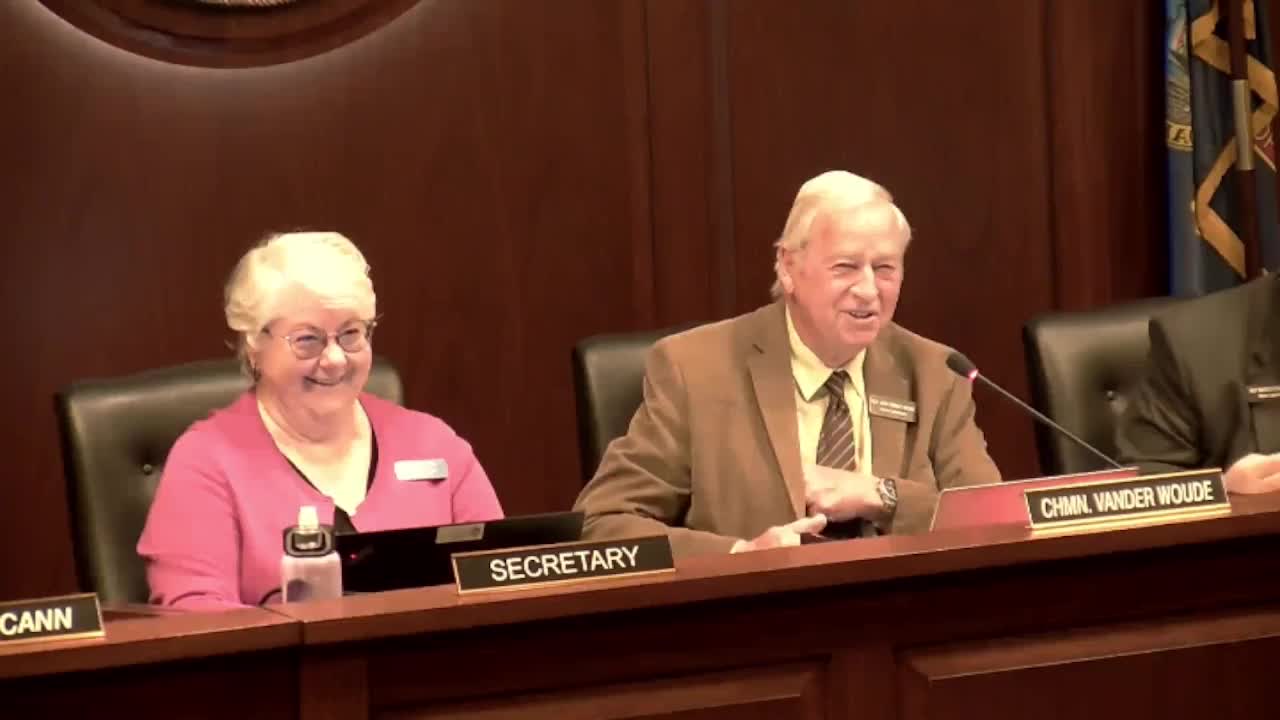
Committee sends bill to allow family-installed cameras in long-term care to the House floor
Summary
The Idaho House Health and Welfare Committee voted to send House Bill 337 to the House floor with a "do pass" recommendation after debating a proposal that would allow residents or their families to install electronic-monitoring devices in private rooms at long-term care facilities.
The Idaho House Health and Welfare Committee voted to send House Bill 337 to the House floor with a "do pass" recommendation after debating a proposal that would allow residents or their families to install electronic-monitoring devices in private rooms at long-term care facilities.
Sponsor Representative Megan Healy, R-District 15, told the committee the bill would "enhance residential safety" and "empower family and residents" by giving loved ones a tool to oversee care when they cannot be present. "It increases accountability and transparency," Healy said, adding that the measure follows similar laws enacted in other states and that it would impose no state cost because families, not facilities, would pay for devices and connectivity.
Supporters and family members told the committee they have used cameras to document problems in care settings. Monte Morland, who said he moved his parents into a memory-care facility in 2023, described putting cameras in his parents' private rooms and later losing that view after staff removed a camera. "This law here in Idaho is for precious mothers like Esther and for all like my parents who need the ones who love them most to watch out for them," Morland testified.
Opponents, including the Idaho Health Care Association, said they support the intent to prevent abuse but not the bill as written. Robert Vandermeer, executive director of the Idaho Health Care Association, said the association cannot "support this bill as written," citing concerns about privacy, footage of residents' intimate body parts, facilities' liability if recordings are leaked, and practical difficulties in ensuring privacy during routine care. He told the committee that federal surveyors and regulators could still hold facilities accountable if abuse is documented on their premises regardless of who owns the footage.
Committee members questioned logistics and safeguards. Healy said the bill places responsibility for equipment and any added Wi‑Fi on families rather than on facilities. The sponsor also said the bill, as written, prevents facilities from viewing recordings unless a resident or family member authorizes access; she said the bill includes a definition for "intimate body parts" and requires that residents who opt for monitoring be placed in single rooms.
Members discussed other safeguards and practical solutions raised in testimony: posting conspicuous notice at a monitored resident's room entrance (the bill allows facilities to post notice), whether technology exists to obscure intimate details on shared footage, and whether facilities should be able to view footage for staff training if families consent. Vandermeer said technology that obscures sensitive details could address some concerns but noted that many decisions—what camera, where footage is stored, and whether to blur images—are controlled by families under the bill.
Representative Wheeler moved to send the bill to the House floor with a "do pass" recommendation. There was no second recorded in the transcript. The committee chair called for the vote; one member verbally responded "Aye," and the chair cast a supporting vote. The chair announced, "Motion passes," and said House Bill 337 will be sent to the House floor with a due-pass recommendation.
The committee record shows the primary policy tensions are (1) families' desire for continuous oversight and a tool to document alleged neglect or abuse, and (2) facilities' concerns about resident privacy, handling of potentially explicit footage, practical privacy measures during routine care and bathing, and potential federal regulatory consequences. The sponsor said she worked with stakeholders on language including single-room placement for monitored residents and a definition of intimate body parts, but facility groups asked for more time to refine technical and liability details.
The bill now advances to the full House for further consideration.