Get Full Government Meeting Transcripts, Videos, & Alerts Forever!
Get email alerts on the Emergency Management topic
No spam. Unsubscribe anytime.
Morgan County adopts updated emergency management plan, approves FEMA salary and hazard-mitigation grant applications
Summary
The Morgan County Commissioners adopted an updated Comprehensive Emergency Management Plan that incorporates about 20 new annexes, approved applying for an EMPG salary-reimbursement grant (about $44,000) and authorized applying for a 2025 Hazard Mitigation Grant to update a hazardous-commodity flow study, particularly around the I‑69 corridor.
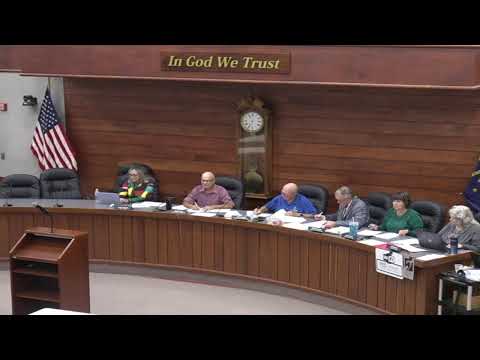
Morgan County Commissioners on Oct. 20 adopted an updated Comprehensive Emergency Management Plan and approved two grant applications intended to support emergency-management staff and hazardous‑materials planning.
The County formally adopted the Comprehensive Emergency Management Plan (CEMP), which staff said was bundled into an executive summary for the board and includes roughly 20 new annexes developed with local public‑safety stakeholders. Commissioners also voted to apply for the Emergency Management Performance Grant (EMPG), a FEMA salary‑reimbursement program for emergency management staff, and to apply for a 2025 Hazard Mitigation Grant to update a hazardous‑commodity flow study for county roadways.
Why this matters: County emergency‑management staff said the updated plan refreshes population and geography data and adds annexes that outline which agencies would respond and what they would do in incidents such as severe weather or flooding. The commodity‑flow update aims to identify hazardous materials moving on major routes — staff cited completion of I‑69 and increased traffic as a reason to refresh prior 2020 work.
Abby, the staff member who presented the package, said the CEMP “is made up of 2 parts,” explaining an overview plan and separate annexes that identify who would report to the Emergency Operations Center and their responsibilities. She told the board the most recent substantial update before this work was in 2018 and that “we've added 20 annexes in the last year and a half.” She said agencies that helped write relevant annexes — including local fire departments, police, school representatives, the Red Cross and hospitals — have adopted those annexes into their own procedures.
On the EMPG application, Abby said the county was approved for “just over $44,000” this year and requested permission to apply to receive that funding for salary reimbursement. On the Hazard Mitigation Grant, Abby said the county received a similar grant in 2020 and now seeks an update “with the completion of I‑69 and the potential for new materials to be moving” on that route to inform future training and exercises.
Actions and votes recorded: the board approved the CEMP adoption (motion by Bridal Collier; motion carried 3–0), approved applying for the EMPG salary‑reimbursement grant (motion by Collier; second by Mr. Adams; motion carried 3–0), and authorized applying for the 2025 Hazard Mitigation Grant to update the hazardous‑commodity flow study (motion made and seconded; motion carried 3–0). Staff said proceeds and study results will be used to support training and exercises for local public‑safety agencies.
What happens next: Staff indicated the county will continue to add and refine annexes as needs arise and that grant applications will move forward per the board’s approvals. The Hazard Mitigation Grant application, if awarded, would fund a countywide update to commodity‑flow data used for planning and emergency exercises.