Get Full Government Meeting Transcripts, Videos, & Alerts Forever!
Get email alerts on the Occupational Licensing Reform topic
No spam. Unsubscribe anytime.
Committee backs occupational‑licensing bill that codifies scope‑of‑practice rules; vote drew dissent
Summary
House Bill 107 would require new licensing and fees to be established by statute or rule and create a "universal licensure" provision clarifying that licensed professionals may perform acts within their education, training and experience; committee sent the bill to the House floor with a due‑pass recommendation after debate and a recorded vote.
Representative Jeff Ehlers, R‑Meridian, and cosponsor Representative Jordan Redmond presented House Bill 107, a multi‑part occupational‑licensing bill that would require new licensure or fee authorities to be established by statute or formal rulemaking and add a statutory provision clarifying that licensed professionals may perform acts within their education, training and experience.
Ehlers described several provisions: prohibiting boards or commissions from creating new licensure requirements by informal policy, requiring fees to be set by statute or rule so they go through public notice, and creating a “Universal Occupation and Professional Licensing Practice Authority” to clarify scope of practice by tying permission to education, training and experience.
Representative Wheeler pressed sponsors on who determines an “accepted standard of care” and whether a national or out‑of‑state standard could influence Idaho license holders. Representative Jordan Redmond replied the licensing boards already evaluate education, experience and training and the bill largely codifies existing practice. Representative Redmond and testifiers said boards would continue to set scope of practice and that the bill adds legislative oversight when a board attempts to impose new licensure requirements without statutory authorization.
Supporters who testified included Kate Haas (Kestrel West, for Cicero Action) and Greg Pfister (FGA Action), both of whom argued the bill would add clarity for practitioners and enforce legislative oversight on licensing boards. Pfister cited national estimates on the cost of licensing and argued the bill ensures taxpayer protection.
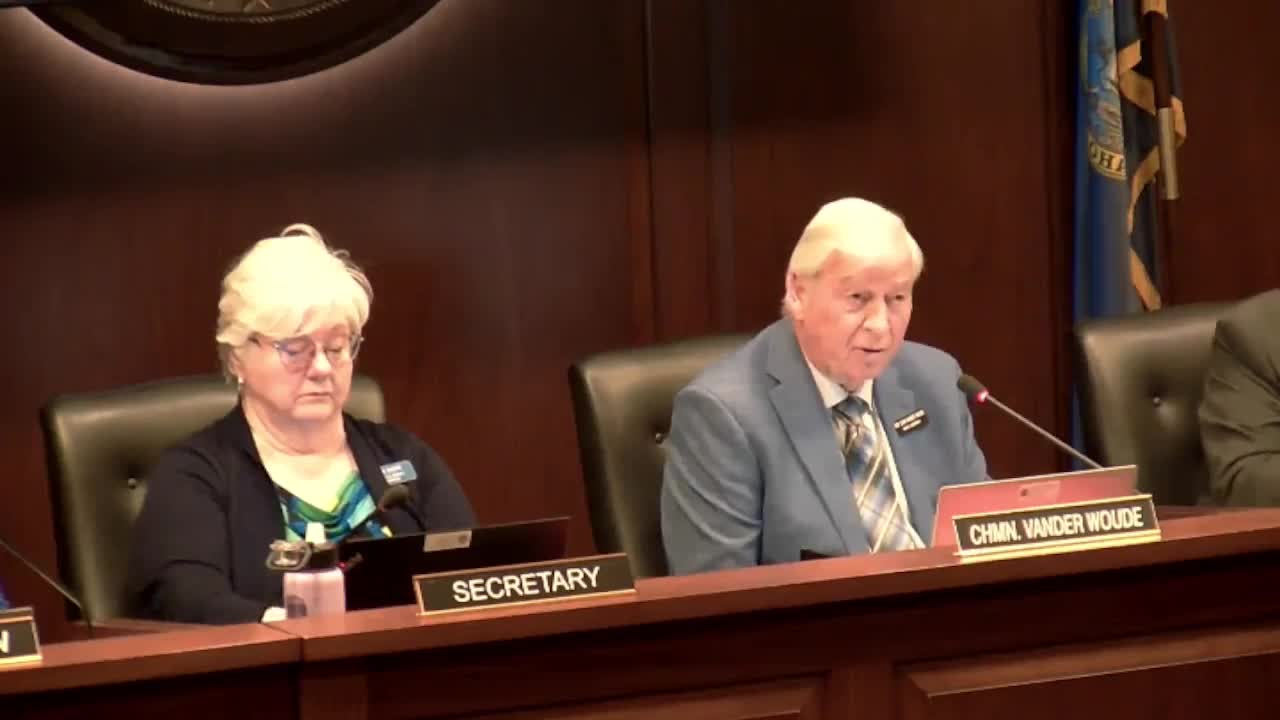
Representative Healy moved to send HB 107 to the floor with a due‑pass recommendation. Representative Wheeler said he would vote no, citing uncertainty about the universal licensure language, but the motion carried after a roll call; the chair announced the motion had passed and the bill will go to the House floor with a due‑pass recommendation.
Committee discussion focused on balancing board authority and legislative oversight, the mechanics of enforcement if a board exceeds statutory authority, and whether the bill could affect professions not under the Department of Professional Licensing (sponsors said teachers and similar certificatory paths are not the intended target). The bill advances to the House floor for further consideration and possible amendment.