Get Full Government Meeting Transcripts, Videos, & Alerts Forever!
Get email alerts on the Administrative Rules topic
No spam. Unsubscribe anytime.
Committee moves temporary-rules bill to general orders after brief debate
Summary
Senate Bill 10-76, which would tighten guardrails for the issuance of temporary administrative rules including cost-benefit analysis and limits on reissuance, was sent to general orders after sponsor testimony and supportive testimony from the Idaho Farm Bureau.
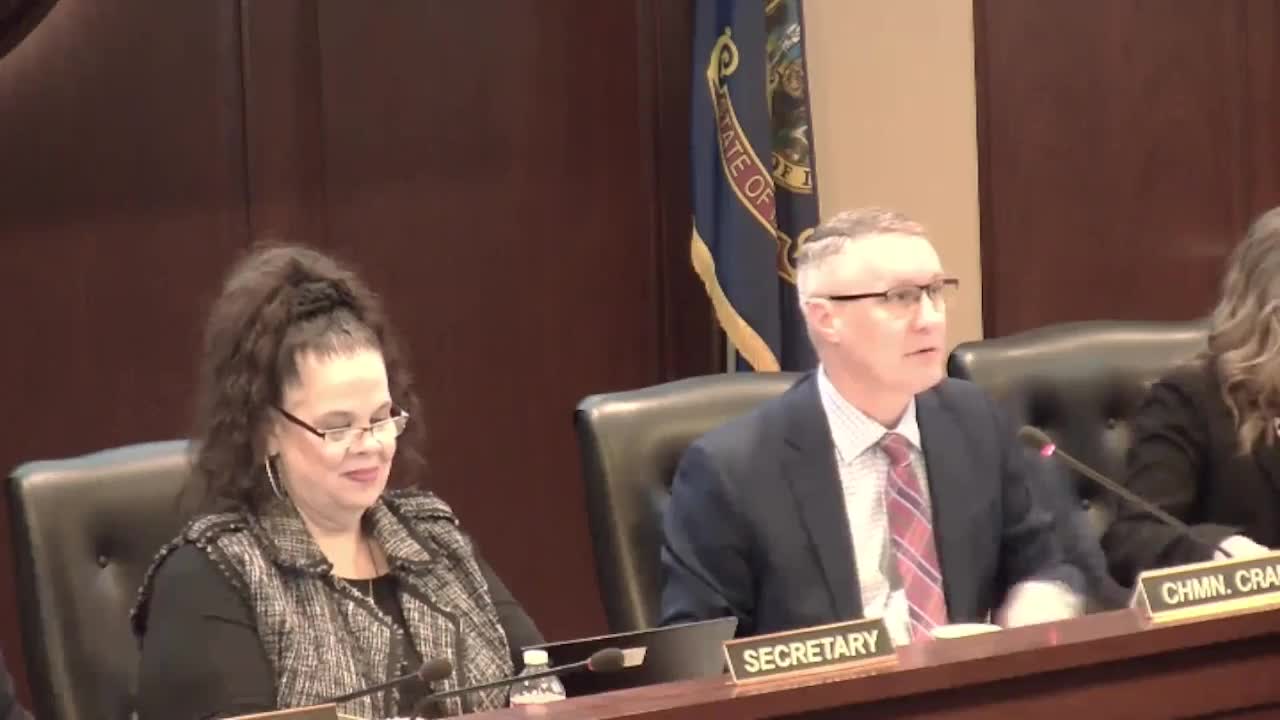
The House State Affairs Committee voted to send Senate Bill 10-76, as amended, to general orders after the bill's sponsor described changes intended to strengthen oversight of temporary administrative rules.
Representative Jeff Ehlers (district 21), presenting the bill, said the proposal clarifies permissible reasons for issuing temporary rules — for example to address an imminent threat, a natural disaster or to protect citizens' rights — and requires officials to issue a statement explaining the need for the temporary rule. The bill would also make temporary rules subject to the economic impact and cost-benefit requirements of Section 67.5223, and would generally bar reissuing substantially similar temporary rules except in limited circumstances, including a demonstrated imminent threat.
Representative Barbieri questioned the bill's 90-day limitation on reissuance and asked whether 30 or 60 days would be more appropriate. Representative Ehlers said he would be open to a friendly amendment shortening the 90-day period if the committee agreed to act quickly.
Russ Hendricks, representing the Idaho Farm Bureau, testified in support and urged the committee to send the bill to the floor with a due-pass recommendation, saying the measure "is just an incremental step to improve the rulemaking process, focusing primarily on temporary rules and narrowing down when temporary rules could be used." Hendricks noted that the 90-day provision is one of several alternatives included in the bill's subsection and that imminent threats remain separately covered.
After brief questions and no extended opposition in committee, a motion to send Senate Bill 10-76 as amended to general orders carried on a committee voice vote.