Get Full Government Meeting Transcripts, Videos, & Alerts Forever!
Get email alerts on the Wildfire Mitigation topic
No spam. Unsubscribe anytime.
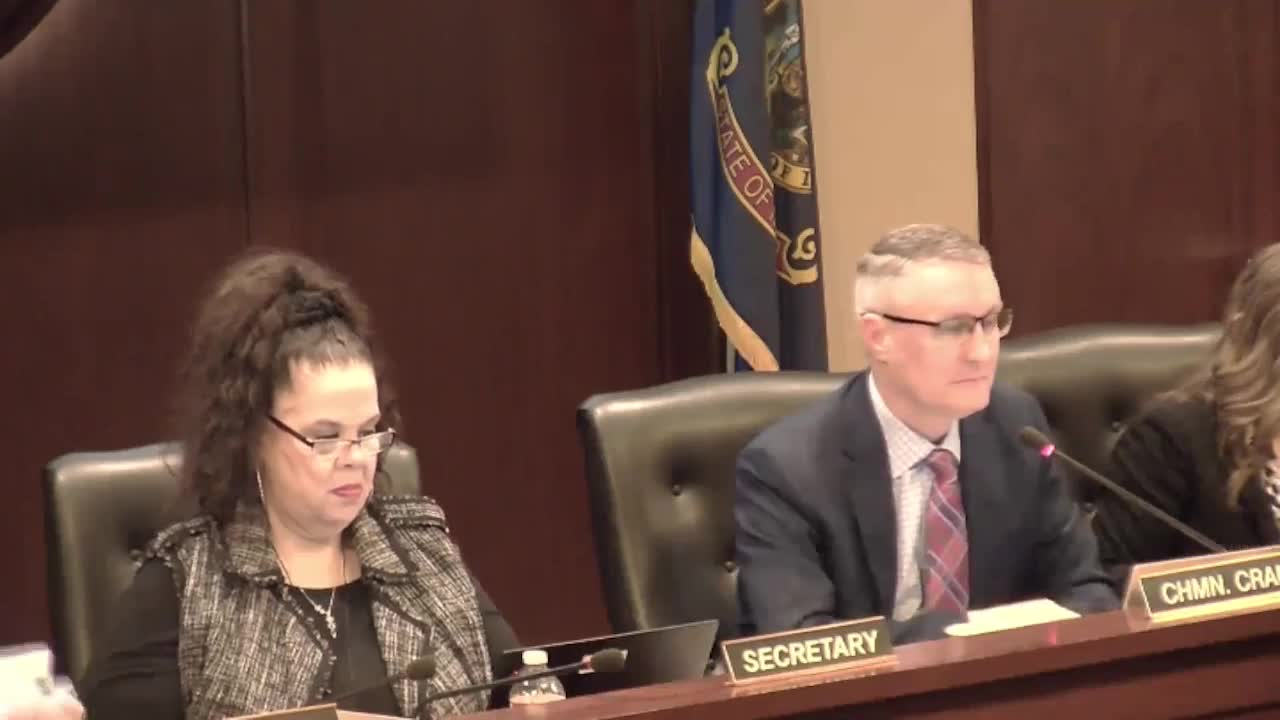
House State Affairs committee sends wildfire 'standard of care' bill to House floor with due-pass recommendation
Summary
The House State Affairs Committee voted to send Senate Bill 11-83 to the House floor with a due-pass recommendation after extended testimony and debate over wildfire mitigation plans, Public Utilities Commission oversight and liability limits tied to a rebuttable presumption for utilities that follow approved mitigation plans.
The House State Affairs Committee voted 11–3 to send Senate Bill 11-83 — described by sponsors as a wildfire "standard of care" measure — to the House floor with a due-pass recommendation.
The bill would require electric utilities that choose to participate to submit wildfire mitigation plans to the Idaho Public Utilities Commission (PUC). The PUC, with input from the State Forester and local stakeholders, would review and approve plans; the measure creates a rebuttable presumption that a utility that follows an approved plan met the applicable standard of care. Testimony at the hearing focused on public review of plans, clarity over who can recover damages after a wildfire, and the effect of liability limits on utility rates.
Representative Judy Boyle, the bill sponsor, said the measure is designed to reduce wildfire ignition caused by power lines: "As we all know, our forests are a mess. . . . When you have electricity and dead trees and brush and grass, you have a recipe for disaster." Boyle told the committee the bill would require utilities to submit plans that the PUC and the Department of Lands would review and that local fire districts would be given an opportunity to comment.
Will Hart, executive director of the Idaho Consumer-Owned Utilities Association (ICUA), said the measure was the product of two years of stakeholder work and called it "a balanced approach." He told the committee that consumer-owned utilities have invested in wildfire mitigation and that the bill would give the PUC explicit authority to set expectations: "If a utility fails to comply with their wildfire mitigation plan, the utility will be held accountable."
Tom Carter, vice president of Rocky Mountain Power, and Gregory Hessler, senior vice president and general counsel at Avista, described wildfire as an "existential" risk to utilities and urged the committee to approve the bill so the PUC review process would be open to public participation and would provide clear standards.
Jen Visser, director of government affairs for Idaho Power Company, asked the committee to review the fiscal note and noted the PUC process is public: "Every docket or decision that is made by the commission is a public process. Wildfire mitigation plans . . . are presently submitted to the commission for, just their review." Visser also clarified distinctions raised during questioning about the bill's liability language and the state's wrongful-death statute.
Opponents and critics urged explicit code references to ensure medical and wrongful-death damages are not excluded. Lance Giles, a contract lobbyist who identified himself as representing the Idaho Bridal Lawyers Association, recommended adding explicit Idaho Code references for medical bills and wrongful death to remove ambiguity. In response, Representative John Shirts and other supporters said the bill already refers broadly to civil actions and that adding specific cross-references could unintentionally narrow who can seek recovery.
Committee members repeatedly questioned how the rebuttable presumption would operate in practice. Supporters said the presumption would allow a judge and jury to determine whether a utility's compliance with an approved plan was sufficient; if compliance were proven and not rebutted, liability would generally fall to insurance rather than ratepayers. If a plaintiff can rebut the presumption and prove causation and negligence, the utility would remain liable.
After roughly two hours of testimony and floor debate in committee, Representative Dygert moved to send the bill to the House floor with a due-pass recommendation. The motion passed on a roll call vote, 11–3; members recorded as voting yes included Chairman Crane, Representative Scott, Representative Palmer, Representative Barbieri, Representative Alfieri, Representative Boyle, Representative Deigert, Representative Mickelson, Representative Pohanka, Representative Achilles and one other; members recorded as voting no included Representative Skog, Representative Hostetler and Representative Leissemeister.
The bill requires participating utilities to file wildfire mitigation plans with the PUC, to provide status reports on implementation, and to allow the PUC (with State Forester input) to set and review standards of care. The committee record and testimony indicate the measure would not automatically insulate utilities from civil liability; rather it establishes a rebuttable presumption tied to compliance with an approved plan and attaches reporting and public-review requirements.
The committee's action moves the bill to the House floor, where further amendment and debate are possible.