Get Full Government Meeting Transcripts, Videos, & Alerts Forever!
Get email alerts on the Adoption Policy topic
No spam. Unsubscribe anytime.
Committee sends resolution seeking federal grant flexibility to support adoption and birth‑mother services to the floor
Summary
Sen. Julie Van Orden’s SCR105 asks that any future federal family‑planning or family‑health grants include allowance for adoption education, birth‑mother support and adoption‑expense coverage; the House Health and Welfare Committee voted to send the resolution to the floor with a due‑pass recommendation.
Senator Julie Van Orden (R.-Dist. 30) presented Senate Concurrent Resolution 105 to the House Health and Welfare Committee, saying the measure asks Congress to ensure that any future federal grants in the “health and welfare space” allow states to use funds for adoption education, adoption awareness, birth‑mother support and adoption‑expense assistance.
Van Orden emphasized the resolution does not request federal funds be sent to Idaho; rather it asks that if federal grants for family planning or family health become available, Congress should permit states to use those funds for adoption‑related services. “We are not asking Congress to send us federal funds. We are asking that if grants become available in the health and welfare space … Idaho would like to see provisions put in there so that those funds may be used for adoption expenses,” Van Orden said.
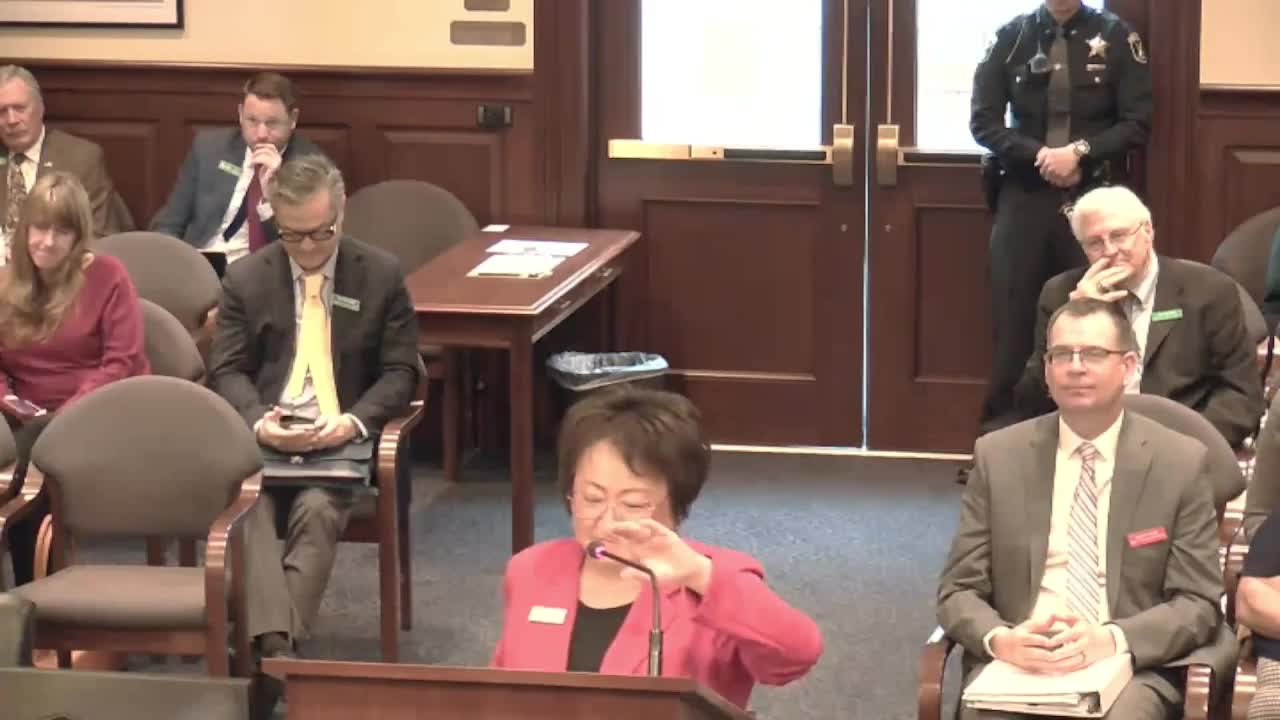
Terry Marcroft, representing the group Unplanned Good, testified in support and described adoption awareness and birth‑mother support as ways to increase the number of families formed by adoption. “The key is… building awareness about adoption as an option, and then taking much better care of the women, the brave women who choose life and then choose parents for their babies,” Marcroft said.
Opponents of relying on federal funding spoke during debate. Representative Levitt moved to hold the resolution, arguing Idaho should favor private charities and nonprofit fundraising rather than seeking additional federal dollars. Several committee members also voiced concern about the phrase “family planning” and the possibility that federal grants could be tied to programs the state would not endorse. Supporters said the resolution merely preserves the state’s option to apply for federal grants that explicitly permit adoption‑related uses.
After discussion and competing motions, the committee sent SCR 105 to the House floor with a due‑pass recommendation. The chair recorded the final disposition: “Senate concurrent resolution 105 will be sent to the floor with a due pass recommendation.”
Why it matters: SCR105 would not itself authorize spending but asks Congress and federal agencies to craft grant terms so states could use potential federal family‑health or family‑planning funds for adoption education, birth‑mother support and adoption expenses. Proponents said that would expand supports for birth mothers and increase adoption options; opponents argued those activities should be funded privately and expressed caution about federal grant strings.
What’s next: SCR105 will go to the full House for consideration as a concurrent resolution asking federal flexibility on grant terms.