Get Full Government Meeting Transcripts, Videos, & Alerts Forever!
Get email alerts on the Health And Welfare Rule Package topic
No spam. Unsubscribe anytime.
Committee approves broad Idaho Health & Welfare rule package, spotlighting foster care changes
Summary
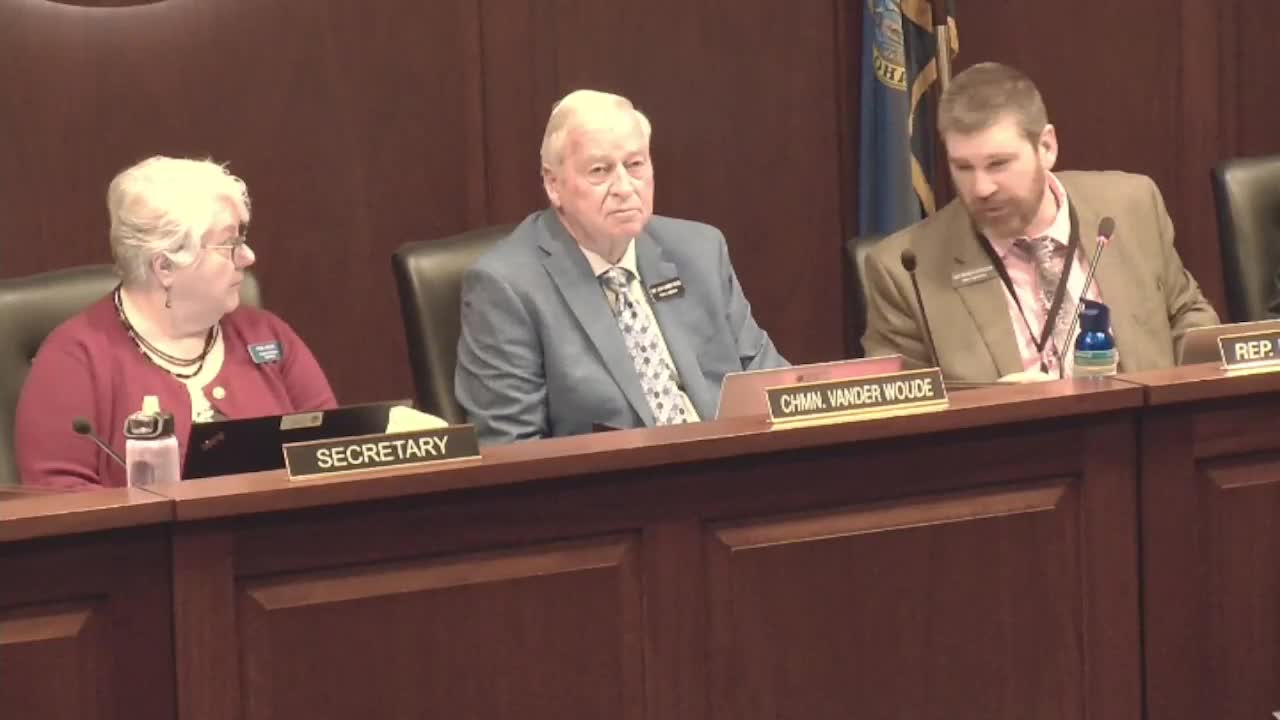
BOISE — The Idaho House Health and Welfare Committee on Oct. 24 approved a sweeping set of administrative rule changes from the Idaho Department of Health and Welfare that the department says will shrink its regulatory footprint, simplify hospital licensing, consolidate emergency medical services rules and alter multiple foster care regulations intended to increase foster-family capacity.
BOISE — The Idaho House Health and Welfare Committee on Oct. 24 approved a sweeping set of administrative rule changes from the Idaho Department of Health and Welfare that the department says will shrink its regulatory footprint, simplify hospital licensing, consolidate emergency medical services rules and alter multiple foster care regulations intended to increase foster-family capacity.
Alex Adams, director of the Idaho Department of Health and Welfare, told the committee he is focusing on “quality over quantity” as the department pares back rules and shifts some decisions back to the Legislature. “One fourth of every administrative rule in the state comes through my department,” Adams said. “I want to start cutting our rules, getting our rules down and I want to start moving those to statutes so that we return the decision making back to the elected lawmakers.”
The committee approved a series of dockets presented by Jared Larson, the department’s legislative and regulatory affairs chief. The measures approved ranged from temporary emergency measures for foster placements to a repeal of the state hospital-licensing chapter that the department says will be replaced by statutory direction and a companion bill. The committee also adopted a consolidated emergency medical services chapter that reduces continuing-education hours to comply with a recently passed state law.
Why it matters: The approved rules package touches child welfare practice (licensing, appeals and visitation), adoption-related procedures, emergency medical services certification hours, and hospital licensing policy. Those changes carry immediate operational effects for foster families and child-protection respondents, and they set the stage for statutory changes the department plans to pursue in the legislative session.
Foster-care changes and safeguards
The committee approved several related dockets that the department described as a coordinated package of temporary and pending rules to increase foster-family supply and clarify administrative procedures.
Adams said the department’s foster-care push is central to his approach. “Where I want to make the biggest difference is for child welfare and foster care specifically. We have a goal of doubling the ratio of foster families relative to the number of foster kids in the state,” Adams said. He told lawmakers that when he took the job the state had “about 74 foster families for every 100 foster children” and that figure has since risen to 94 per 100; the department’s target is 150 foster families per 100 foster children.
Among the rule changes the committee approved: - Crisis-level payments and emergency flexibilities: A temporary rule allows the department discretion to authorize additional, time-limited payments to foster families when shortages require placements of large sibling groups or high-acuity children. Department staff said a previously discussed figure was about $150 per child per day as an emergency supplemental payment; Andy Blackwood, bureau chief with the Department of Health and Welfare, said those supplemental payments would be covered within the department’s current budget allocation and would be used only if needed for particular cases. “This allows us to use existing resources to meet the needs of specific types of families coming in,” Blackwood said. - Administrative-review and central-registry procedures: The rules clarify timing for appeals tied to the Child Protection Central Registry. The department must provide the individual under consideration with the information it relied on within 14 days; the individual then has 28 days to request an administrative review. Blackwood clarified that the 14-day timeline applies to the department’s obligation to provide information and that the 28-day window to begin an appeal is for the person receiving notice. The central registry is a closed registry and information is released only with consent for employment/background checks, the department said. - Visitation safeguards for substantiated parents: A temporary rule requires direct supervision during visits between children and parents who were substantiated at a level that raises child-safety concerns; the rule prohibits unmonitored conversations and forbids the child from sitting on the parent’s lap during visits, the department said. Jared Larson said the changes were driven in part by a division administrator with prosecutorial experience to strengthen protections in visitation settings. - Adoption and kinship steps: Temporary rule language enacted on the director’s first day waives adoption fees for children adopted out of department custody, expands the department’s definition of kin, and can avoid duplicative home-study requirements for families that already had a successful study while the child was in the department’s custody. - Foster licensing rewrite and licensing flexibilities: The committee adopted a repeal/replace of the foster-care licensing chapter that the department said aligns Idaho with the National Model Licensing Standards (sometimes called the “reasonable and prudent parent” model). Changes include moving the minimum age for foster parents from 21 to 18 in limited circumstances (for example, an older sibling who is the best immediate placement), streamlining application timelines, allowing the department to absorb reasonable costs for home modifications (smoke detectors, fire extinguishers) and creating an expedited pathway for previously licensed foster parents who want to reactivate a license without repeating all pre-service training. - Household-background checks and safety items: The enacted rules continue to require background checks for household adults, but the timing in some sections permits a check within a short period after an adult moves in (“by the next working day” in the adopted text). Lawmakers raised concerns about that timing during the hearing, and department staff offered to work with members on improvements. The rules also adopt requirements from the national model for firearms and ammunition: firearms must be locked and ammunition stored separately (for example in a locked box); department staff said they allow flexible methods (a locked box with key or combination lock) rather than mandating a particular brand or type of safe.
Lawmakers pressed department staff on due-process protections around placement on the Child Protection Central Registry, the short timelines for document submission and what options exist if a person misses a filing window. Blackwood said the department certifies registry notice by mail and provides forms and phone contact information; she said the department would need to check with legal staff about remedies after the 28-day window.
Hospital licensing: repeal and planned statutory approach
The committee voted to repeal the rule chapter that previously regulated hospital licensing in Idaho and accepted the department’s plan to address hospital licensure through a Senate bill that would recognize hospitals licensed by the Centers for Medicare & Medicaid Services (CMS) as licensed by the state. Jared Larson told the committee the department is constrained by federal rules — it cannot be less strict than CMS and federal law limits additional requirements — and that the repeal plus a statutory fix is intended to streamline state regulation and eliminate duplicative oversight. Laura Studi, identified as a bureau chief, was available as the subject-matter expert on specifics.
Emergency medical services consolidation and continuing-education changes
The committee approved a consolidated EMS chapter that combines multiple existing chapters into a single set of rules and reduces continuing-education (CE) hour requirements to align with House Bill 704 from the previous legislative session. Jared Larson said the consolidated chapter lowers CE hours for specified provider levels to match the average of contiguous states; the department provided the following stated changes: - Emergency medical responders: from 8 to 5 hours; - Medical technicians: from 16 to 12 hours; - Advanced emergency technicians: from 27 to 20 hours; - Paramedics: from 36 to 30 hours. Wayne Denny, EMS bureau chief, was present as the subject-matter expert during the discussion.
Votes at a glance
The committee recorded motions and approvals on the dockets below. Where the transcript did not record a named roll-call tally, the committee recorded the motions as moved and carried on voice vote. (When a specific member is recorded as making the motion in the transcript, that member is listed as the mover.)
- Docket 1603142401 (hospital licensing repeal/replace): motion to adopt moved by Representative Redmond; outcome: approved. - Docket 1606012402 (children & family services — temporary rule: crisis-level placement/central registry procedures): motion to approve moved on the floor; outcome: approved. - Docket 1606012403 (children & family services — adoption/kinship/adoption-fee waivers): motion to adopt; outcome: approved. - Docket 1606012404 (visitation safeguards for substantiated parents): motion to approve moved by Representative Fuhrman; outcome: approved. - Docket 1606012405 (children & family services rewrite and ZBR reorganization): motion to adopt moved; outcome: approved. - Docket 1606022401 (foster-care licensing temporary repeal of old chapter): motion to adopt moved by Representative Rabell; outcome: approved. - Docket 1606022402 (foster-care licensing replacement — prudent parent model, minimum age changes): motion to adopt moved; outcome: approved. - Docket 1606022403 (reactivation of prior foster parents): motion to adopt moved; outcome: approved. - Dockets consolidating and repealing EMS chapters (including docket 1601012401 and related repeals): motions to adopt; outcome: approved. Committee members cited HB 704 compliance for the CE-hour reductions.
(Several other rule-chapter repeals and consolidations connected to the consolidated EMS chapter and other previously published chapters were also moved and carried during the same hearing. The committee secretary confirmed that motions and approvals were recorded for the listed dockets on the hearing agenda.)
What the department said about impact and next steps
Adams told the committee the department intends to “cut about 200 pages of rules” this session and to introduce bills to move many rule provisions into statute. Jared Larson said some hospital licensing issues will be handled by a companion Senate bill that the department will file. Department staff committed to follow up with committee members on data requests — for example, the foster-parent survey results and clarifications about consolidated placement and adoption sections — and said they would work with legislators who raised concerns about timelines for background checks and registry procedures.
Ending
The committee adjourned after completing the agenda and said it will resume rule review the next day. Members of the committee and department staff encouraged legislators to raise questions ahead of the next hearing so subject-matter experts can prepare specific citations and back-up material.
Sources: Committee hearing transcript; statements on the record from Alex Adams (Director, Idaho Department of Health and Welfare), Jared Larson (Legislative and Regulatory Affairs Chief, Department of Health and Welfare), Andy Blackwood (Bureau Chief, Department of Health and Welfare), Julie Sepcak (child-welfare program manager), Wayne Denny (EMS bureau chief) and other committee members.