Get Full Government Meeting Transcripts, Videos, & Alerts Forever!
Get email alerts on the K12 Budgeting topic
No spam. Unsubscribe anytime.
Legislative fiscal staff outline K‑12 funding basics, highlight enrollment and formula pressures
Summary
Jared Tatro of the Legislative Services Office briefed the House education committee on K‑12 budget drivers: enrollment and average daily attendance, support units, major funds (general, dedicated, federal/ARPA), statutory formulas, and pending enhancement requests including weighted student funding and transportation formula rewrite.
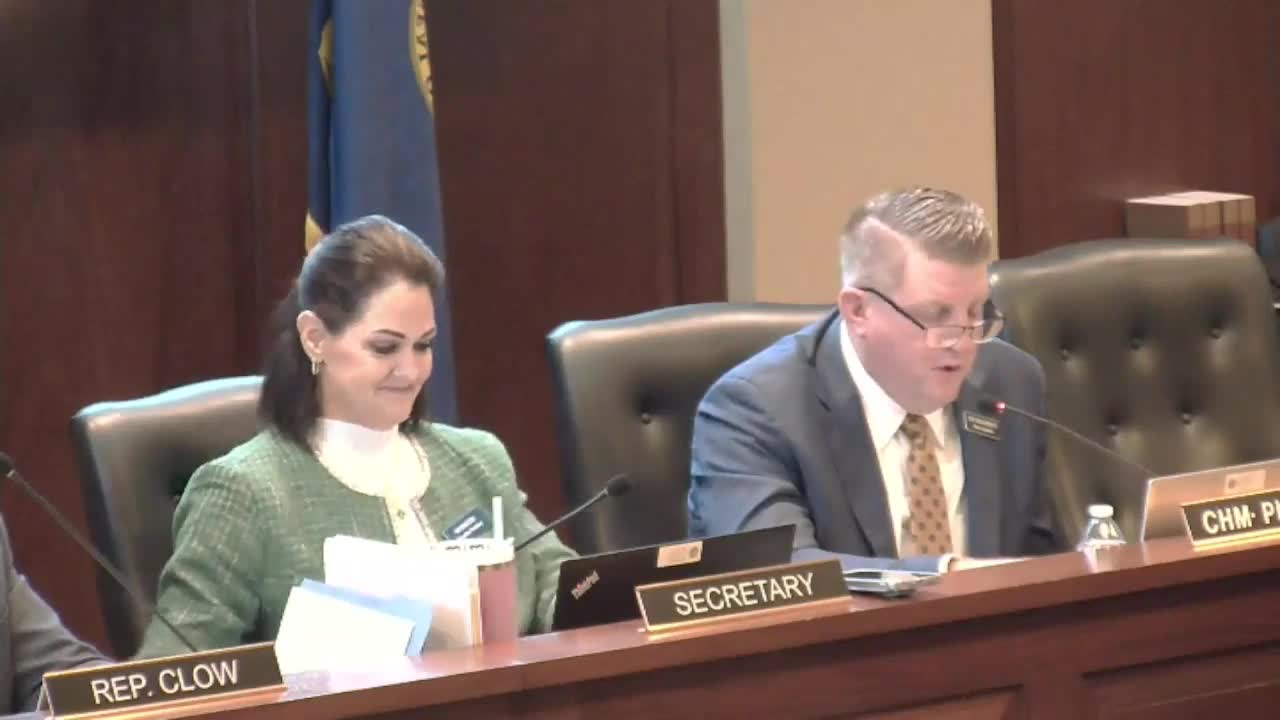
Jared Tatro, deputy division manager in the Legislative Services Office, briefed the House Committee on Education on Feb. 13 on how Idaho’s K‑12 funding works, the key drivers of cost and recent pressures that could alter district budgets.
Tatro told the committee the state’s estimated enrollment for the current school year is about 314,100 students; midterm average daily attendance (the attendance measure used to calculate funding) was about 295,400 — roughly 94% of enrollment. He reported 15,875 support units in the current midterm calculation and said the current year appropriation for public schools is roughly $3.3 billion, of which about $2.6 billion comes from the state general fund. Federal funds were listed at roughly $251 million plus $99 million in ARPA funds (one‑time funding that is scheduled to expire).
Tatro emphasized the distinction between enrollment and average daily attendance, noting that “during the 3 years of COVID, the rule was adopted that was a hybrid between attendance and enrollment” and that returning to a pure average daily attendance calculation has produced larger funding effects than anticipated in some districts. He also explained support units and divisors — the statutory tables that translate attendance into the number of funded classroom units — and reminded members that most K‑12 dollars “need a vehicle” in statute or the appropriation bill to be distributed to districts.
On program maintenance and early JFAC decisions, Tatro said the Joint Finance‑Appropriations Committee had approved program maintenance adjustments including $24 million for personnel benefit cost increases and an $84.7 million change‑in‑employee‑compensation package that the committee calculated as a 5% increase for administrators, classified and instructional staff. He identified the superintendent’s top enhancement requests — a weighted student formula, a rewrite of the transportation formula, and a special‑needs student fund — and noted each would require germane legislation.
Committee members asked timing questions about when districts receive final budget information. Tatro said districts typically cannot finalize contract decisions until the legislature’s appropriation is signed into law but can estimate based on committee actions; districts were likely to know firm numbers only after adjournment and signing. He also reiterated that one‑time federal funds are phased out of base budgets by design, and that public education stabilization funds exist to smooth shortfalls if statutory distributions under current law do not match appropriations.
The briefing included statutory references (Title 33, Chapter 10 and related sections) and resources Tatro said legislative staff provide to members, including the annual legislative budget book, fiscal source book and public session records. Members asked follow‑up questions about how the career ladder is funded, charter school special‑education support needs, and whether changes to enrollment or attendance policy would be considered; Tatro noted those are policy decisions the committee must weigh in the session.