Get Full Government Meeting Transcripts, Videos, & Alerts Forever!
Get email alerts on the Student Phones In Schools topic
No spam. Unsubscribe anytime.
House education committee introduces bill asking districts to adopt local cell‑phone policies
Summary
The Idaho House Committee on Education voted to introduce RS32063, a one‑paragraph draft that would require school districts to adopt a written cell‑phone or electronic device policy by Aug. 1 and include confiscation/return procedures; members debated device definitions, special‑education and medical exceptions, and local control.
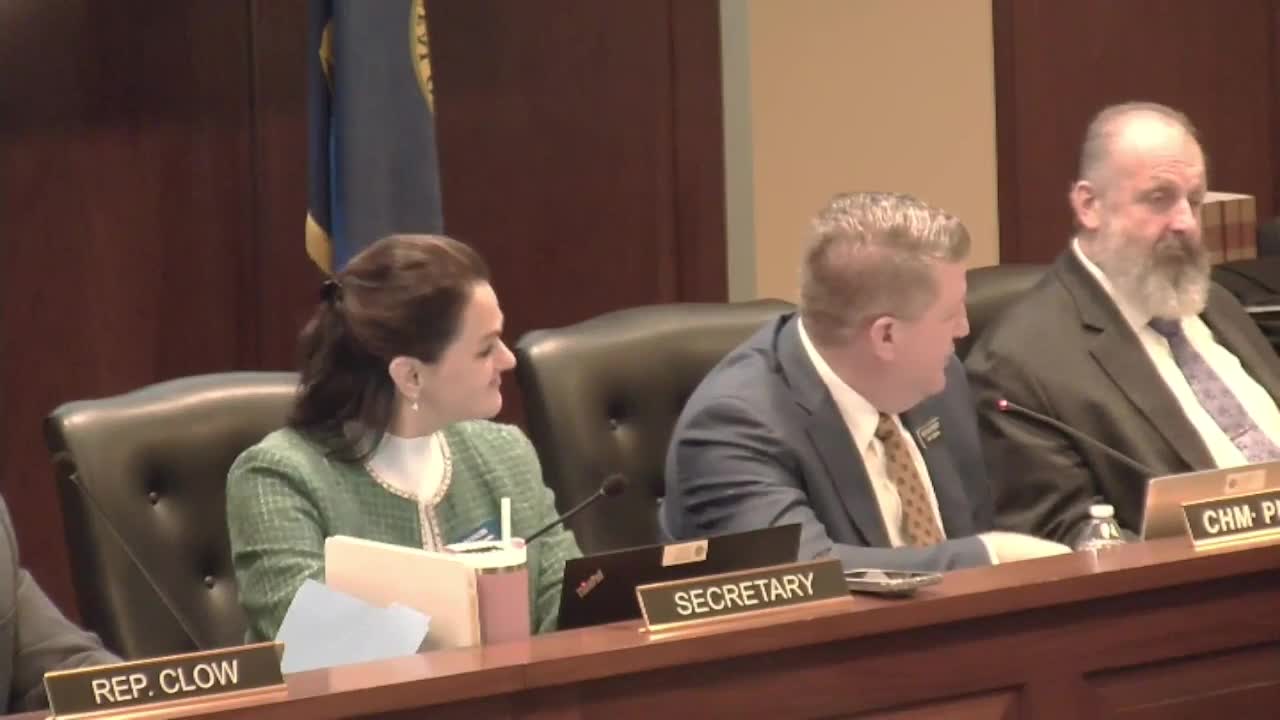
The Idaho House Committee on Education on Feb. 13 voted to introduce RS32063, a draft that would require each school district to adopt and publish a local policy on student cell phones and other wireless electronic communication devices by Aug. 1.
The bill, presented by Representative Jaren Crane, would direct districts to have the policy approved by their board of trustees and “shall be included in the school district’s written conduct standards manuals,” and would require districts that confiscate devices to specify how confiscated items will be returned to students. Crane summarized the core restriction this way: “At a minimum such policy shall prohibit the use of wireless electronic communication devices in classrooms during the periods of academic instruction. It's that simple.”
Committee members repeatedly pressed on the language’s scope and exceptions. Representative Harris asked whether parental notification or involvement should be required for repeat offenses; Crane said he left that to local control so districts and parents could address on‑call needs or medical exceptions. Representative Garner asked how the ban would affect students protected under Section 504 plans or individualized education programs; Crane affirmed he wanted districts to handle those cases locally. Representative Nelson warned the phrase “wireless electronic communication devices” could be read so broadly it would ban district‑issued tablets or other classroom technology and urged careful drafting before a final print. Representative Green pointed to the bill’s definition language to argue that the measure narrows to “cell phones” by defining electronic devices as those that can be used to wirelessly communicate with another person.
Representative Hawkins moved to introduce the RS; the committee approved the motion. When the committee recorded nays, Representative Plough, Representative Nelson and Representative Wisniewski asked to be recorded as voting nay. The motion carried and RS32063 will be printed for public review and possible future hearing.
The draft cites no fiscal note and, as Crane emphasized, permits local boards to tailor policies for rural districts and students who need access for medical or on‑call duties. Committee discussion focused on whether the bill’s current language needs amendment to preserve district‑issued instructional devices, define permissible exceptions for special‑education or medical needs, and clarify parental notification procedures for repeat confiscations.