Get Full Government Meeting Transcripts, Videos, & Alerts Forever!
Get email alerts on the Legislative Audits topic
No spam. Unsubscribe anytime.
Legislative auditors report many recent findings; single-audit delays tied to new accounting system
Summary
The Legislative Services Office audit division briefed the Joint Finance and Appropriations Committee on Jan. 7 about uncorrected findings, common audit problems and delays in statewide financial audits tied to a new accounting system and late submission of financial statements.
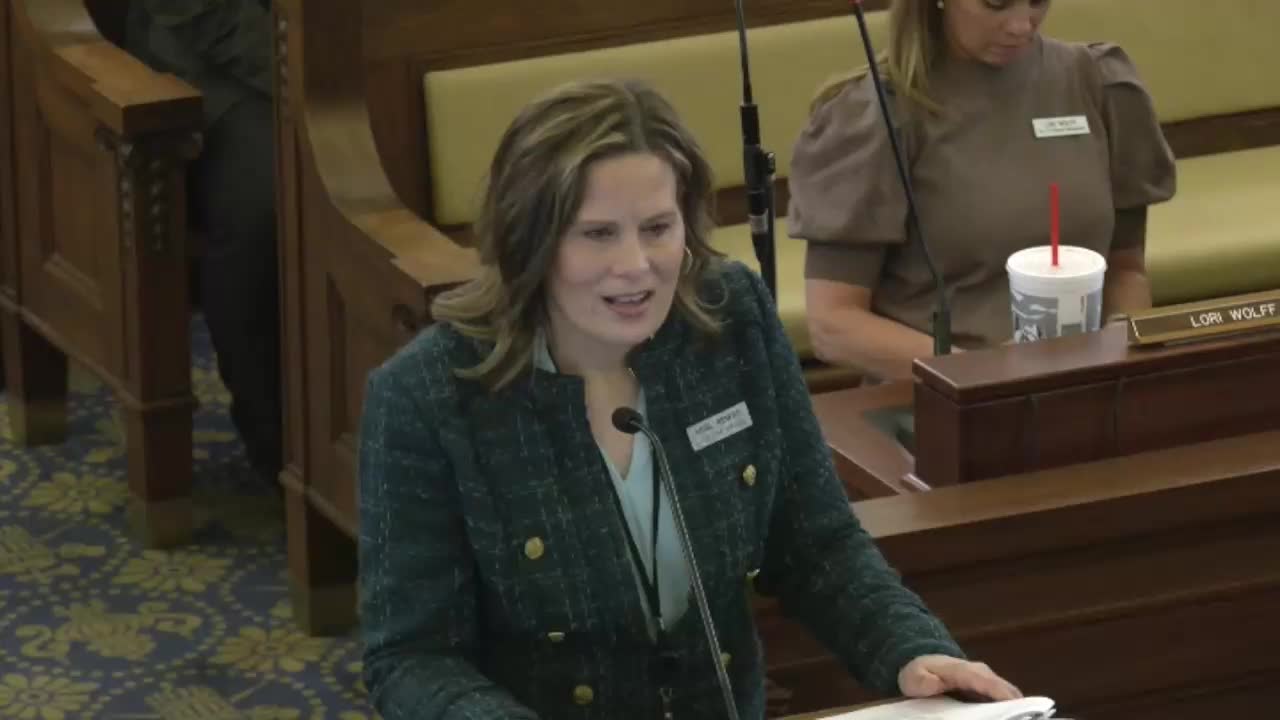
April Renfro, director of legislative audits at the Legislative Services Office, told the Joint Finance and Appropriations Committee on Jan. 7 that the office is focused on increasing transparency and accountability and that the audit staff is stretched but actively following up on findings.
Renfro said the audit division currently has 30 financial and IT auditor positions and one administrative assistant. “We currently have 30 financial and IT auditor positions,” she said, and noted there are a few openings the office is trying to fill. She described the audit office’s statutory responsibilities, including auditing the annual comprehensive financial report (ACFR) and preparing a statewide single-audit schedule of federal expenditures.
The auditors are required to present an annual report of uncorrected findings. Renfro said roughly 70% of the findings shown in the report are from the current reporting period and thus have not yet had follow-up testing; roughly 30% are older findings that entities have not corrected in a reasonable time. She said the office plans about 28 reports a year, including opinion audits of the ACFR, single-audit work and about 21 accountability reports.
Renfro highlighted several types of recurring problems in accountability and opinion audits: weak internal controls, noncompliance with statutes or rules, substantive errors in financial reporting and systemic information-technology control weaknesses. As an example of a control and documentation issue, she described a Fish and Game finding that a 2020 accountability report showed travel expenditures were not documented according to state travel policy; the agency’s attempts to fix the problem were only partially successful and follow-up work remained pending.
Renfro also described findings with more direct program impacts. In the Department of Health and Welfare’s 2023 accountability report the audit team tested 19 qualified residential treatment program (QRTP) placements for foster youth and found multiple documentation gaps: 10 lacked required placement assessments, about 21% lacked a court order the auditors could locate, 84% did not retain the notice of placement with the court that identifies placement date and recommended level of care, and 42% lacked required 30-day case consultations. Renfro characterized the gaps as arising primarily from inconsistent application of internal controls and document-retention practices.
On timing, Renfro said the auditor’s office normally completes the ACFR audit after receiving draft financial statements from the state controller’s office; that audit opinion is typically due 60 days after the opinion is issued and the single audit is typically due by March 31. This year, she said, the state controller provided draft financial statements very late — she said the auditors did not receive them until Dec. 30, which delayed the audit timeline. “We did not receive them until December 30,” she said, and the office estimates it may finish the ACFR audit in March. The late delivery also makes meeting the March 31 single-audit deadline unlikely, she said, and she plans to notify the federal cognizant agency about the delay.
Committee members pressed about consequences and agency responses. One co-chair said the committee must treat audit findings seriously because “if they can’t correct them … it questions how much more we’re gonna give to them.” Renfro and committee members discussed reasons findings remain open — some require legislative or policy changes, some need more training or paperwork, and some require additional follow-up testing.
Renfro said auditors follow standards that require testing of corrective actions and will escalate matters where agencies either disagree with findings or fail to fix documented deficiencies. She told the committee there were rare cases where findings led to criminal investigations but that most problems relate to controls, documentation or training.
The auditors’ uncorrected findings report was sent to the JFAC co-chairs before the meeting and will be distributed to members. Renfro said the division will continue follow-up testing, issue annual updates for accountability reports at 90-day and annual intervals, and work to complete the ACFR and single-audit reports now delayed by the late submission of financial statements.