Get Full Government Meeting Transcripts, Videos, & Alerts Forever!
Get email alerts on the Medical Education topic
No spam. Unsubscribe anytime.
House panel advances bill to end WWAMI ties and direct new medical education partnerships and timelines
Summary
The House Education Committee voted to advance House Bill 176 after hearing competing testimony on whether Idaho should phase out statutory ties to the WWAMI medical-education arrangement and direct the State Board to designate new program partners and timelines for Idaho-centered clinical training.
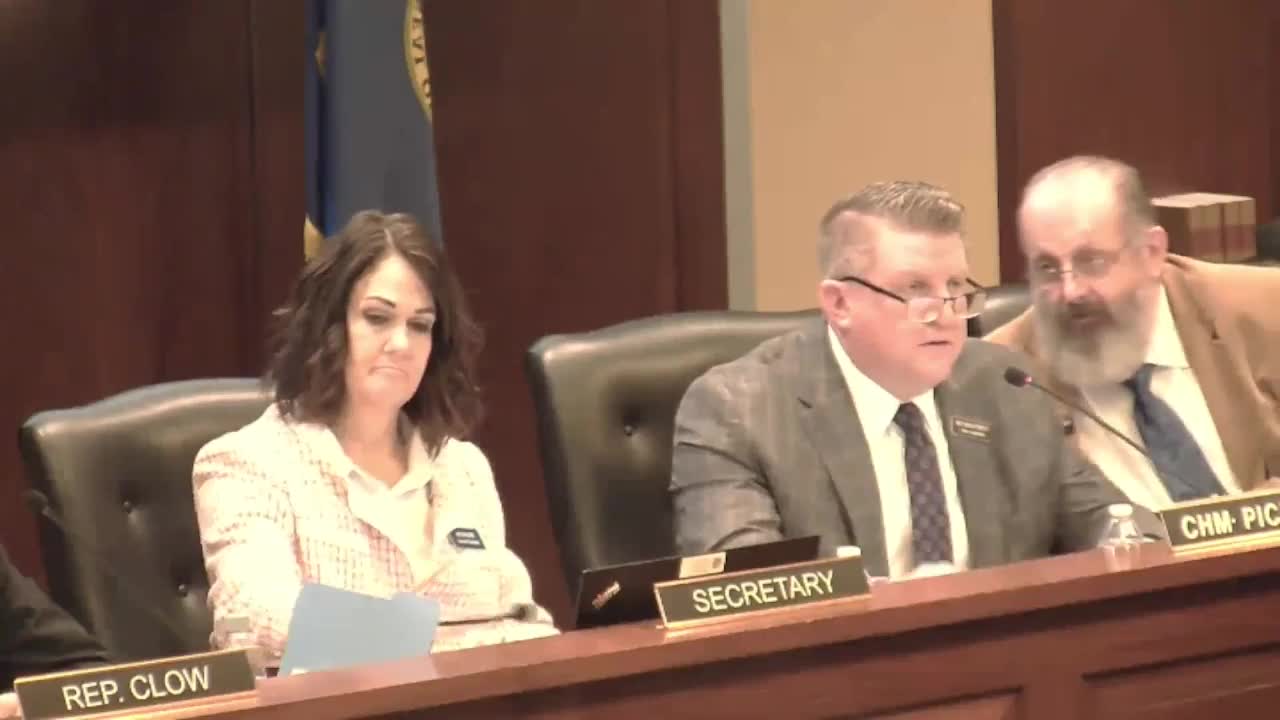
The House Education Committee voted to send House Bill 176 to the floor with a "do pass" recommendation after a contentious hearing with more than a dozen witnesses for and against the measure.
Rep. Dustin Manwaring, sponsor of HB 176, said the bill would phase out Idaho's reliance on the WWAMI regional medical-education arrangement and direct the State Board of Education to designate at least two medical-education programs in Idaho or adjacent Mountain Time Zone states. Manwaring said the change is intended to increase capacity, keep more state investment in Idaho and to boost the number of Idaho-trained and Idaho-retained physicians. "Idaho does not have its own state run medical school," Manwaring told the committee, and lawmakers should give direction to universities and the State Board about the state's priorities.
Under the bill text described by Manwaring, no further slots may be reserved for Idaho students in the WWAMI program after the 2026-27 academic year; current students would complete their training and continue to receive state support. The bill would require that, by the 2029-30 academic year, a majority of clinical training for Idaho students be provided in Idaho. The measure also sets a maximum of 60 program seats (Manwaring said Idaho currently runs 40 slots at the University of Idaho, and the University of Utah has had 10 Idaho seats), with a pathway to expand clinical placements and residency positions inside Idaho.
University of Idaho faculty and administrators testified they could run the first two years of preclinical curriculum on the Moscow campus and seek a new out-of-state partner for the clinical phase. Dr. Rusty Baker, who identified himself as a University of Idaho faculty member involved in the program, said the university currently supports 160 students in the combined program (about 80 in the first two preclinical years in Moscow and about 80 in clinical phases) and that the university's students perform highly on licensing exams. "We now have 160 students in the program. 80 are in the first two years at the University of Idaho and 80 are in the clinical phase that is administered by the University of Washington," Dr. Baker said.
Dr. Ben Chan of the University of Utah joined by phone and described Utah's experience and capacity. "Our match rate is currently 97 percent," he told the committee, and he highlighted Utah's regional clinical network, residency programs and recent collaborations with Idaho State University to create psychiatry training in Idaho.
Supporters of HB 176 framed the bill as a way to retain more state funds and expand Idaho-based clinical training. Manwaring provided a two-party funding snapshot he said shows roughly $4,450,000 flows to the University of Idaho and $9,380,000 to the University of Washington for the same block of student slots; he said a shift to a Utah partnership would flip that distribution so more state money remained in Idaho.
Opponents — including current WWAMI students, University of Washington faculty and many Idaho clinicians — warned the bill could disrupt decades-built clinical training relationships, reduce rural training time, and weaken residency pipelines that help keep physicians in Idaho. Dr. Suzanne Allen, vice dean for academic rural and regional affairs at the University of Washington School of Medicine, said UW does not use Idaho funds for abortion care or training and that the university is working to expand clinical-capacity inside Idaho but needs time and clinical sites to do so.
The committee debated procedural alternatives, including a motion to hold the bill until Feb. 19 which failed on a tie, and a later motion to hold that also failed. Representative Ehart moved that the committee send HB 176 to the floor with a "do pass" recommendation; after roll call the committee voted 9 to 5 in favor, advancing the bill. The transcript records multiple roll-call and voice votes on substitute and holding motions before the final vote was taken.
The bill drew dozens of short public-testimony appearances both for and against, with testimony from University of Idaho and University of Washington faculty, Idaho clinicians, current WVAMI students, and stakeholders representing family-medicine organizations. Several witnesses said the proposal must be paired with a concrete plan to expand residencies in Idaho; sponsors said the bill requires clinical capacity and residency expansion inside Idaho as part of the transition.