Get Full Government Meeting Transcripts, Videos, & Alerts Forever!
Get email alerts on the State Parks Budget topic
No spam. Unsubscribe anytime.
Idaho Parks seeks pay fixes, program consolidation and capital work including Heyburn marinas
Summary
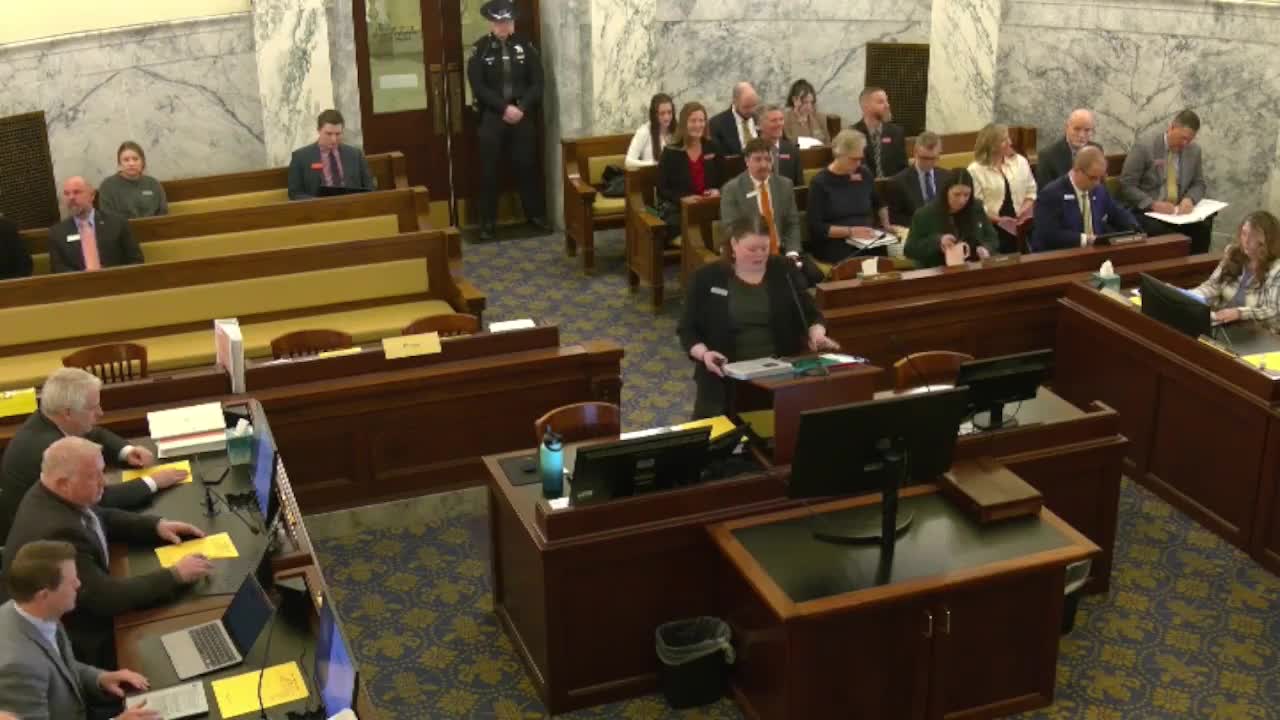
The Idaho Department of Parks and Recreation told the Joint Finance Corporation Committee on Oct. 24 that it seeks targeted salary changes for seasonal workers and rangers, a consolidation of management and operations programs, and capital projects including marina replacements at Heyburn State Park.
The Idaho Department of Parks and Recreation told the Joint Finance Corporation Committee on Oct. 24 that it seeks targeted salary changes for seasonal workers and rangers, a consolidation of management and operations programs, and capital projects including marina replacements at Heyburn State Park.
Janet Jessup, a budget and policy analyst with legislative services, opened the agency presentation and noted the department administers 30 state parks and trail systems and was established by the legislature in 1965. Director Susan Buxton said parks face pay “compression” — long‑time employees paid near recent hires — and described the department’s request to use dedicated fund authority to restore step differences and address compression for managers and rangers.
Why it matters: Parks staffs and managers said they need pay adjustments to remain competitive with other agencies and private employers and to avoid hiring new employees at wages equal to or above long‑tenured staff. Director Buxton told the committee that many park positions require science and technical training and that “it really is a a ministerial request” to consolidate programs so the agency can manage revenues and expenditures more simply.
Key details: The department said it is allocated about 190.8 full‑time positions and that most appropriations for capital projects are one‑time in nature. Buxton described two targeted enhancements in the 2026 request: raising seasonal employee pay from $12 to $15 an hour and implementing a tiered ranger compensation program to address compression among ranger and management ranks. Buxton said the seasonal program hires about 300 seasonal employees each year and relies on more than 500 volunteers. Human resources officer Jennifer Quindell Miller told the committee managers “do have the ability to pay between 12 and 15, but we are looking at having to push that higher” for recruitment in resort and remote locations.
Committee members asked for more precision on seasonal pay and implementation. Representative Tanner noted several incremental appropriations over recent years and questioned whether the effective pay floor is now closer to $13.50–$15; Buxton and HR staff said local recruiting pressures vary by location and that in some resort areas wages must be higher than $15. Buxton also noted seasonals do not receive the Classified Employee Compensation (CEC) adjustments and that the agency intends to use dedicated funds for these increases.
Capital and maintenance: Jessup highlighted that parks received a large one‑time appropriation in 2023 for deferred maintenance; expenditures can span multiple fiscal years and dedicated funds are often restricted to specific uses, causing apparent lapses between appropriation and spending. Buxton identified sizable capital outlay requests for Bear Lake (Fish Haven) improvements and Lake Cascade; the governor’s recommendation included the agency’s full capital requests. Buxton also described planned replacement of two large marinas at Heyburn State Park — Rocky Point and Chatcolet — noting the project will add slips and that the Coeur d’Alene Tribe has contributed to planning and design. Buxton said the marinas’ replacement work is funded in part by prior appropriations and tribal contributions and that earlier assessments and designs were paid for by the tribe.
Equipment and programs: Troy Elmore, operations administrator, said the department will buy a compact wheel loader paid from the snowmobile sticker fund to clear parking lots at snowmobile staging areas; counties operate the grooming program and the department owns grooming equipment. Elmore said the new loader would cover about one‑third of the snowmobile grooming program parking lots and that about 27 county programs exist statewide.
Requests and next steps: The department also asked to consolidate management services and park operations into a single budgeted program to simplify oversight; Jessup characterized that consolidation as netting to zero for total appropriation and described it as largely administrative. Committee members requested more detailed, written information on deferred maintenance projects and status, and Buxton said the agency had included a detailed project list in its packet and would provide additional materials on request.
Buxton closed by thanking committee members for prior appropriations and reminding the panel that many funding items are one‑time and will show up as lumpy spending across fiscal years. She offered to provide further details on individual projects and staffing analyses.
Ending: Committee members requested follow‑up documents on deferred maintenance and seasonal pay analysis; the department agreed to provide the materials.