Get Full Government Meeting Transcripts, Videos, & Alerts Forever!
Get email alerts on the Scholarships And Educator Incentives topic
No spam. Unsubscribe anytime.
Committee reviews Scholarships & Grants budget; board director pledges improved performance reporting
Summary
The State Board of Education's Scholarships and Grants program presented its budget, described timing-driven spending, and said it will return better outcome data on programs including the rural and underserved educator incentive and the Opportunity Scholarship.
Kevin Campbell, budget analyst with the Legislative Services Office, reviewed the Scholarships and Grants program, which is administratively housed in the Office of the State Board of Education and oversees multiple scholarships and incentive programs.
Campbell said the program has 1.35 authorized FTP and that 99.5% of spending is trustee and benefit payments; personnel costs account for roughly 0.5% of the program. He noted that spending can vary because scholarship award cycles do not align neatly with the state fiscal year. Scholarships and Grants administers the Opportunity Scholarship, the Armed Forces and Public Safety Officer Scholarship, GEAR UP (Gaining Early Awareness and Readiness Undergraduate Programs) funds, the Idaho Work Study Program and the Bridging Rural and Underserved Educator Incentive program.
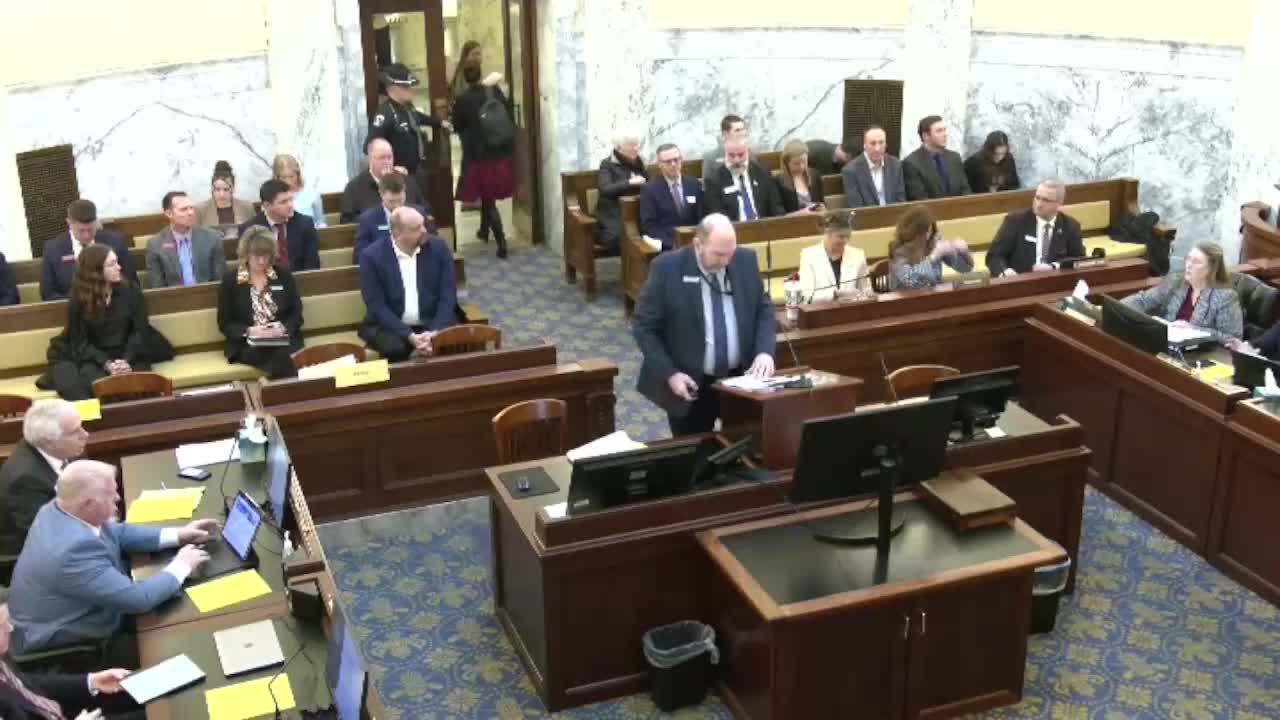
Joshua (Josh) Whitworth, executive director of the State Board of Education, told the committee he will prioritize performance reporting and said the board will return with additional outcomes data. "I will say I have not spent significant amount of time in the short run understanding the performance measures around these scholarships, but I think they are one, as we look at performance budgeting and look at how we can represent information back to make sure that these programs are actually producing the outcomes that we're after," Whitworth said. He told members the board can report on recipients and program participation and will provide more detailed data on the rural and underserved educator incentive program, including district-level distributions and recruitment/retention effects.
Campbell noted recent appropriations: $7 million for the Opportunity Scholarship in FY2021 and the Bridging Rural and Underserved Educator program beginning in FY2023 with follow-on appropriations in FY2024 and FY2025. The board requested $1.375 million in FY2026 for the Bridging Rural and Underserved Educator incentive program and $124,000 for a software engineer to maintain scholarship databases and public interfaces. Whitworth said the engineer request stems from a backlog of needed work on the application systems and security upgrades, and he acknowledged available but limited funding for an existing vacant software position.
Why it matters: scholarship and incentive programs affect access to higher education and educator staffing in rural and underserved districts. The committee asked for outcome metrics to assess whether the programs meet recruitment and retention goals.
What comes next: the board will provide additional performance reporting and program-level detail for the committee, including distinctions between "rural" and the board's definition of "underserved" and the data on program cohorts.