Get Full Government Meeting Transcripts, Videos, & Alerts Forever!
Get email alerts on the Safe Haven Amendments topic
No spam. Unsubscribe anytime.
Senate committee advances bill to speed placement of surrendered newborns with licensed adoption agencies; tribes and advocates weigh in
Summary
Senators voted to send Senate Bill 1058 to the floor after testimony that amendments would speed placement of surrendered newborns with licensed adoption agencies while preserving Indian Child Welfare Act notification requirements.
Senators voted to send Senate Bill 1058 to the floor after hearing testimony that amendments to Idaho’s safe‑haven law would speed placement of surrendered newborns with licensed adoption agencies while preserving Indian Child Welfare Act (ICWA) notification requirements, supporters said.
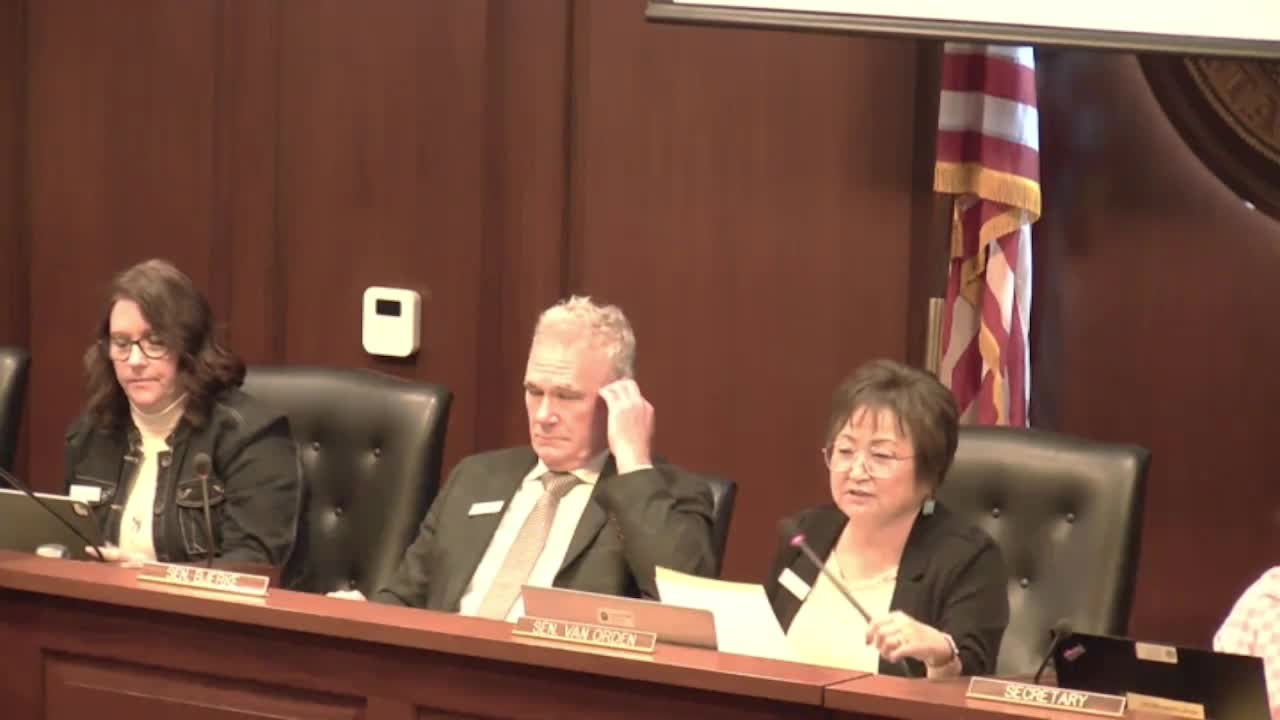
Sen. Tammy Nichols, sponsor of the bill, told the Senate Health and Welfare Committee the measure would require the Department of Health and Welfare to keep a list of licensed adoption agencies and transfer custody of a surrendered infant to an agency within 24 hours unless the child requires further medical care. “This bill aims to place abandoned children quickly with families who are ready and waiting,” Nichols said, adding that the bill aligns with tribal concerns and existing federal law.
Key provisions described in testimony include a 24‑hour transfer to a licensed adoption agency when appropriate, a 48‑hour hospital continuation if the infant requires medical treatment and a requirement that notices required under the Indian Child Welfare Act be issued within 10 days when the child may be Native American. Nichols told the committee the changes are intended to reduce unnecessary entries into foster care and speed permanent placement when possible.
Licensed adoption‑agency representatives testified in support. Kara Walsh, a licensed social worker who represents A New Beginning Adoption Agency, said adoption agencies can respond immediately to placement needs and that keeping newborns out of foster care can reduce potentially disruptive transitions. “The earliest days of a baby’s life are vital for healthy attachment and development,” Walsh said.
Tribal representatives and legal counsel said the bill clarifies how ICWA notice and tribal consultation would operate when a surrendered infant may be an Indian child. Tyrell Stevenson, legislative director for the Coeur d’Alene Tribe, described ICWA as aimed at keeping Native children within their families and communities and said the bill’s language improves coordination with tribes. Blake Hude of the Shoshone‑Bannock Tribes said tribal leaders worked with the Department of Health and Welfare on the language.
Not all testimony was uniformly supportive. Whitney Wunderlich, who adopted a child surrendered under the current Safe Haven Act through the foster care system, warned that some adoptive parents might lack training that foster parents receive and suggested expedited adoption within the foster-care system as an alternative. Senator Maryanne Wintrow said she would likely vote no, expressing concern that safe‑haven placements can lack information about medical or coercion risks and urged stronger social supports for parents in crisis.
Committee members moved and seconded a motion to send SB 1058 to the Senate floor with a due‑pass recommendation. The motion carried on a voice vote.
If passed by the full Senate, the bill would direct the Department of Health and Welfare to implement the placement and notification timeline described in the statute and coordinate with tribes and licensed adoption agencies.