Get Full Government Meeting Transcripts, Videos, & Alerts Forever!
Get email alerts on the Health And Welfare Reorganization topic
No spam. Unsubscribe anytime.
Health & Welfare outlines reorganization, seeks vehicle, IT and staffing funding as budget hearings begin
Summary
The Idaho Department of Health and Welfare presented a reorganization plan and several budget requests to the Joint Finance and Appropriations Committee, including a CIO/CFO reporting change, a plan to align budget units with operations, a 60-vehicle replacement request and IT upgrades tied to a major Medicaid modernization.
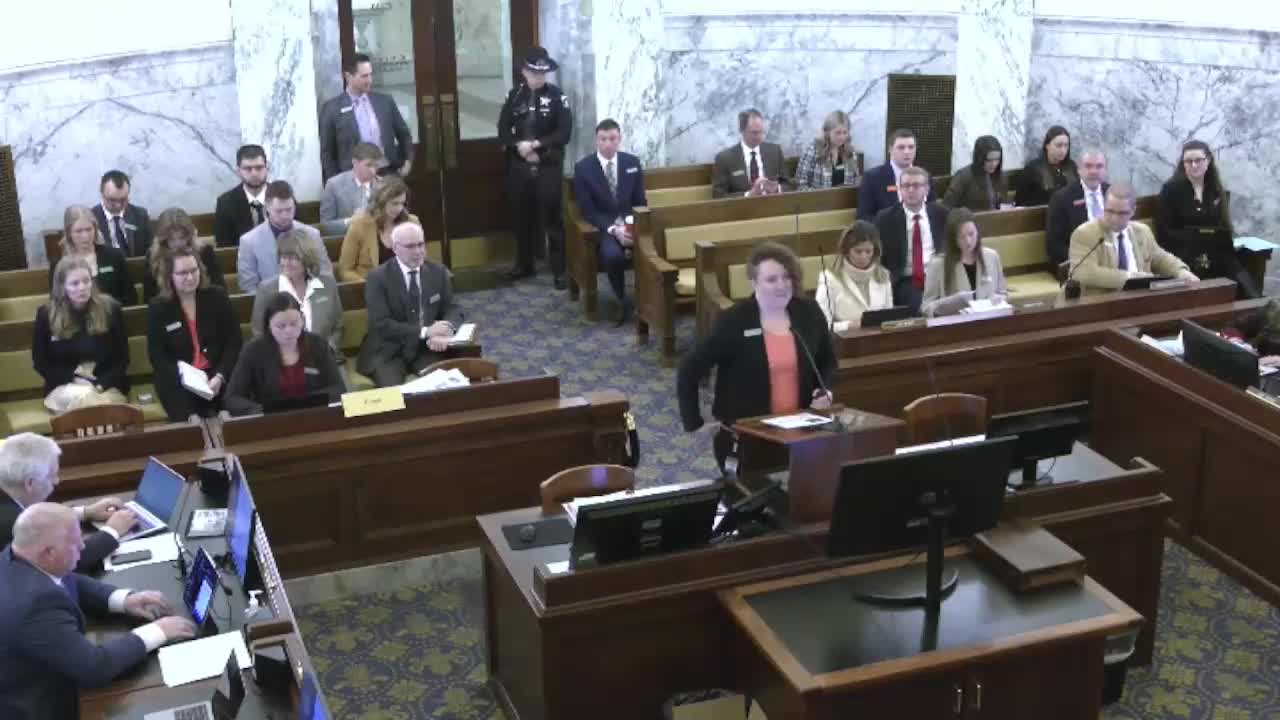
The Idaho Department of Health and Welfare told the Joint Finance and Appropriations Committee on Monday that it is proposing an internal reorganization and several budget requests intended to align appropriations with how the agency operates.
Alex Williamson, budget and policy analyst with the Legislative Services Office, gave an overview of the department and the governor's recommended budget for the agency. She said the Department of Health and Welfare is the state's largest budgeted agency and noted the legislature will consider the department's divisions individually across the session. Williamson said the department has historically organized internally in ways that did not always match how the legislature budgets programs and that the agency requested changes so that "the budgeted programs are and where the work is being done" are aligned.
Director Alex Adams, who took the post in June, told the committee the reorganization is designed to improve "line of visibility" and "lines of accountability." "I have the radical belief that budgets are laws, not suggestions," he said, describing a new chief financial officer position that now reports directly to the director and a move from three to four deputy directors to separate oversight of Medicaid and child welfare.
Key organizational changes presented by the department include:
- Splitting Family and Community Services (FACS) out as its own division and promoting the Medicaid administrator to a deputy director who will continue Medicaid duties while overseeing the remaining Medicaid and behavioral health divisions. - Renaming and regrouping divisions: Support Services and Licensing to Division of Operations; Public Health and Self Reliance to Health and Human Services; Developmental Disability Services to Early Learning and Development; Child Welfare to Youth Safety and Permanency; Service Integration to Family and Community Partnerships. - Moving Extended Employment Services (EES) and the children's community developmental disabilities program under Medicaid administration (the agency said this reflects who currently administers the programs, not a change in funding source). - Creating a chief of legislative and regulatory affairs responsible for tribal relations and public records requests; creating a CFO and a program manager for communications and customer experience.
Budget requests and program details discussed during the hearing included:
- Vehicle replacements: the department requested funding to replace 60 vehicles, totaling about $1.8 million. Director Adams said the department's statewide fleet is 435 vehicles, about two-thirds of which are used by child welfare staff for visits, court appearances and related duties. The agency's goal is a seven-year replacement cycle; many vehicles proposed for replacement have 105,000 to 159,000 miles.
- IT, servers and MMIS: the department requested hardware replacements and SQL Server upgrades (moving from 2017 to 2022) and had sought funding for cloud capacity (the governor's recommendation zeroed out the cloud server capacity request after the agency identified alternative solutions). The agency also highlighted the Medicaid Management Information System (MMIS) modernization estimated at roughly $180 million; the department requested operational staff for MMIS and said IT positions were expected to be filled soon (anticipating hires in February).
- Staffing and vacancies: Williamson noted the department averaged about 94% filled FTP over five years and experiences regular turnover. Director Adams said the department has about 3,000 employees, 74 buildings at 37 locations, and cited vacancy rates in specific units (licensing and certification had a roughly 19% vacancy at submission; the long-term care team reached as high as 80% vacancy during the pandemic). Adams said turnover in licensing and certification had improved (turnover fell from 21% to 7% over recent years).
- Licensing and certification supplemental: the Division of Licensing and Certification requested an exemption from transfer limitations in Section 8 of Senate Bill 1268 (2024) that prohibit transferring personnel-class dollars to other expense classes. The division historically used personnel funds to contract for nurses and other surveyors. The department said the 2025 supplemental requested the authority to transfer personnel dollars to operating as needed; the governor recommended the supplemental and a similar 2026 ongoing exemption. Director Adams said the department would be able to manage with an estimated $300,000 transfer in the current cycle but noted every other state agency generally has authority to transfer personnel to operating without a supplemental.
- Contract vs. in-house costs: Director Adams said the department pays about $35 per hour for its classified employees performing licensing work but that contract surveyors have cost the department about $90 to $95 per hour during periods of high vacancy.
Committee members asked for more detail on the fleet (mileage, age, and replacement rationale) and on whether MMIS and other IT hires were in place; the director said MMIS positions were posted and expected to be hired in the near term and that the department would provide additional fleet detail. Williamson and Adams stressed that several of the requested changes are intended to align the budget to operations — i.e., transparently showing in the appropriation where work is done — and that the committee will consider program maintenance and enhancement bills across the coming weeks.
Provenance: The department's reorganization overview, budget slides and Q&A are recorded in the committee's Jan. 13 budget hearing transcript.
Ending: Committee staff and the agency said they will continue to refine staffing, fleet and IT details in subsequent division hearings and work-group meetings; the program maintenance bill and related enhancement bills were scheduled for committee action later in January.