Get Full Government Meeting Transcripts, Videos, & Alerts Forever!
Get email alerts on the School Staffing Flexibility topic
No spam. Unsubscribe anytime.
Committee backs bill restoring staffing flexibility for Idaho school districts
Summary
Representative Sonia Galaviz asked the House Education Committee to strike a one-way penalty in Idaho code that reduces local districts’ 9.5 percent staffing flexibility when average staffing exceeds the statewide average; the committee voted to send House Bill 305 to the House floor with a due-pass recommendation.
Representative Sonia Galaviz presented House Bill 305 to the House Committee on Education, asking the committee to strike a provision in Idaho code that permanently reduces a district’s staff-allocation flexibility when a district’s average class size exceeds the statewide average by one support unit.
“...the flexibility that some districts have is nicknamed ‘use it or lose it’—it punishes some [districts] pretty significantly,” Representative Sonia Galaviz told the Committee, urging restoration of the statutory 9.5 percent discretion that school districts may use when allocating certified positions.
Spencer Barzee of the Idaho Department of Education reviewed data the sponsors submitted showing how the penalty has applied since 2016. Barzee said the 9.5 percent flexibility was created during the 2009 recession and the later 2016 change instituted a one-way annual reduction: “If a school district has 1 more student above the state wide average, then that flexibility… is shrunk by a percent. And they can never gain that back. It’s a 1 way street down.”
Superintendents from multiple districts testified in support. Scott Wollstone, superintendent of Bonneville School District, said his district drew down $4,000,000 from fund balance this year after changes to attendance-based funding and argued modest use of the restored flexibility would avoid painful cuts. “If we can get this bill passed and we reduce our certified staffing by just 5%, that saves our district $3,000,000 out of that $4,000,000,” Wollstone said, outlining trade-offs such as cutting paraprofessionals or custodial staff if the bill does not pass.
Grace School District superintendent Jason Moss and Middleton superintendent Mark Gee gave similar testimony describing how small districts use flexibility to fund special education paraprofessionals, transportation shortfalls and preschool services that carry little state support.
Committee members pressed sponsors on alternatives—Representative Harris asked whether a temporary reinstatement mechanism would be possible rather than an outright repeal. Spencer Barzee said districts with chronically higher class sizes would find it hard to regain lost flexibility under a time-limited approach and noted charter schools are not subject to the same restriction.
The committee held extended questioning about fiscal mechanics and whether removing the penalty would move budgeted but unspent funds into the general pool (PSEF). Barzee and other witnesses said the money affected is already budgeted at the state level; if a district hires below its allocation those dollars revert to the pool.
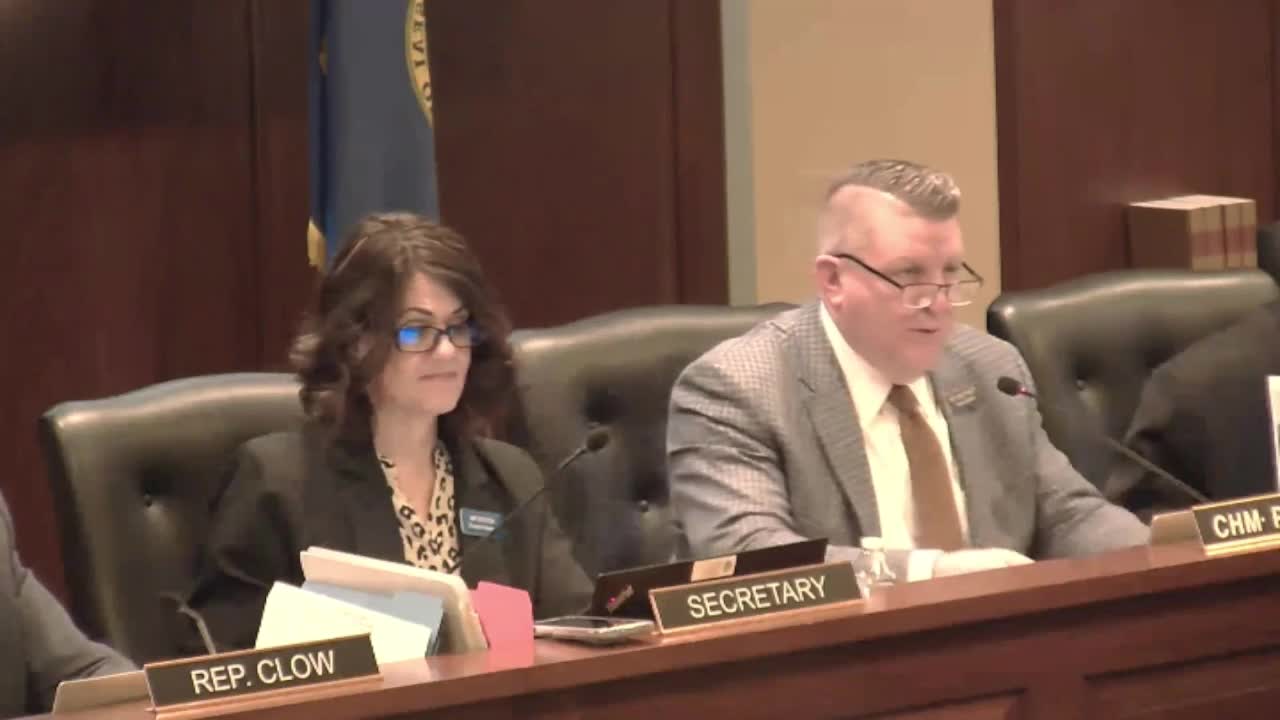
Committee action: Representative Garner moved that House Bill 305 be sent to the floor with a due-pass recommendation. The motion passed by voice vote; the chair recorded the motion carried and the bill will go to the full House.
Why it matters: sponsors and district leaders said HB305 restores local control for boards and superintendents, allowing districts to use previously restricted personnel funding for special education, un-reimbursed transportation, curriculum and other local priorities. Opponents on the floor later may press questions about levy impacts, long-term class-size trends and budget accountability.