Get Full Government Meeting Transcripts, Videos, & Alerts Forever!
Get email alerts on the Legislative Audits topic
No spam. Unsubscribe anytime.
Legislative auditors report uncorrected findings, warn audit timeline delayed after LUMA transition
Summary
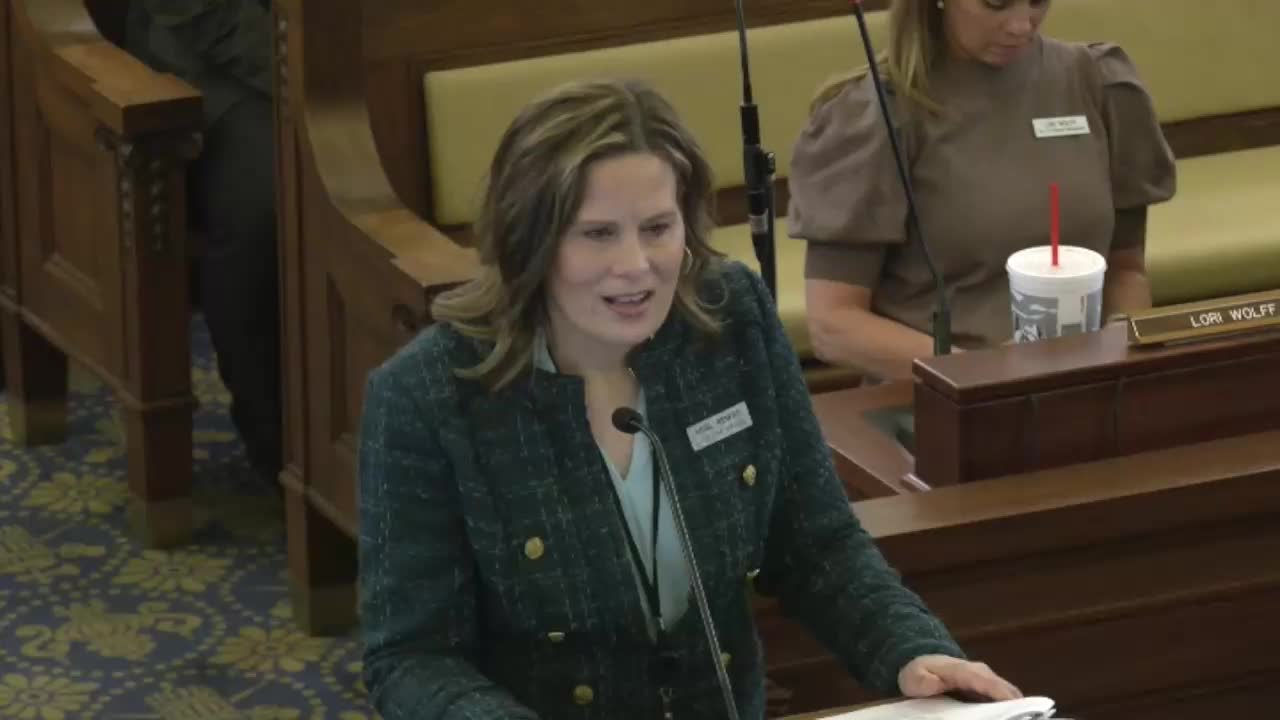
April Renfro, director of legislative audits at the Legislative Services Office, told the Joint Finance and Appropriations Committee on Jan. 7 that the office is issuing its annual report on uncorrected audit findings and that most outstanding items are recent and pending follow-up. She also warned that a late submission of statewide financial statements tied to the controller’s LUMA transition will probably delay the ACFR and single-audit opinions until March.
April Renfro, director of legislative audits at the Legislative Services Office, told the Joint Finance and Appropriations Committee on Jan. 7 that the office is issuing its annual report on uncorrected audit findings and that most outstanding items are from the current reporting period. She also warned that a late submission of statewide financial statements tied to the State Controller’s office transition to the LUMA system will probably delay the annual comprehensive financial report (ACFR) audit and the single-audit opinion into March.
The auditors’ office, Renfro said, performs the ACFR audit (statewide financial statements), the single audit that covers federal-award compliance, accountability reports that review agency internal controls, and several agreed-upon-procedure and entity-audit assignments. Renfro told the committee the office has about 30 financial and IT auditor positions, a small administrative staff, and statutory authority to conduct these reviews under Idaho law as cited to the committee.
The uncorrected-findings report is intended to show which agencies still have open recommendations and how long those items have been outstanding. Renfro said the office now lists open findings going back four years; in previous annual reports the office tracked five years’ history. She said roughly 70% of the uncorrected findings shown in the report are from the current reporting period and have not yet had follow-up visits, leaving about 30% that represent older findings the agencies have been unable to correct in a reasonable time.
"We really only have 30% that the entities have not been able to get their findings corrected in a reasonable amount of time," Renfro said. She described the office’s follow-up process for accountability reports: a 90-day visit, a first annual visit and report, and then a second-annual visit if problems remain.
Renfro gave examples of open or recently followed-up findings. She described a recurring accountability finding at the Department of Fish and Game involving noncompliance with the state travel policy: missing or incomplete travel vouchers, missing receipts and documentation, and insufficient internal controls to prevent nonbusiness travel expenditures. That item, originally raised in a 2020 accountability report, showed partial corrective action at 90 days but reverted to "uncorrected" after the office could not obtain test samples during the state controller’s transition to LUMA; Renfro said the auditors could not verify improvements because the new processes and data were provided late.
Renfro also described findings in the Department of Health and Welfare’s FY2023 accountability report related to qualified residential treatment program (QRTP) placements for youth in foster care. The auditors tested 19 QRTP placements and reported multiple documentation and timeliness problems: 10 of 19 lacked a completed placement assessment, a small share lacked required details, about 21% of files lacked the court order, one case (about 5%) was not placed within 60 days of start of placement, 84% did not retain a notice of placement filed with the court that identified placement date and recommended level of care, and 42% of tested cases did not have the required 30-day case consultations. Renfro told the committee those gaps were driven by inconsistent internal controls, missing policies or training, and failures of document retention.
Renfro said the office also continues to identify systemic information-technology control weaknesses and internal-control gaps that raise the risk of errors across an agency’s population of transactions. She cited a single-audit finding in FY2023 about the review and approval of annual updates to the Low Income Home Energy Assistance Program benefits matrix: auditors found no reported payment errors in testing, but the agency had not documented a formal review, which increases the risk of an undetected error.
On timing, Renfro said the auditor’s office expects the ACFR opinion and the single-audit opinion to be completed later than usual because the State Controller’s office delivered financial statements to auditors on Dec. 30 rather than the earlier November draft the auditors had expected. "We didn't receive them until December 30," she said. The auditors provided the controller with an estimated March completion date and warned that the late ACFR will also make the March 31 single-audit deadline unlikely.
Renfro said the office is trying to notify the federal cognizant agency (Health and Human Services) about the expected delay so federal grantors are aware. Committee members and co-chairs asked about potential consequences; Renfro said other states that issued reports late did not appear to suffer immediate credit-rating downgrades but that federal grantors have been actively monitoring timely single audits and the auditors anticipate additional federal communications.
Committee members and co-chairs emphasized the budget committee’s oversight role. One co-chair told members the committee will consider audit findings when deciding appropriations and can take actions ranging from corrective conditions on funding to withholding funds in rare cases where an agency repeatedly fails to implement remedies.
Renfro said the uncorrected-findings report was sent to the co-chairs for initial review and would be released to the full committee the same day as the hearing.
Questions from members following the presentation focused on causes for longstanding uncorrected items, whether agencies can formally disagree with audit findings and examples of dispute resolution (including prior discussions with federal grantors on TANF transfers), and the potential for supplemental actions when audit findings persist.
Renfro closed by offering to stand for further questions and noting the auditors will continue follow-up visits and issue the uncorrected-findings report to the committee.
The presentation and the committee’s questions made audit timeliness and unresolved internal-control weaknesses a clear oversight focus for the 2025 budget cycle.