Get Full Government Meeting Transcripts, Videos, & Alerts Forever!
Get email alerts on the Insurance Regulation topic
No spam. Unsubscribe anytime.
Idaho Insurance Department reports PBM oversight, high‑risk pool and wildfire insurance stress to budget panel
Summary
The Department of Insurance briefed the Joint Finance-Appropriations Committee on Jan. 21 about PBM oversight, the operation of the state's high‑risk health‑insurance pool and wildfire-related stress in the homeowner insurance market.
The Department of Insurance briefed the Joint Finance-Appropriations Committee on Jan. 21, detailing implementation of pharmacy benefit manager (PBM) reporting, the operation of a health‑insurance high‑risk pool that officials say helped expand carrier participation and lower age‑to‑age rates, and market stress in homeowner insurance linked to wildfires and rising reinsurance costs.
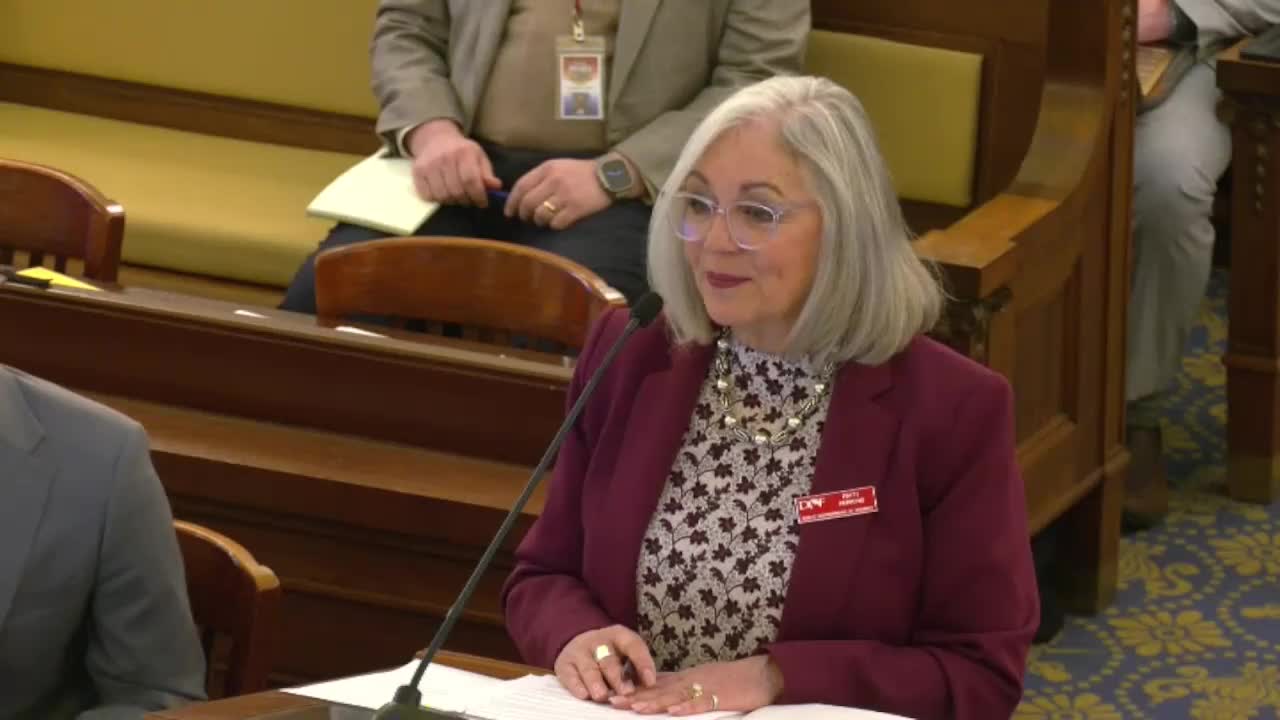
Dean Cameron, director of the Department of Insurance, told the committee the agency is processing PBM data submissions required by last year’s reform (House Bill 596) and has an analyst dedicated to PBM complaints. "She's receiving numerous complaints," Cameron said, saying most PBMs had complied with the required data format while a few remain noncompliant as the department works to collect needed information.
Director Cameron described the state’s high‑risk reinsurance pool – a mechanism that shares costly claims with carriers – as a long‑running tool that the department retained after federal Affordable Care Act changes and that, in his account, contributed to lower individual market rates and more carriers on the exchange. "It acts as reinsurance," Cameron said, explaining that the pool reimburses a share of claims identified by CPT code and is funded in part by a portion of premium tax receipts.
Insurance market stress: Cameron and the analyst Noah Peterson told the committee that wildfire-related losses in other states, rising reinsurance premiums and inflationary claim costs have tightened the property insurance market. Cameron said Idaho had seen carrier pullbacks and increasing use of the surplus-lines market, where policies carry fewer consumer protections. "If you're not hearing complaints from homeowners, about their rate increases, you're lucky," he said, noting nonrenewals and rate tightening in parts of the state.
Budget and staffing requests: Peterson said the department has 75.5 approved full‑time positions (63.5 in insurance regulation; 12 in the state fire marshal division). For FY2026 the department requested several enhancements including a staff actuary (1 FTP, $201,900 from the insurance administrative fund), a regulatory compliance specialist (position requested at $41.03 per hour, pay grade O), compensation increases for the state fire marshal and deputies ($48,100 ongoing from the Arson, Fire and Fraud Prevention Fund) and $162,200 in one‑time capital outlay to replace items for the state fire marshal (including $10,000 for fire turnouts, $16,200 for cameras and $136,000 for two medium‑duty pickup trucks with canopies and bed slides).
Performance and complaints: Cameron said the agency reverts funds some years and that in FY2024 the department reverted just under $2.2 million of its total appropriation. He said staff were on the ground during recent Idaho wildfires assisting consumers and that the state had burned just under 1 million acres in the past year, with more than 140 structures lost and about 40 residences destroyed. The director emphasized mitigation and a proposed legislative pool to help homeowners harden properties and to provide market support for carriers.
Committee follow-up: Senator Cook and others asked for more detailed PBM complaint and compliance data. Cameron said the agency is collecting data from PBMs and would provide a fuller report to the committee as the information becomes available. No formal votes were taken during the hearing.