Get Full Government Meeting Transcripts, Videos, & Alerts Forever!
Get email alerts on the School Facilities Funding topic
No spam. Unsubscribe anytime.
Bill would ease requirements to unlock long-dormant school facilities fund for smaller Idaho districts
Summary
Representative Doug Pickett presented RS32537C1 to change how Idaho’s Public School Facilities Cooperative Fund may be used, removing the requirement for a state-appointed district supervisor on projects under $5 million, preserving an existing payback index, and clarifying priority of payments. The committee introduced the RS by voice vote.
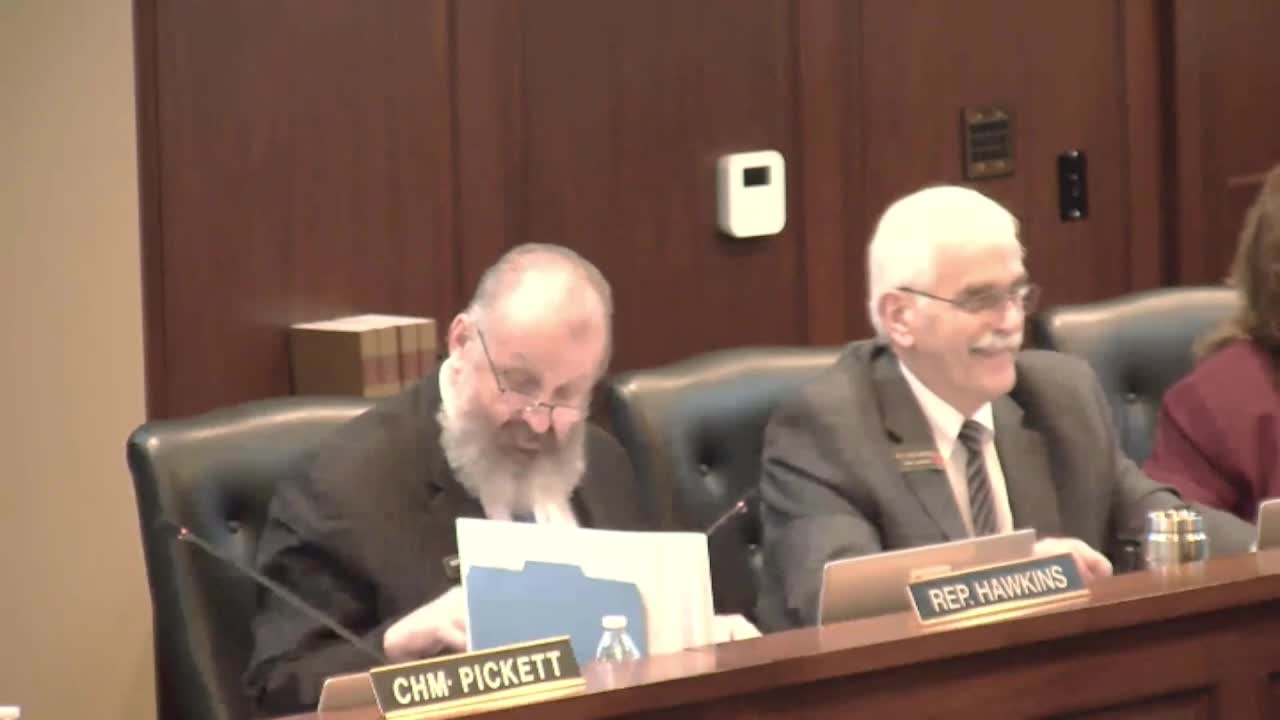
Representative Doug Pickett introduced RS32537C1 to the House Committee on Education, proposing changes to the state’s Public School Facilities Cooperative Fund intended to make the fund more accessible to rural and smaller school districts.
The measure would remove a requirement that the state appoint a district supervisor to oversee projects valued at $5,000,000 or less and would add language to allow districts that approved an insufficient bond to use the cooperative fund as part of a plan to take to voters under the constitutional two-thirds bond requirement.
The proposal targets an old provision from a 2006 measure—cited in the presentation as House Bill 743—from which the cooperative fund has been used only once. “This legislation would remove that requirement for projects up to $5,000,000 in value allowing districts, especially smaller school districts, to more easily access or be willing to access that funding,” Representative Pickett said. Pickett told the committee the supervisor requirement discouraged use of the fund because the supervisor could modify or reject school-board decisions during construction.
Under RS32537C1 the panel that reviews school facility plans would be reconstituted in part by replacing one member appointed by the state board executive director with the superintendent of public instruction. The draft also preserves the existing payback method based on the so-called bond levy equalization value index—an index described in committee testimony as composed of state-average property value per support unit (50% weight), unemployment rate (25%) and average income (25%). Pickett explained how the index would be used to reduce a district’s repayment obligation proportionally: if a district’s index is 0.8 relative to a statewide index of 1, it would be responsible for repaying 80 percent of the construction cost.
RS32537C1 also sets the maximum amortization at 20 years to match the length of the bond voters would approve, and clarifies the payment priority in the event a district has existing bonds: existing indebtedness would be paid first, then indebtedness arising from this program, then any future obligations.
Fiscal and funding details were discussed during the presentation. Pickett said the bill would use money shifted from a “bond levy equalization fund” and referenced a $25,000,000 transfer; he said the fiscal amount under the draft would amount to about $50,500,000 with that transfer included. “It’s our intent to help make sure that that money that’s been sitting there for 20 years… is used for what it was intended for,” Pickett said.
Committee action: a motion to introduce RS32537C1 was made and approved by voice vote; the transcript records the committee chair calling for “aye” and the motion carrying.
Why it matters: supporters said the change would give smaller and rural districts—many with limited bonding capacity due to low property values or large areas of nontaxable federal/state land—a new path to address failing or unsafe facilities without ceding local control to an appointed supervisor. Opponents and detailed fiscal impacts were not recorded in this hearing.
The committee introduced RS32537C1 and moved it forward for further consideration.