Get Full Government Meeting Transcripts, Videos, & Alerts Forever!
Get email alerts on the Disability Services topic
No spam. Unsubscribe anytime.
Senate panel sends respiratory-care compact to print, hears Idaho Independent Living Council review
Summary
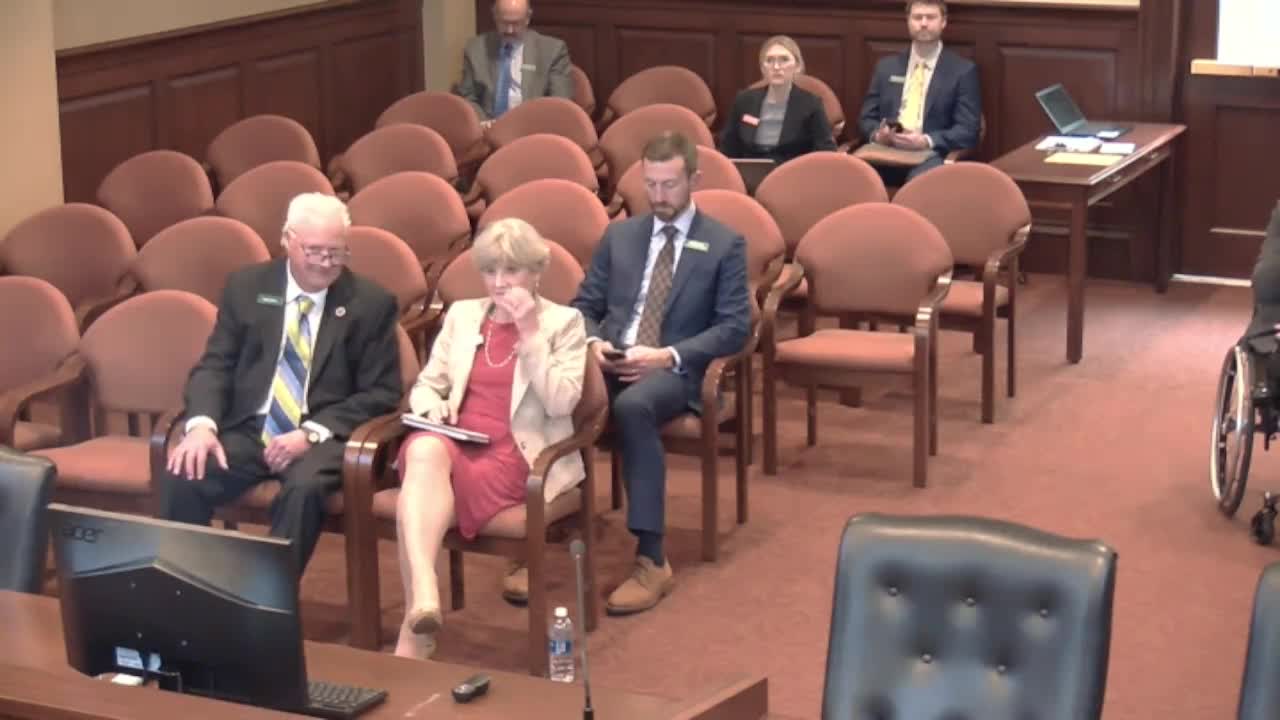
The Senate Health and Welfare Committee granted unanimous consent to send RS 32442 (Respiratory Care Interstate Compact) to a privilege committee for print and received the Idaho State Independent Living Council's annual presentation on needs assessment, home- and community-based services, and a recent Department of Justice report.
The Senate Health and Welfare Committee granted unanimous consent to send RS 32442, a proposal related to the respiratory care interstate compact, to a privilege committee for print, and then heard a presentation by the Idaho State Independent Living Council (SILC) on statewide needs and priorities for Idahoans with disabilities.
Mel Levitan, executive director of the Idaho State Independent Living Council, told the committee that the council is composed of 17 to 24 volunteer members, including four ex officio agency representatives, and employs four staff members. "The Idaho State Independent Living Council actively engages in statewide activities that assist in providing Idahoans with disabilities a greater voice in obtaining services that are participant directed, cost effective, and community based," Levitan said.
The SILC coordinates with the three regional Centers for Independent Living'0 Disability Action Center Northwest, LINC (Living Independence Network Corporation), and LIFE (a center for independent living in eastern Idaho)'and with state agencies including the Division of Vocational Rehabilitation and the Idaho Commission for the Blind and Visually Impaired. Levitan said the council does not provide direct services but works with organizations that do and helps amplify constituent voices.
The council reported results from its 2022'23 statewide needs assessment: 871 respondents, participation from 30 of Idaho's 44 counties (304 county-identified responses), and 29 listening sessions over four months. Levitan said the top concerns identified were housing affordability and accessibility, access to health care (including shortages of specialists in some counties), shortages of direct support professionals, and lack of public and volunteer transportation options in smaller communities.
Levitan highlighted that home- and community-based services (HCBS) are central to the SILC's work. He told senators the average annual cost for HCBS, based on materials referenced in testimony, is under $20,000 per person, while a nursing-home stay averages about $85,800 annually. "Not only does it restrict an individual's freedom," Levitan said, "it's also a lot more money." Levitan warned that changes such as block grants or per-capita caps to Medicaid funding could threaten HCBS availability.
Committee members asked about specific policy issues. Senator Wintrow asked Levitan to explain what the SILC means by "integration, inclusion, and equity." Levitan responded with concrete accessibility examples, including accessible routes and audio systems tuned for hearing aids and cochlear implants: "It's not about getting more. It's just about being able to get here and participate." Wintrow added that those adjustments are about giving people "a fair shot to get here and not have to think about it."
Levitan also discussed a Department of Justice report dated Jan. 16, 2025, raising concerns about settings for some certified family homes, case management gaps, and younger people entering nursing homes. Levitan said case management additions (noted in state implementation plans as two hours per month in testimony) are likely insufficient to help people secure housing and appropriate community supports. He offered to provide the committee with copies of the DOJ report and later agreed to send it electronically.
Levitan said the SILC is pursuing several priorities in its current three-year state plan, effective Oct. 1, including emergency-planning inclusion for people with disabilities, promoting affordable accessible housing, strengthening the IL network'including youth engagement and leadership development'and exploring legislation to establish an Idaho ABLE savings program.
The committee adjourned after the presentation. The committee's unanimous consent to send RS 32442 for print was recorded at the meeting without objection.