Get email alerts on the Career Technical Education topic
No spam. Unsubscribe anytime.
Lawmakers hear CTE request for $10 million to expand high‑demand programs amid wait lists
Summary
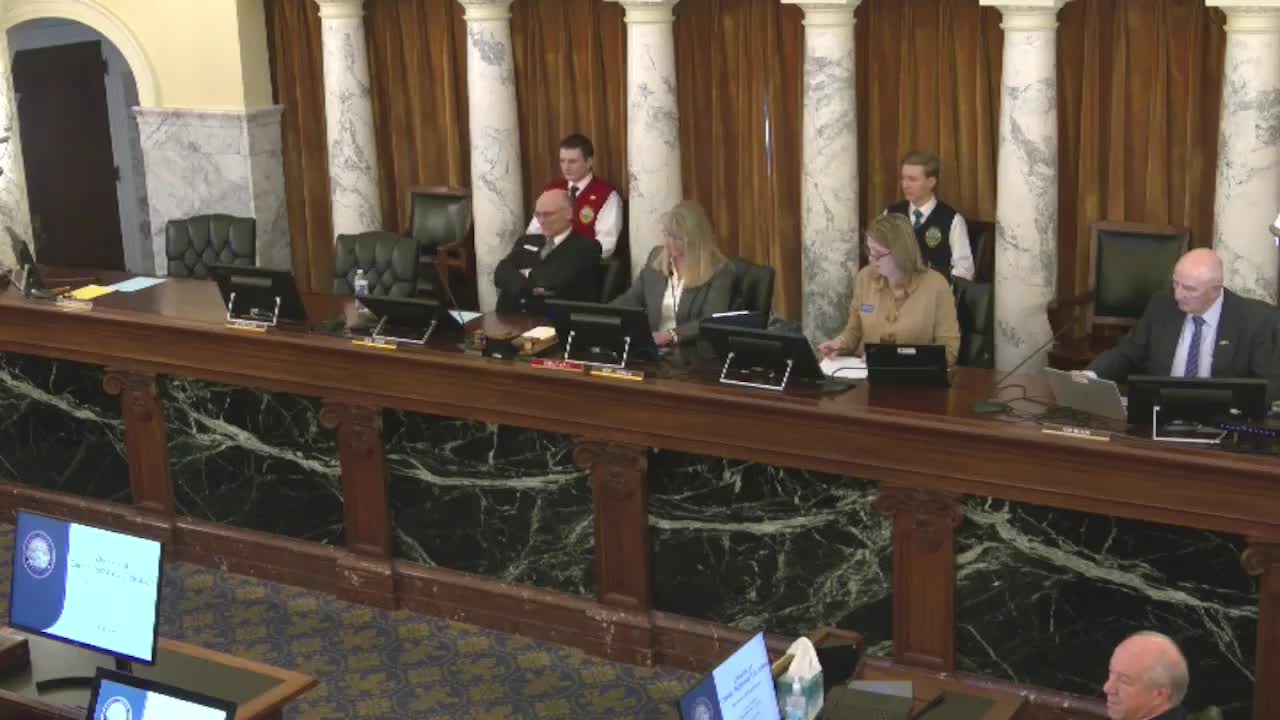
Kevin Campbell, a budget and policy analyst with the Legislative Services Office, and Joshua Whitworth, executive director for the State Board and in a current interim role for the career technical education division, told the Joint Finance‑Appropriations Committee on Feb. 10 that Idaho’s Career Technical Education system is seeing rapidly rising demand and is seeking targeted ongoing and one‑time funding, including a governor‑recommended $10 million ongoing to expand capacity in high‑demand programs.
Kevin Campbell, a budget and policy analyst with the Legislative Services Office, and Joshua Whitworth, executive director for the State Board and in a current interim role for the career technical education division, told the Joint Finance‑Appropriations Committee on Feb. 10 that Idaho’s Career Technical Education (CTE) system is facing rapidly rising student demand and capacity constraints.
Campbell outlined CTE’s budget history and fund structure and noted several funds with statutory purposes that support CTE activities, including the Displaced Homemaker Fund, the Hazardous Materials and Waste Enforcement Fund and the Motorcycle Safety Fund. He told the committee that the division’s appropriations have grown materially over recent years and that trustee and benefit payments and personnel are the largest expenditure categories.
Whitworth said CTE is seeking targeted ongoing and one‑time funding in fiscal 2026 to address oversubscription in technical programs. Among the specific requests he described were $664,000 ongoing from the general fund for additional instructors in programs at or over capacity, $125,400 for a business‑industry engagement manager, and a governor‑recommended $10,000,000 ongoing to “continue building additional capacity in high demand CTE programs.” Whitworth also noted smaller requests, including a one‑time $3,000 computer for the requested manager.
The committee and agency discussed where capacity gaps are forming. Whitworth said the constraints are both facilities and faculty: “We kind of look at it as 3 legs of the stool,” he said, citing demand (students and business), faculty to teach courses, and physical facilities such as welding booths. He told the committee the state is seeing “large demand across the entire career technical education ecosystem” and that wait lists remain despite recent investments.
Legislators and agency staff discussed how the proposed $10 million would be distributed and overseen. Whitworth said the division envisions the money operating like a grant program tied to industry engagement: businesses would match funds and local technical colleges would receive grants based on demonstrated demand and industry commitment. “The grant would require some engagement by industry to participate in that,” Whitworth said. He added the division would report outcomes and that funds would be prioritized in regions and programs with the greatest need rather than split equally.
Lawmakers also questioned whether the new business‑industry engagement manager would duplicate work by the Workforce Development Council or existing local efforts. Whitworth described the position as district support embedded with school districts to connect local employers with programs, rather than replacing the council’s broader workforce strategy and technical advisory committees.
Committee members pressed for more detail on how spending would be allocated and tracked. Representative Furness said lawmakers will need a line‑by‑line plan to defend the ongoing appropriation on the chamber floor and suggested funds intended for universities should be considered in separate budgets if they will benefit institutions outside the technical colleges. Whitworth said the division will provide additional information to the committee on distribution, reporting and expected outcomes.
Committee members also raised questions about dedicated CTE funds. Representative Tanner described how the Hazardous Materials and Waste Enforcement Fund is financed — “it’s actually $20 per trip… $2.50 for an annual permit” — and asked staff to verify a reported negative balance. Whitworth said staff would follow up and provide clarification. On the Motorcycle Safety Fund, members noted fee revenue has grown with population and asked whether program expenditures match fee collections and whether fee structure or program delivery should change; Whitworth said the division would review options and return recommendations.
Lawmakers repeatedly asked for lists of oversubscribed programs and for data on wait lists, local capacity, and faculty shortages. Whitworth said the division could share a list of oversubscribed postsecondary programs and would follow up with additional details for secondary programs. Senators and representatives cited welding and nursing among the most oversubscribed fields; Whitworth said the state has a strong and growing industry demand for welders tied to manufacturing and large projects, and noted nursing programs face faculty‑to‑student ratio constraints.
Whitworth closed by thanking the committee for prior investments and committing to provide more granular proposals on how the requested funds would be distributed and measured.
AI generated
The text on this page is AI generated. Summaries, highlights, analysis, and video transcripts are all produced from the original source material.
AI can make mistakes, so if you spot one, and we will fix it for everyone.
Note: the source content is unaltered by us. Any content source we link to, be it a video, an audio recording, or a document, is presented exactly as its publisher released it. That publisher is usually a government body, sometimes an individual official or another organisation.