Get Full Government Meeting Transcripts, Videos, & Alerts Forever!
Get email alerts on the State Budget topic
No spam. Unsubscribe anytime.
Governor’s executive budget emphasizes K-12 funding, reserves and new wildfire, transportation investments
Summary
DFM Administrator Laurie Wolf presented Governor Little’s executive budget to the Joint Finance and Appropriations Committee, outlining roughly $151 million in recommended agency enhancements, large transfers to stabilization funds, and high-priority investments in education, wildfire suppression, transportation and workforce programs.
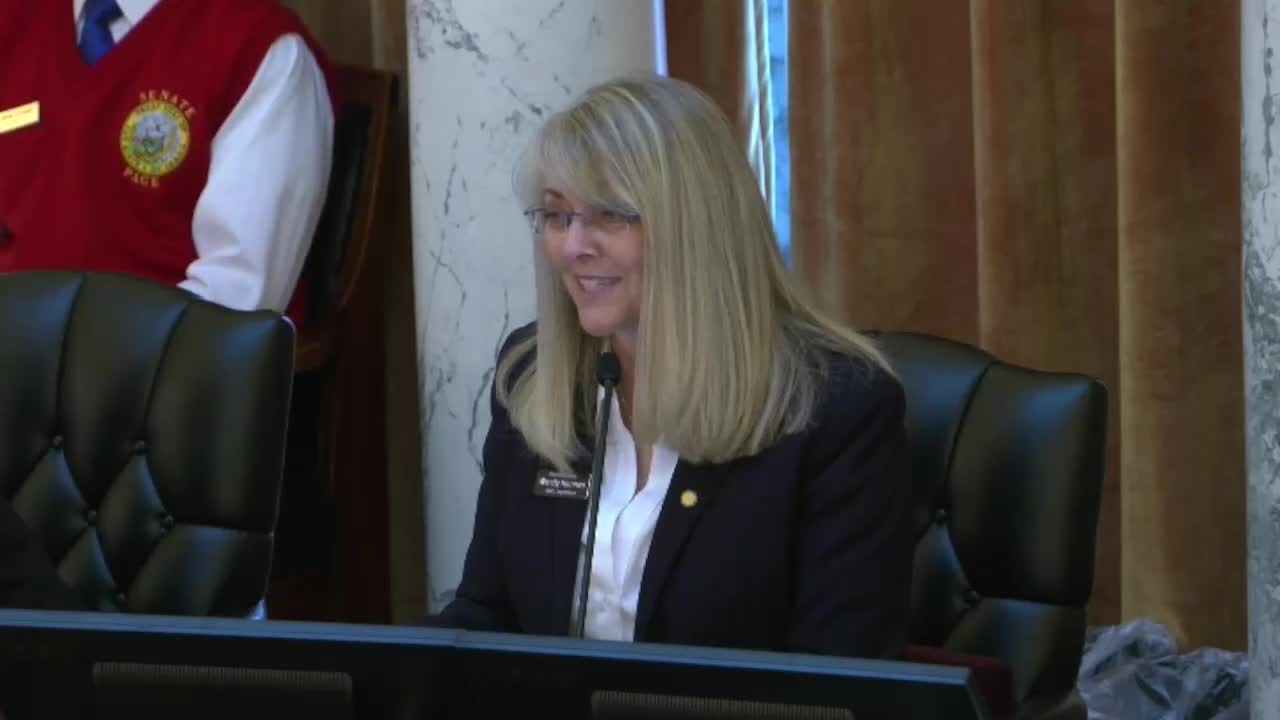
BOISE — Laurie Wolf, administrator of the Division of Financial Management, presented Governor Brad Little’s executive budget to the Joint Finance and Appropriations Committee on Jan. 8, describing the proposal as “his keeping promises budget” and framing it around education, infrastructure and fiscal conservatism.
The budget package uses conservative revenue assumptions while leaving significant reserves and proposes record transfers to state stabilization accounts. Wolf told the committee the executive recommendation includes about $151 million in recommended enhancements for fiscal 2026, a projected $227 million ending general-fund balance in FY 2026 after transfers, and transfers that would move funds into the budget stabilization and public education stabilization accounts.
Why it matters
The governor’s plan would direct sizeable new resources to public schools, wildfire funding and transportation while holding $100 million in potential tax relief for later legislative action. The package’s mix of one-time and ongoing funding, and its transfers to rainy-day funds, set priorities and guardrails for the legislature as it moves into week-by-week budget hearings.
Key numbers and priorities
- Education: The budget recommends $150 million in additional funding for public schools, including $83 million toward teacher pay and nearly $30 million for teacher health insurance. The proposal sets aside $50 million as a revenue adjustment for potential education choice initiatives, to be released only if corresponding policy is enacted. Wolf said, “Education is his top priority.”
- Reserves and transfers: The administration would transfer $59 million to the budget stabilization fund and $50 million to the public education stabilization fund in FY 2026, and projects a $1.4 billion revert/reserve balance (about 22% of the budget) after those moves. Wolf noted Idaho’s reserve level aligns with Moody’s suggested ranges for healthy state balance.
- Wildfire and natural resources: The governor recommends a $60 million supplemental in FY 2025 to backfill the fire suppression account for costs already incurred, and $40 million ongoing for FY 2026 to support future suppression needs. Wolf said the intent is to maintain a stable funding level so the state is not forced into reactive, year‑to‑year financing.
- Transportation: The budget includes a $50 million contribution to a transportation expansion and congestion mitigation fund, intended to support bonding for additional high‑value projects. Wolf said the funding would help ITD to plan and bond for projects beyond the department’s current Techum bonding capacity.
- Workforce and training: The governor proposes $25 million for workforce training — $15 million one‑time for a competitive grant program that requires private match and $10 million ongoing for career and technical education (CTE) capacity.
- Workforce housing: A $15 million one‑time transfer to the workforce housing fund is recommended to support affordable housing projects, with statute and prior allocations guiding eligible uses.
- Cybersecurity and public safety: The budget proposes $10 million for statewide cybersecurity priorities managed through ITS, $500,000 to continue an anti‑fentanyl program and investments at state prisons for contraband mitigation.
- Health care workforce: The administration recommends $850,000 to support about 18 medical residency positions in Boise and $500,000 ongoing for a rural physician incentive program.
- State public defense: Following the state takeover of public defense on Oct. 1, the administration is recommending a FY 2025 supplemental of $5.4 million and a FY 2026 increase of $16.8 million; Wolf said the total FY 2026 recommendation to support the state public defense effort is about $83 million. She explained the December Supreme Court decision and consolidation impacted earlier cost estimates and that the funding request is presented as one‑time pending policy decisions about longer‑term funding sources for the public defense fund (a dedicated sales‑tax distribution).
Revenue and forecasting choices
Wolf told members the administration used conservative revenue projections for FY 2026 while noting actual collections for FY 2025 were trending ahead of original estimates. She pointed to sales‑tax growth (from about $2.6 billion to a projected $3.2 billion by 2026) but said tax cuts and transfers reduce the portion available for the general fund. “We took a conservative approach,” Wolf said, explaining that revenue updates and month‑to‑month volatility informed the recommendation.
Committee questions and concerns
Members pressed Wolf on several items during Q&A. Senator Mike Carlson asked for clarification about the $60 million supplemental and the $40 million ongoing wildfire funding; Wolf said the $60 million is a FY 2025 supplemental to replenish the fire suppression account for costs already expended, and the $40 million would be ongoing in FY 2026. Representative Ben Tanner asked why the administration reserved $100 million for tax relief rather than returning more revenue immediately; Wolf responded the governor was balancing investments with savings and targeted tax relief.
Next steps
Wolf’s presentation framed priorities for the committee’s upcoming hearings. The Joint Finance and Appropriations Committee will review agency maintenance budgets and agency enhancement requests in work groups and full committee hearings over the next several weeks, with staff presentations and agency testimony scheduled across the session.
Ending
Wolf closed by emphasizing structural balance and reserves as budget strengths and invited committee members to follow up with agency analysts for detail. The committee continued with its schedule; agency‑level hearings and staff briefings will provide the detailed line‑item work needed to translate the governor’s recommendations into appropriation actions.