Get Full Government Meeting Transcripts, Videos, & Alerts Forever!
Get email alerts on the K 3 Literacy And District Governance topic
No spam. Unsubscribe anytime.
Lewiston district cites community partnerships, Cognia accreditation and gains in K–3 literacy
Summary
Lewiston Independent School District No. 1 told the Senate Education Committee about community engagement work, Cognia systemwide accreditation, a PLC recognition and K–3 reading gains; the superintendent also told senators the district faces a roughly $5 million special-education funding gap.
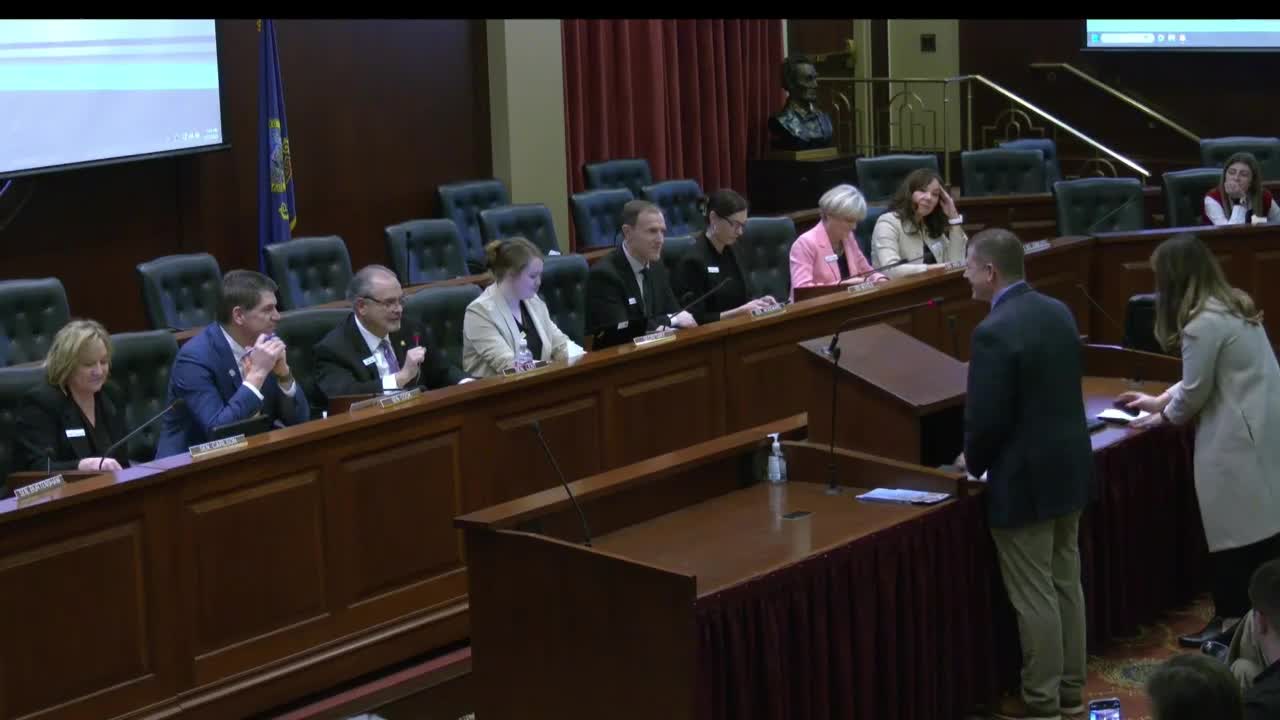
Lance Hanson, superintendent of Lewiston Independent School District No. 1, and Charlotte Kramer, vice president of the Lewiston School Board, told the Senate Education Committee the district has increased parent and community engagement, pursued systemwide accreditation and achieved gains in early literacy while facing a special-education funding shortfall.
Hanson said Lewiston serves about 4,500 students ages 3–21 with roughly 800 employees. He said the district is one of the first in Idaho to achieve systemwide accreditation through Cognia and has earned a Professional Learning Community (PLC) designation for at least one campus. "We're gonna ensure high levels of learning every day to all of our students," Hanson said.
Kramer described extensive community work groups that include parents, students and local leaders and credited the groups with raising satisfaction on district parent surveys and helping set the district's five-year strategic goals. "These work groups help us address issues, avoid bad decision making, and plan for the future," she said.
On K–3 literacy, Hanson reported that about 70.9 percent of K–3 students were reading at grade level last year and said the district uses Enhanced Core Reading Instruction, developed at the University of Oregon, with a tiered intervention model. He said the district is participating in a tier-3 study with Boston University and that the literacy work has produced strong results for students without disabilities (about 90 percent at grade level when those students are isolated in the figures) and lower but improving outcomes for students with disabilities.
Hanson told senators that Idaho faces an $80 million statewide special-education funding gap and that Lewiston's local share of that gap is about $5 million. He said the district receives roughly $4,000 per special-education student from the state by his calculation.
Senators asked about Cognia accreditation, special-education funding and PLC recognition; Hanson and Kramer described the accreditation process as a multi-school self-study with third-party review and the PLC award as a year-long application demonstrating collaborative practices, student results and learning-focused processes.