Get Full Government Meeting Transcripts, Videos, & Alerts Forever!
Get email alerts on the Unemployment Insurance topic
No spam. Unsubscribe anytime.
Labor asks JFAC for $7.33 million in dedicated authority as federal UI funds shrink
Summary
The Idaho Department of Labor asked the Joint Finance-Appropriations Committee for additional dedicated spending authority to sustain unemployment insurance operations as federal pandemic-era grants decline and the agency works to consolidate accounting transfers.
The Idaho Department of Labor told the Joint Finance-Appropriations Committee on Oct. 24, 2025, that it needs additional dedicated spending authority to maintain unemployment insurance operations as federal pandemic-era grants diminish.
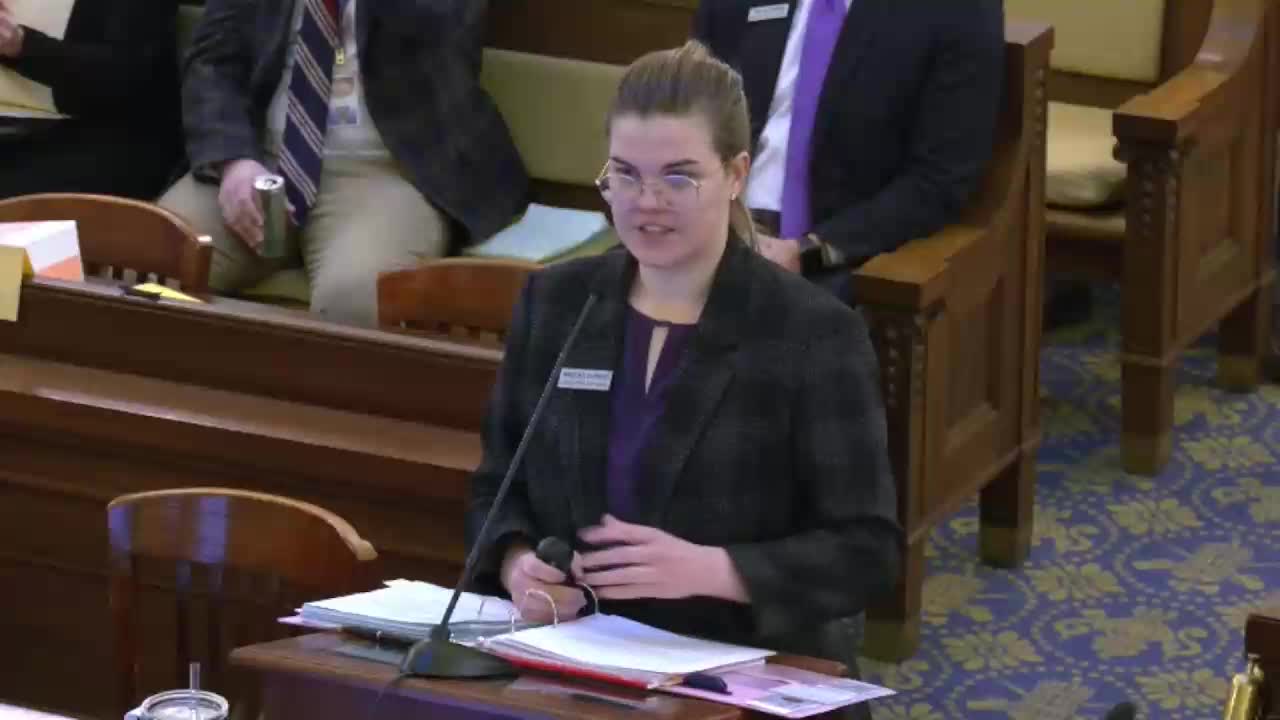
"As these federal dollars are declining, we need to keep all of those operations going," Director Janie Rivera told the committee, explaining the department’s $7,330,000 ongoing request for unemployment insurance (UI) operations and its request to transfer accounting balances between internal funds.
The department said the requested $7.33 million would be provided from dedicated agency funds rather than general fund and would be used to sustain current staff and operations in the UI determinations program—work that includes eligibility determinations, appeals adjudication and compliance functions. Rivera said the department does not plan to add new full-time positions as part of this request but to provide spending authority to cover existing staff when federal grant support declines.
Analysts explained an accounting transfer in the request: $4,868,600 would be moved from the Unemployment Penalty and Interest Fund back to the Employment Security Fund to correct an over-transfer and align the agency’s continuously appropriated cash balances. The department also requested roughly $161,000 for Office of IT-recommended hardware (70 laptops and docking stations and 70 desktops).
Committee members pressed for additional detail on staffing and the trust fund. Rivera described Idaho’s UI trust fund as "about a billion dollar trust fund" and said state law sets tax rates based on a backward-looking calculation that considers the worst historical years. If the trust fund were exhausted, Rivera said, the state could borrow from the federal government or issue bonds; during the pandemic some states borrowed federal loans and others used bonding.
Rivera and department staff said Idaho’s trust fund currently projects sufficient reserves to withstand a severe recession. Rivera said statutory changes since the Great Recession increased the fund’s target level to about 1.3 times the previous formula to improve solvency.
Lawmakers asked for additional data. Senator Cook and Representative Handy requested written follow-ups showing the department’s baseline staffing levels, how staffing fluctuated during the pandemic and what the department expects to be the new baseline in the post-pandemic economy. Rivera said she would provide numbers and a fact sheet describing benefit duration and employer tax formulas, and the analyst agreed to follow up on how salary-savings were being used.
The department also explained how benefit duration is set. Rivera said benefit weeks under Idaho law are indexed to the state unemployment rate—duration ranges cited in the hearing included a low of about 10 weeks for intermittent workers and a maximum that varies between roughly 20 to 26 weeks depending on statewide unemployment (the committee heard that the current rate yields 21 weeks under statutory indexing). Rivera also provided an approximate current average weekly benefit "around $434." These parameters are set in statute and rule, she said.
No formal appropriation votes were taken during the hearing; analysts said the governor’s recommendations include the department’s enhancement requests and committee staff will provide the additional staffing and expenditure detail members requested.