Get Full Government Meeting Transcripts, Videos, & Alerts Forever!
Get email alerts on the Education Budget topic
No spam. Unsubscribe anytime.
Idaho education budget hearing highlights special-education staffing, assessment contract and Career Ready grants
Summary
The Joint Finance Preparation Committee heard a budget presentation for the Idaho State Department of Education that highlighted requests for new special-education staff, a one-time $2.7 million transition for statewide assessments, use of ARPA/ESSER and Millennium Fund awards, and plans to raise drivers-education reimbursement.
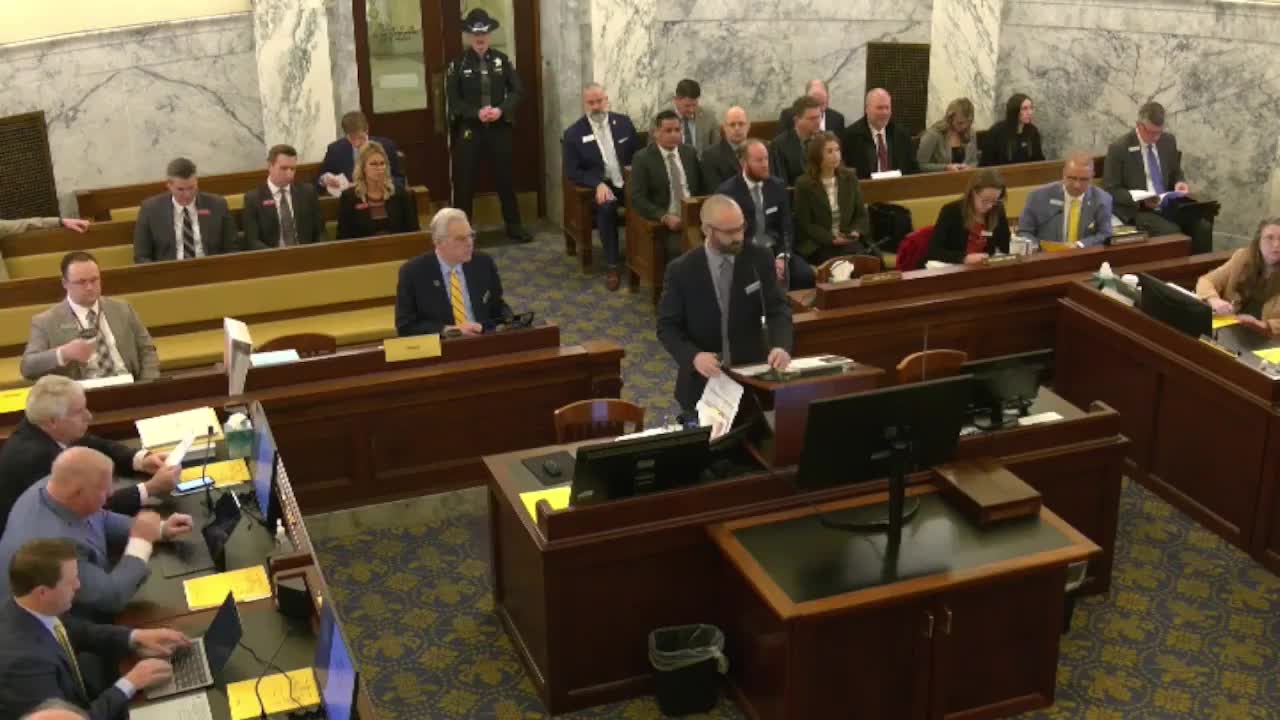
The Joint Finance Preparation Committee heard a budget presentation for the Idaho State Department of Education on issues including special-education staffing, a transition to a new statewide student assessment, the status of the Career Ready Students grant program and several one-time grants funded with federal and Millennium Fund dollars.
Jared Tetro, deputy division manager with the Legislative Services Office, opened the departmental briefing and led the committee through the agency budget book and slides, noting personnel counts, fund balances and a variety of ongoing and one-time enhancement requests.
The department sought ongoing positions to help manage a rising workload in special education, including a dispute resolution specialist, a charter-school special-education specialist and a second Indian education coordinator. State Superintendent Debbie Critchfield told the committee the department has seen “an increase in parents that are asking for their students to be tested” and that the department has experienced “a 65% increase in requests for mediation, 77% increase in just general complaints and a 1,200% increase in hearings.” She said the dispute-resolution coordinator’s role is “not to go in and say someone was right and someone was wrong, but it's to go in and say was the federal laws followed?”
Why it matters: Committee members pressed department staff on whether the requested positions reflect permanent increases in workload and on the financial exposure to districts if federal one-time dollars have been used for ongoing needs. Several lawmakers asked for follow-up reports on how prior federal and ARPA/ESSER dollars were spent.
Assessment contract and test transition: The department asked for $2.7 million in one-time federal spending authority to “pilot a new platform” as it transitions away from the current Smarter Balanced ISAT vendor. Gideon Tolman, the department’s chief financial officer, told the committee the $2.7 million “would be a one-time federal fund spending authority to… switch to the new platform,” and said he believed “the current base funding would cover the actual implementation of the new assessment” but agreed to provide clarifying detail on whether the request fully pays for a replacement vendor or primarily covers transition and pilot costs.
Career Ready Students grants and ARPA/obligations: Members pressed for details on the Career Ready Students program and the allocation/timing of awards. Tetro noted large balances in some dedicated funds reflect dollars already obligated to districts but not yet reimbursed; Critchfield told the committee 65 million dollars has been appropriated over recent cycles, the agency received requests totaling about $138 million across 152 grant applications, and that 72 grants representing roughly $62.7 million have been awarded and obligated. She added the department’s “out the door number” in reimbursements was about $16 million to date and said the agency uses a reimbursement model to avoid commingling grant dollars with district funds.
Other notable enhancement and supplemental requests: - Drivers education reimbursement: The department asked the panel to consider legislation to raise the per-student reimbursement for drivers education from $150 to $300. Committee members noted the drivers-education fund cash balance has grown in recent years; department staff said the current request is for spending authority to draw down cash so districts and charters receive more reimbursement. - School bus camera fund: The department requested a one-time supplemental and an ongoing enhancement tied to proceeds from a new statute increasing fines; staff said there is about $35,000 currently in the fund and spending authority is subject to available cash. - Idaho Reading Indicator and Performance Report Card: The department sought a one-time supplemental (about $800,000 net after canceling a pilot) to update the state report card required by Title I. Tolman said federal rules require that the state “develop, post, and maintain a state report card” to receive Title I funding. - Child Nutrition Technology grant and Farm to School: The department described a $746,300 four-year federal grant to support MyIdahoCNP software and a $264,100 ARPA Farm to School grant to support classroom vertical gardens. - Millennium Fund and underperforming charters: Critchfield said the department received $3 million from the Millennium Fund in FY2024 for youth prevention programs and noted the governor recommended $300,000 to support underperforming charter schools from the public charter school authorizer fund; Tolman and Tetro said the authorizer fund is drawn from authorizer fees and committee members asked for a breakdown of prior-year recipients.
Auditing, vacancies and personnel: Committee members asked about a newly approved financial auditor position intended to verify student counts and payments that drive the K-12 funding formula; Critchfield said the position has been filled. The department reported 6 current vacancies at the time of testimony and said it is actively recruiting. Committee members asked for follow-up detail on ARPA/ESSER and other federal spending to ensure one-time funds are not funding ongoing programs.
What’s next: Committee members requested follow-up documents: a list of private schools that received ARPA COVID support and amounts; detailed status of Career Ready Students obligations and reimbursements; and clarification on whether the $2.7 million request fully pays for a new assessment vendor or funds only transition/pilot activities. No formal committee action or vote was taken during the hearing portion covered in the transcript.
Ending note: Superintendent Critchfield closed by restating the department’s role implementing Idaho Code and State Board policy and said the department aims to serve parents, teachers, local leaders and taxpayers with accountability and transparency.