Get Full Government Meeting Transcripts, Videos, & Alerts Forever!
Get email alerts on the Statewide Budget Decisions topic
No spam. Unsubscribe anytime.
Legislative staff outline statewide budget decisions and two compensation paths; members seek more detail on CEC and benefit reserves
Summary
Legislative staff presented the committee with competing FY2026 general fund revenue estimates, benefit-cost adjustments, statewide cost allocation changes, contract inflation and two alternative CEC proposals that will shape upcoming budget votes.
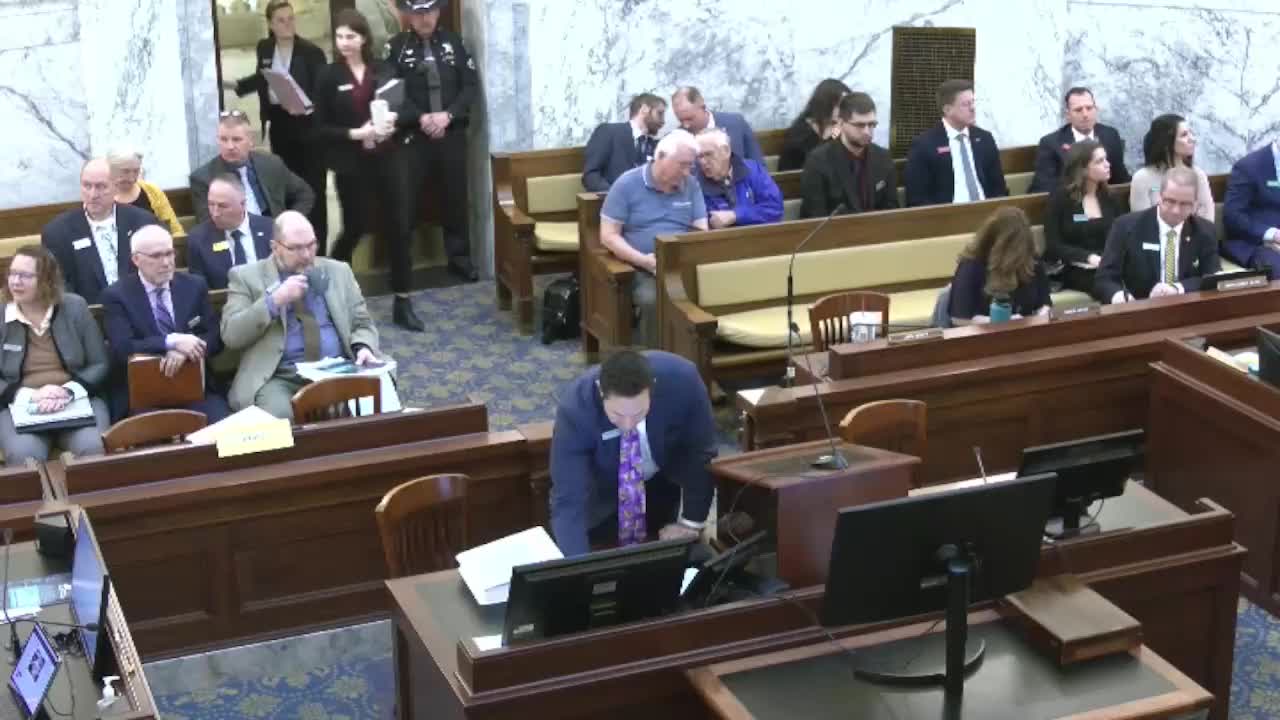
Legislative staff briefed the Joint Finance-Appropriations Committee on statewide decision units that will shape FY2026 budgets, including two competing general fund revenue forecasts and alternative approaches to change in employee compensation (CEC).
Keith Bybee, division manager for budget and policy analysis at the Legislative Services Office, and other LSO staff walked members through the packet of statewide decisions the committee will consider later in the week. The package includes choices for (1) the general fund revenue estimate used to set budgets (the governor’s recommendation of $6.26 billion or the Economic Outlook and Revenue Assessment Committee’s $6.40 billion projection), (2) personnel benefit cost adjustments (including health insurance funding), (3) contract inflation, (4) statewide cost allocation changes (notably higher state controller and information technology services charges), and (5) change-in-employee-compensation (CEC) options.
On the CEC question, staff presented the governor’s recommendation—a 5% or equivalent $1.55 per hour merit pool distributed at agency head discretion, salary schedule shifts averaging 3.2% for general schedules and 4.5% for IT/engineering/military schedules and a 5% equivalent for public schools—totaling roughly $179.7 million statewide. The CEC committee’s alternative was summarized as a $1.55 per eligible employee recommendation with a slightly lower statewide total (about $174.7 million in the LSO packet) but staff cautioned that small adjustments were still being reconciled in agency salary schedule calculations.
Lawmakers pressed staff for detail. Senator Cook asked why the state controller billing rate had risen; staff said a prior calculation adjustment and LUMA payroll system changes had increased that statewide charge. Senator Janie Ward Engelking and other members asked for more information on how the CEC approach affects higher‑paid technical employees and whether the chosen approach would preserve cost‑of‑living increases for skilled staff; Engelking asked staff to model alternatives that would better protect highly skilled, higher‑paid positions while staying within the same aggregate dollars.
Division of Financial Management Administrator Laurie Wolf joined the briefing to explain benefit-cost calculations and reserves. Wolf said actuarial reports inform the health insurance assumptions and that moving from one funding level to another could reduce reserve cushions; she warned that funding at the lower estimate could require a larger per-employee increase in future years to recapitalize reserves.
Bybee told the committee that the LSO planned votes on statewide decisions on Thursday and planned to return with program maintenance submissions beginning Friday. Committee members requested memos and agency‑specific breakdowns showing the distributional consequences of each CEC option, reserve impacts from benefit funding choices, and documentation for statewide cost allocation changes.
Ending
Committee members asked for supplemental memos quantifying how each statewide decision option would affect agencies and employees and for documentation supporting statewide cost allocation and benefit-reserve calculations before Thursday’s scheduled votes.