Get Full Government Meeting Transcripts, Videos, & Alerts Forever!
Get email alerts on the Bond Levy Equalization topic
No spam. Unsubscribe anytime.
House Bill 521 closeout: staff says $62.8 million from old bond‑levy equalization returns to general fund
Summary
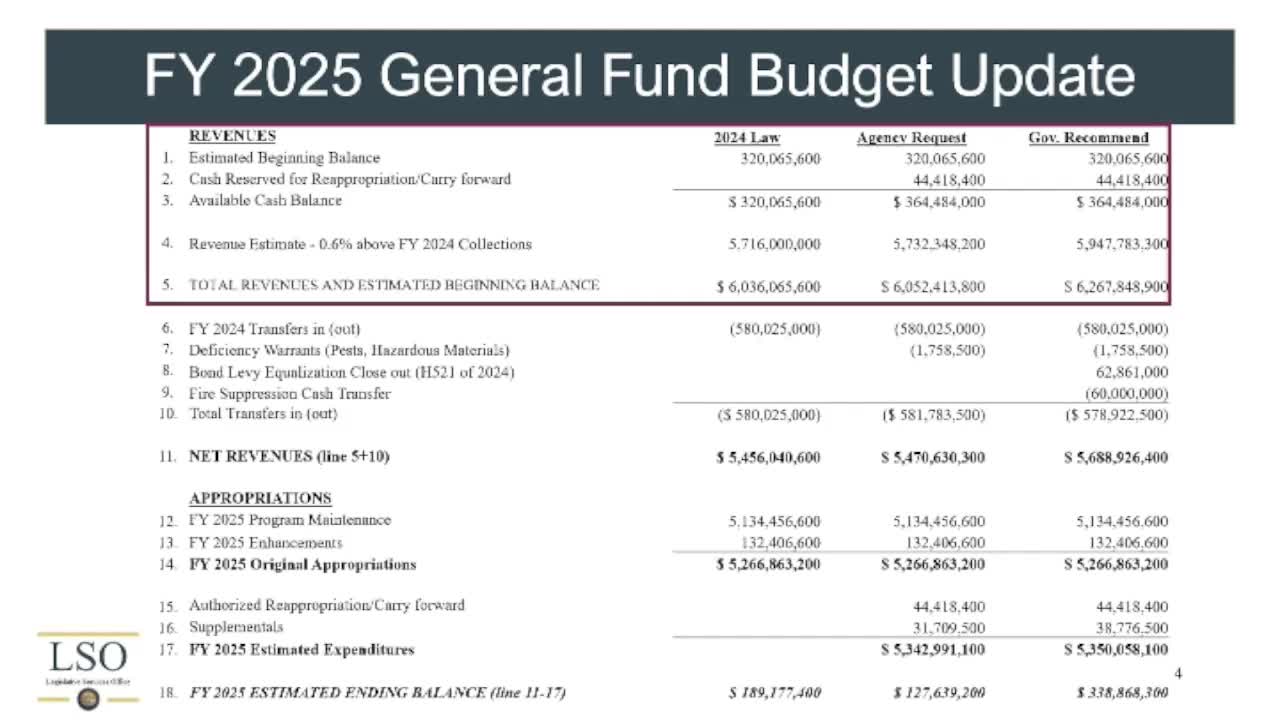
Legislative staff told JFAC that the 2021 change that ended the bond‑levy equalization program (House Bill 521) resulted in an existing cash balance of about $62.8 million that the state controller will transfer to the general fund as the program was closed.
Keith Bybee, division manager for budget policy analysis at the Legislative Services Office, told the committee that House Bill 521 closed out the old bond‑levy equalization program and that a remaining fund balance of about $62.8 million will be transferred back to the general fund.
Bybee explained that the bond levy equalization program previously provided state support to school districts to offset some local bond costs; HB521 replaced that mechanism with a new statewide bonding structure under which the state bonds on behalf of districts and distributes funds according to average daily attendance (ADA). He summarized: "House Bill 521 closed out that bond levy equalization program and created a new bonding structure that the state would go to bond on behalf of the school districts and distribute those funds based on ... ADA."
A committee member asked whether returning the $62.8 million to the general fund could create timing or repayment issues for the new bonding program. Bybee said the programs are separate: the $62.8 million sits in the old bond levy equalization fund because that program no longer exists and, per the statute that closed it, the funds were to be returned to the general fund.
Clarifying detail recorded in the committee presentation: $62,800,000 is the fund balance from the closed bond levy equalization program that the state controller is expected to transfer to the general fund.
No formal action or vote occurred during the exchange; committee staff said they would follow up if members wanted more detail on the transition between the prior equalization payments and the new statewide bonding approach.