Get Full Government Meeting Transcripts, Videos, & Alerts Forever!
Get email alerts on the State Budget Health And Welfare topic
No spam. Unsubscribe anytime.
Legislative analysts detail Health and Welfare budget; Medicaid, hospital assessment drive increases
Summary
An LSO analyst told the Senate Health and Welfare Committee that Medicaid population and hospital assessment adjustments are the primary drivers of a projected rise in Department of Health and Welfare spending, and presented organizational changes proposed by the department.
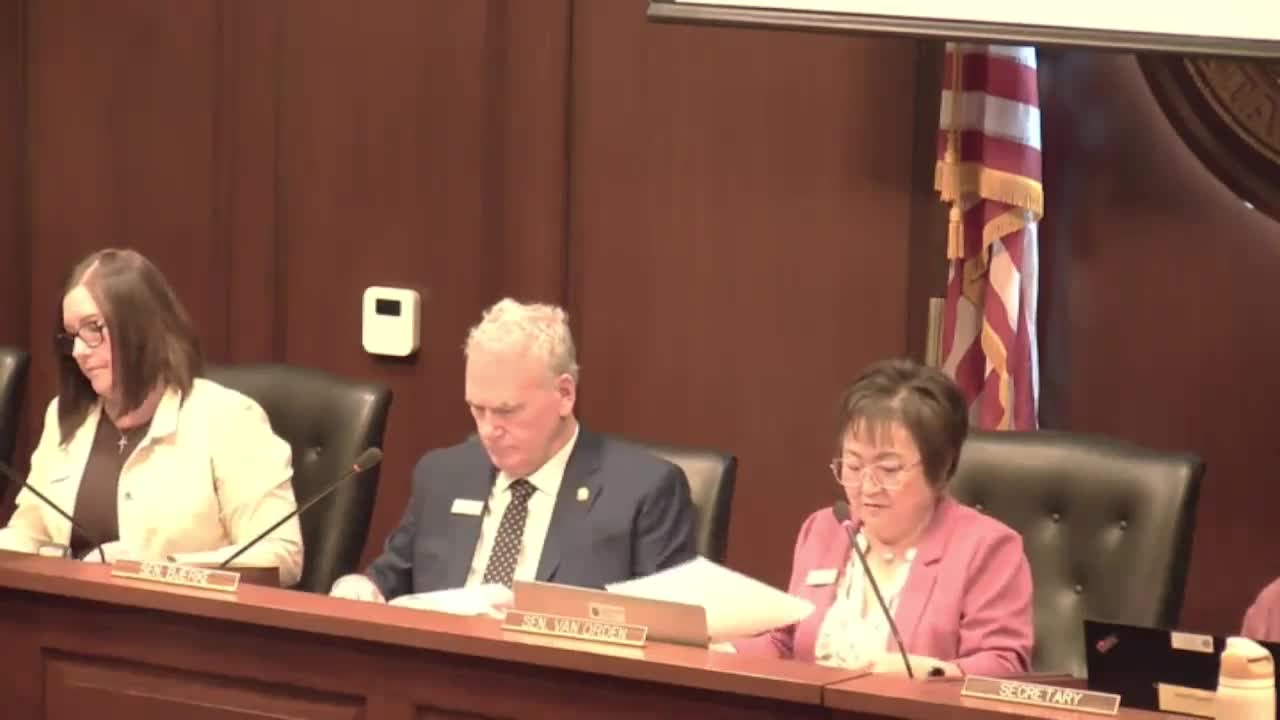
Alex Williamson, budget and policy analyst with the Idaho Legislative Services Office, presented the Department of Health and Welfare budget to the Senate Health and Welfare Committee, highlighting Medicaid‑driven increases, hospital assessment adjustments and agency reorganization proposals.
Williamson walked the committee through a five‑year picture of appropriations and expenditures, saying a roughly $670 million increase from fiscal 2022 to 2023 was driven two‑thirds by Medicaid changes and factors including population forecast adjustments and hospital assessment/upper payment limit changes. "About two thirds of that came from changes, to Medicaid," Williamson said.
Key points from the presentation included: - Expenditure trends: Williamson reported that the department expended about $4.9 billion in fiscal 2024 and that trustee and benefit payments (Medicaid reimbursements, assistance payments and subgrants) accounted for roughly 91% of total spending in the most recently closed fiscal year. - Hospital assessment/upper payment limit: The presentation noted recent statutory changes that allowed hospitals to access an increased upper payment limit, which increased net patient revenue and required larger dedicated funds on the state side to facilitate the required state match for federal drawdown. Williamson described how hospitals' assessment payments are deposited and later remitted back as federal reimbursement. - MMIS procurement and IT modernization: The Medicaid Management Information System (MMIS) multi‑year procurement was presented as a multi‑year dedicated fund drawdown, with an example line item of about $117 million representing the state's 10% share leveraged with favorable federal matching (90/10) on Medicaid IT projects. - Fiscal 2026 governor recommendations: Williamson summarized the governor's recommendation and program maintenance, citing a projected FY2026 total appropriation near $6 billion with roughly $1.2 billion from the general fund (figures presented as the governor's recommendation in the handout Williamson distributed). - Organizational changes: Williamson described a departmental reorganization under Director Adams that would rename and reassign units (for example, Family and Community Services would be reorganized as Child, Youth and Family Services with a subunit called Youth Safety and Permanency) and move several programs (including the Idaho Childcare Program and certain developmental disability services) under newly aligned divisions to better reflect policy priorities.
Sen. Melissa Wintrow asked for clarification about the hospital assessment and the state's role in depositing hospitals' share as the state match; Williamson explained the mechanics and noted that those deposits and federal reimbursement flows are reflected in the state's accounting records and appropriation levels. "Yes," Williamson said, "the hospitals provide essentially what amounts to the state's share of that reimbursement... that has to get deposited into a dedicated account with the state."
Williamson also noted a governor initiative of $15 million for the Idaho Childcare Program and other division‑specific enhancements, and indicated there were multiple midyear supplemental requests that, if approved, would increase the FY2025 appropriations prior to setting an FY2026 baseline.
The committee did not take action on the budget during the hearing; Williamson said he would make materials available (the LSO budget dashboard and the handout referenced for FY2026 program maintenance and enhancements) and stood for questions from committee members.
—
What to watch: hospital assessment/upper payment limit adjustments and the MMIS modernization line items are likely to draw committee scrutiny due to size and federal‑matching implications; the departmental reorganization will have follow‑up implications for budgeting and oversight.