Get Full Government Meeting Transcripts, Videos, & Alerts Forever!
Get email alerts on the Education Charter Schools topic
No spam. Unsubscribe anytime.
Senate committee backs bill allowing school buildings or districts to convert to charter status with local approval
Summary
The Idaho Senate Education Committee voted to send Senate Bill 1097 to the Senate floor with a due-pass recommendation; the bill would permit school districts or individual school buildings to convert to charter status following a locally approved plan.
The Idaho Senate Education Committee voted to send Senate Bill 10 97 to the Senate floor with a due‑pass recommendation after a brief discussion of the bill’s intent and mechanics.
Senator Janie Ward‑Engelking, the bill sponsor, told the committee the measure is intended to give traditional public schools flexibility that charter schools already enjoy. "Some of the flexibility and curriculum, some of the reporting that if you're a highly performing school, you don't have to send those reports in," Ward‑Engelking said, describing the bill's purpose to allow districts or single buildings to pursue charter status without shutting schools down and without the 60% petition usually required of patrons.
Under the version discussed in committee, a conversion would require a locally developed plan and board approval; the bill as presented sets a deadline that no conversion could take effect before Feb. 1, 2026, to allow time for planning. Ward‑Engelking said authorizers could include local school districts and that many procedural details — including funding flows and rulemaking — would be handled later in administrative rules.
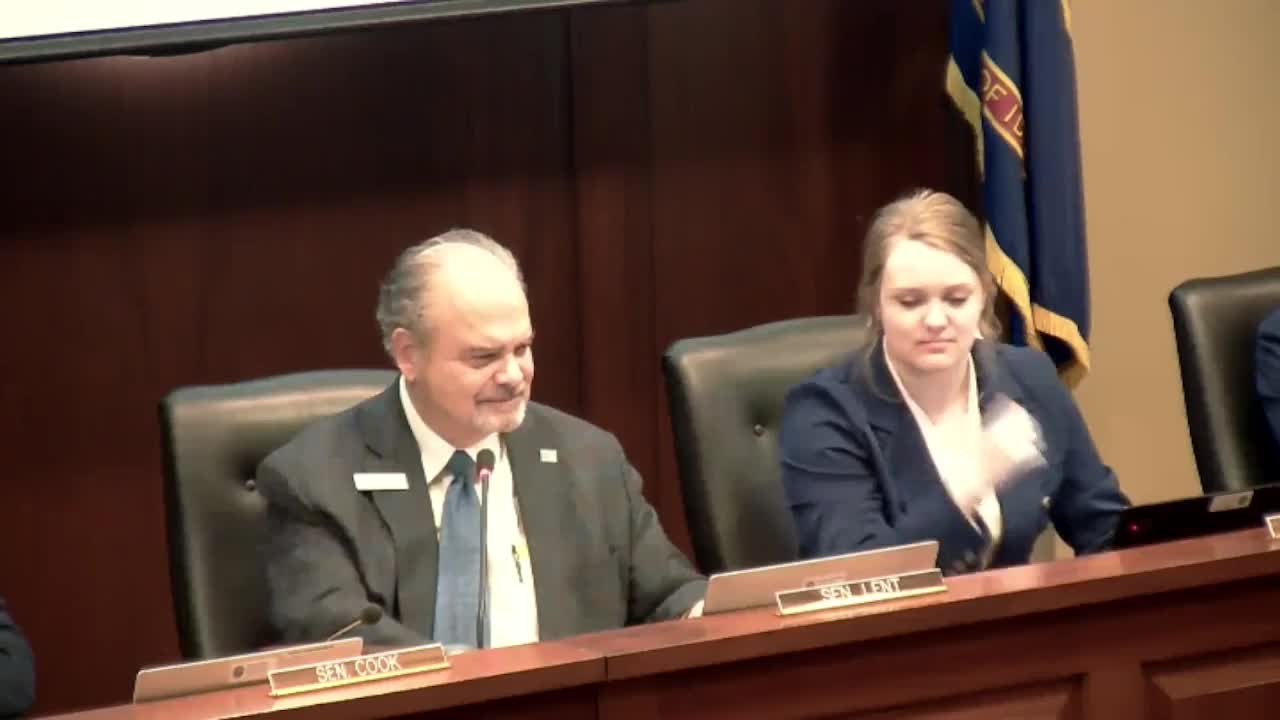
Committee members asked how funding and authorization would work. Ward‑Engelking said existing code and the charter authorization framework provide a roadmap; the bill’s primary change is to make conversion administratively easier for districts that choose it. Senator Cook asked why long lists of requirements could not simply be removed from statute; Ward‑Engelking and other committee members responded that the bill is optional and intended to be a pathway for districts that want that autonomy.
After discussion, Senator Nichols moved to send Senate Bill 10 97 to the Senate floor with a due‑pass recommendation. The committee voice‑voted the motion; the chair announced the motion carried.