Get Full Government Meeting Transcripts, Videos, & Alerts Forever!
Get email alerts on the Disability Services Budget topic
No spam. Unsubscribe anytime.
State Independent Living Council presents budget, cites stable fund balance and federal grant timing
Summary
Legislative Services Office analyst reviewed the Idaho State Independent Living Council’s finances, noting a dedicated fund that typically holds roughly $280,000 and a governor-recommended $11,700 shift from the council’s dedicated fund to the general fund to cover maintenance costs.
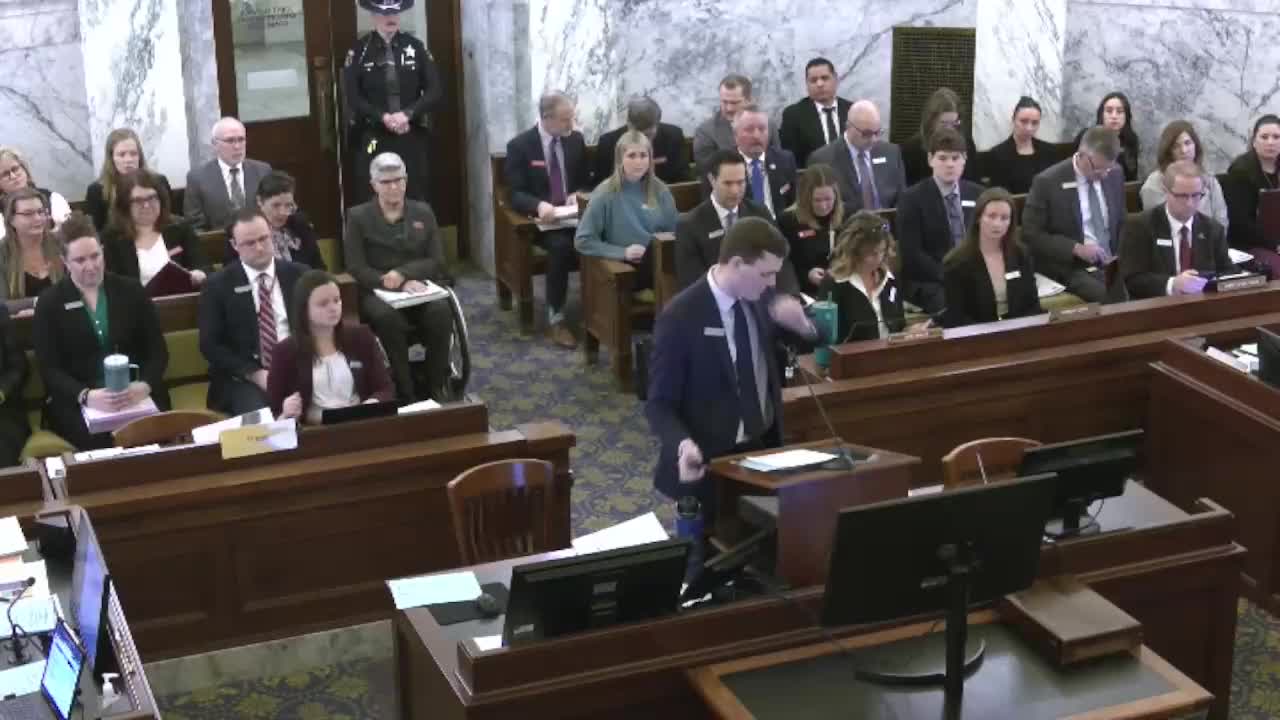
Kellen McGurkin, budget and policy analyst with the Legislative Services Office, told the Joint Finance and Appropriations Committee on Jan. 15 that the Idaho State Independent Living Council spends nearly all of its available dedicated fund revenue each year but typically maintains an ending balance of roughly $280,000, about six and a half months of the agency's expenses.
The council, which the analyst said is established in Idaho Code, Title 56, Chapter 12, operates four full-time positions including Executive Director Mel Levitan. McGurkin said the council’s expenditures are concentrated in personnel — about 69% of their spending on average — and that differences between appropriation and expenditure largely reflect federal grant timing, not ongoing shortfalls. He noted small apparent “overspends” of $3,000 in FY2022 and $13,000 in FY2023 that stem from federal grant periods that do not align with the state fiscal year.
McGurkin flagged a governor-recommended adjustment for fiscal year 2026 that would shift $11,700 in appropriation from the council’s dedicated fund to the general fund. The change, he said, would reduce the dedicated fund appropriation while increasing the general fund appropriation so the general fund covers roughly half of the council’s statewide health benefit and change-in-employee-compensation (CEC) increases that would otherwise come from the dedicated fund.
Levitan, the council’s executive director, thanked the committee for support and described recent administrative work. He credited a $10,000 line-item increase in the previous year for allowing the council to complete audits for calendar years 2022–2024 without findings and thanked the council’s financial specialist, Megan Bates, by name. Levitan said the council’s staff has been stable — with no turnover since 2020 — and emphasized the agency’s travel across Idaho to reach people who cannot travel to Boise.
The analyst also described the council’s revenue sources: federal independent living grants that flow through the Idaho Division of Vocational Rehabilitation, including funds the presentation identified as coming under Title I of the Rehabilitation Act and funds associated with workforce investment programs. McGurkin said Title I funding rose by about $30,000 in FY2023 — its first increase in roughly a decade — and that otherwise federal and state funding sources are expected to remain similar in the near term.
No committee action or vote was recorded on the governor’s recommendation during the presentation. McGurkin and Levitan both stood for questions but none were pursued beyond brief clarifications about fund accounting and program operations.
Looking ahead, McGurkin said the dedicated fund’s typical ending balance provides a cushion in the event federal funding pauses, and he emphasized that the budget shift recommended by the governor is intended to cover part of statewide maintenance cost increases rather than to increase total agency spending.