Get Full Government Meeting Transcripts, Videos, & Alerts Forever!
Get email alerts on the Health Human Services Budget Realignment topic
No spam. Unsubscribe anytime.
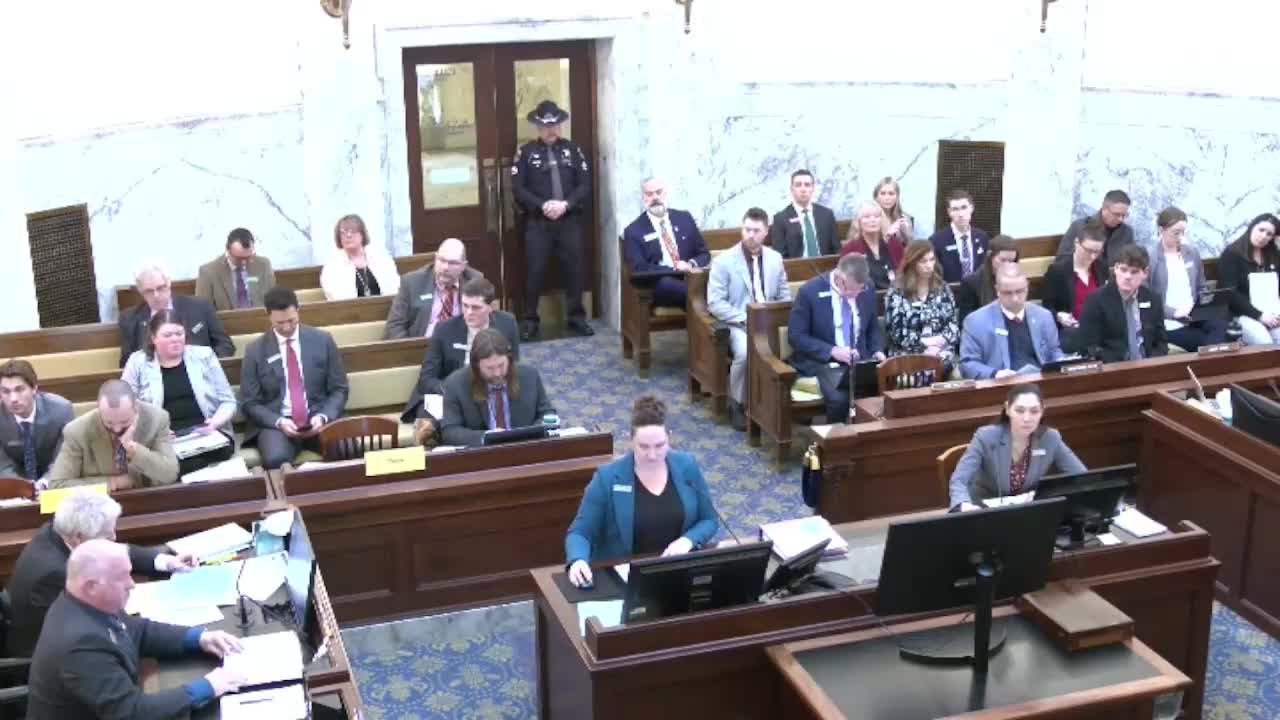
JFAC approves Health & Human Services realignment and $5.26 billion maintenance budget, with two dissenting votes on totals
Summary
The Joint Finance and Appropriations Committee approved a departmental realignment at the Idaho Department of Health and Welfare and adopted the department’s FY2026 program maintenance appropriation totaling $5,263,083,200 (all funds).
The Joint Finance and Appropriations Committee voted Jan. 17 to accept a departmental realignment at the Idaho Department of Health and Welfare and to set the department’s program maintenance appropriation for FY2026 at $5,263,083,200 (all funds), including $1,135,543,600 from the general fund.
The committee first voted to accept changes to Health and Welfare appropriation-unit names, to realign the base, and to add a new budget appropriation unit for the Idaho Childcare Program. That “realignment” motion passed on roll call with 18 ayes, 1 nay and 1 absent excused; Representative Petzke explained on the floor that he intended to vote no because he did not feel he had sufficient information to approve large intra-department transfers and numerous FTP moves without more time for review.
Alex Williamson, budget and policy analyst, explained the packet included base adjustments required by the department reorganization and said the printed materials show the appropriation-unit renaming and the FTP and dollar movements that result from the reorganization. “The packet…looks a little bit different because there is the department reorganization that’s included in the base adjustments,” Williamson said, adding the narrative on pages 4–5 matches the organization chart the department presented earlier in the week.
Following the realignment vote, the committee approved the department’s program maintenance appropriation — the base plus minor statewide adjustments — by roll call. Representative Tanner moved the maintenance appropriation, which totaled $5,263,083,200 across general, dedicated and federal funds; Senator Cook seconded the motion. The House and Senate votes produced a combined total of 17 ayes, 2 nays and 1 absent excused. During the tally Senator Ziederfeld changed her vote from aye to nay before finalization, producing the second recorded nay. Committee staff said the appropriation reflects the department’s statutory and programmatic commitments and a mix of federal entitlements and state-funded programs.
The Health and Welfare packet also included numerous program-specific language provisions inserted into the maintenance bill. Key items approved include: (1) reporting requirements and monthly Medicaid expenditure tracking by the Division of Medicaid, (2) guardrails restricting transfers out of trustee and benefit payments, (3) specific rollups of amounts in the base for programs such as physician incentive, home visitation, smoking-cessation grants and Project Filter, (4) reporting requirements for facility licensing and certification, and (5) directives governing the use and distribution of opioid‑response and other behavioral-health grants.
Committee members asked for clarification at several points, including how the reorganization moves FTPs among appropriation units and how transfers within psychiatric hospitalization and community hospitalization programs are to be administered; staff responded that certain program areas retain transfer/exemption authority for operational flexibility (for example community hospitalization may receive transfers to meet unpredictable placement costs). The maintenance bill includes accountability reporting sections and the standard conditions, limitations and restrictions language the committee uses for program maintenance bills.
Representative Petzke said he preferred more time to review what he described as a “very different animal” with tens of millions of dollars and dozens of FTPs being moved; he recorded a recorded no vote on the realignment motion. Senator Ziederfeld later changed her aye to a nay on the main appropriation motion before the roll call concluded. Committee staff said they will draft the maintenance bill language from today's actions and return bills to the committee for review before introduction.