Get Full Government Meeting Transcripts, Videos, & Alerts Forever!
Get email alerts on the Teacher Workforce topic
No spam. Unsubscribe anytime.
Former Idaho teacher presents interviews showing widespread burnout, cites behavior, technology and workload
Summary
Former teacher Courtney Linker told the Senate Education Committee she interviewed 73 teachers across 16 districts and 35 schools and found high levels of stress, discipline problems, declining parental support and heavy nonteaching workload; she urged class-size limits, more counselors and restrictions on student cellphones.
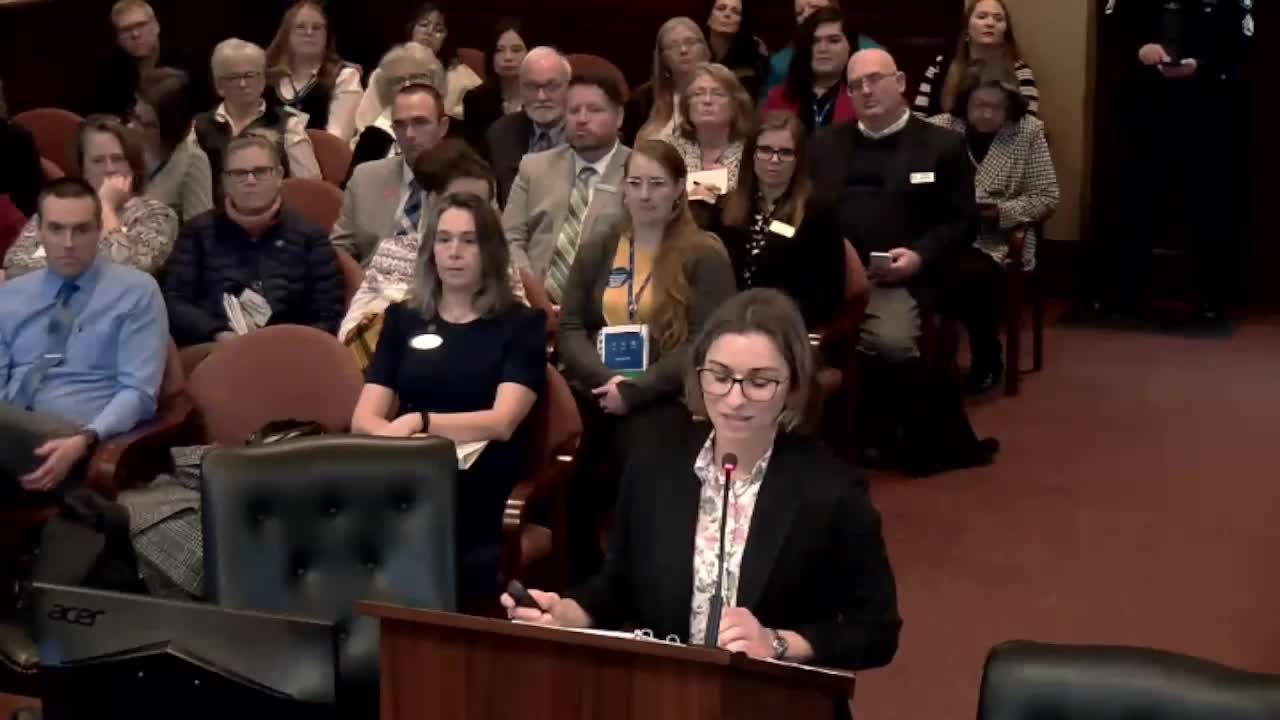
Courtney Linker, a former Idaho classroom teacher, told the Idaho Senate Education Committee on an October meeting day that she compiled interviews with 73 teachers across 16 districts and 35 schools and concluded that teacher burnout is widespread and driven by student behavior, parental disengagement, heavy nonteaching duties and pervasive student device use.
Linker said the research included teachers from across K–12 and across experience levels, and that "last year's experience as a classroom teacher broke me. That's really the only way I know how to describe what I felt." Her stated purpose in the project was clear: "My purpose is to save teachers," she said.
Linker told senators the interviews produced consistent findings she described as alarming: 99% of respondents were state‑certified; two‑thirds were female; 47% described themselves as happy at work while 60% said they felt stressed or anxious and 55% said they felt overwhelmed. She said many teachers reported health impacts and that a significant share did not believe they would remain in the classroom until retirement if current conditions persist.
Committee members pressed Linker on methods and sampling. Linker said she recruited participants through professional contacts developed over 17 years in the classroom and intentionally included teachers from multiple districts to capture a broad view of practice and conditions.
Linker described three interlocking drivers of attrition and burnout. First, she said student behavior and weak school consequences were pervasive: teachers reported repeated disrespect, physical incidents, students self‑harm and instances of violence that sometimes sent staff home with injuries. She offered specific examples from interviews, including a second‑grader who threw a desk through a window and teachers who reported being physically scratched.
Second, Linker said parental support had declined in many cases, and teachers described feeling "villainized" by some families. She said teachers often encounter parents who shift blame to educators rather than engaging in students' learning, and that parent disengagement and student apathy were frequently cited together as a top challenge.
Third, Linker said heavy noninstructional workloads were a major factor: teachers on average checked 56 of 66 listed responsibilities in her instrument; many reported forfeiting planning time for meetings, grading hundreds of student submissions, and carrying duties that could be assigned to other professionals.
Linker criticized the current format of the individual professional learning plan (IPLP), telling the committee the majority of teachers she interviewed did not find it beneficial. She said implementation was inconsistent across schools and that platform and process issues made the IPLP time‑consuming and duplicative of work teachers already do.
On remedies, Linker urged the legislature and education leaders to reduce unnecessary teacher duties, increase in‑school behavioral supports and counselors, set more manageable class sizes, and adjust funding to make support staff pay competitive. She recommended no secondary teacher be responsible for more than 200 students and no elementary teacher more than 30. She also advocated limiting students' daily screen time in school and cited local districts that removed cellphones during the school day with positive results.
On testing, Linker said she values required state assessments but questioned the proliferation of local interim and progress monitoring tests that she said consume instructional time. She also proposed pension changes (a ‘‘rule of 80’’ rather than ‘‘90’’) as a retention incentive.
Committee members thanked Linker and asked follow‑up questions about parental volunteers, the role of technology and whether some teachers were experiencing symptoms that resembled post‑traumatic stress. Linker said the stress she experienced during her most recent year in the classroom included medical testing and a need for a prolonged break; she said many interviewees reported similar health and well‑being impacts.
The committee did not take formal action on Linker's recommendations at the hearing. Linker left the committee with paper copies of her findings and recommended next steps for policymakers and district leaders.