Get Full Government Meeting Transcripts, Videos, & Alerts Forever!
Get email alerts on the Program Maintenance topic
No spam. Unsubscribe anytime.
JFAC staff outlines program maintenance bills, sales tax distribution and Techum funding implications
Summary
Budget staff walked JFAC through the structure of program maintenance bills, the split between maintenance and enhancement requests, and a detailed look at sales tax distribution formulas including Techum funding and the tax relief fund.
Budget policy staff presented an overview of program maintenance budgets, the mechanics the legislature will use to assemble maintenance bills, and a sales tax distribution analysis that affects how much revenue is available to the general fund.
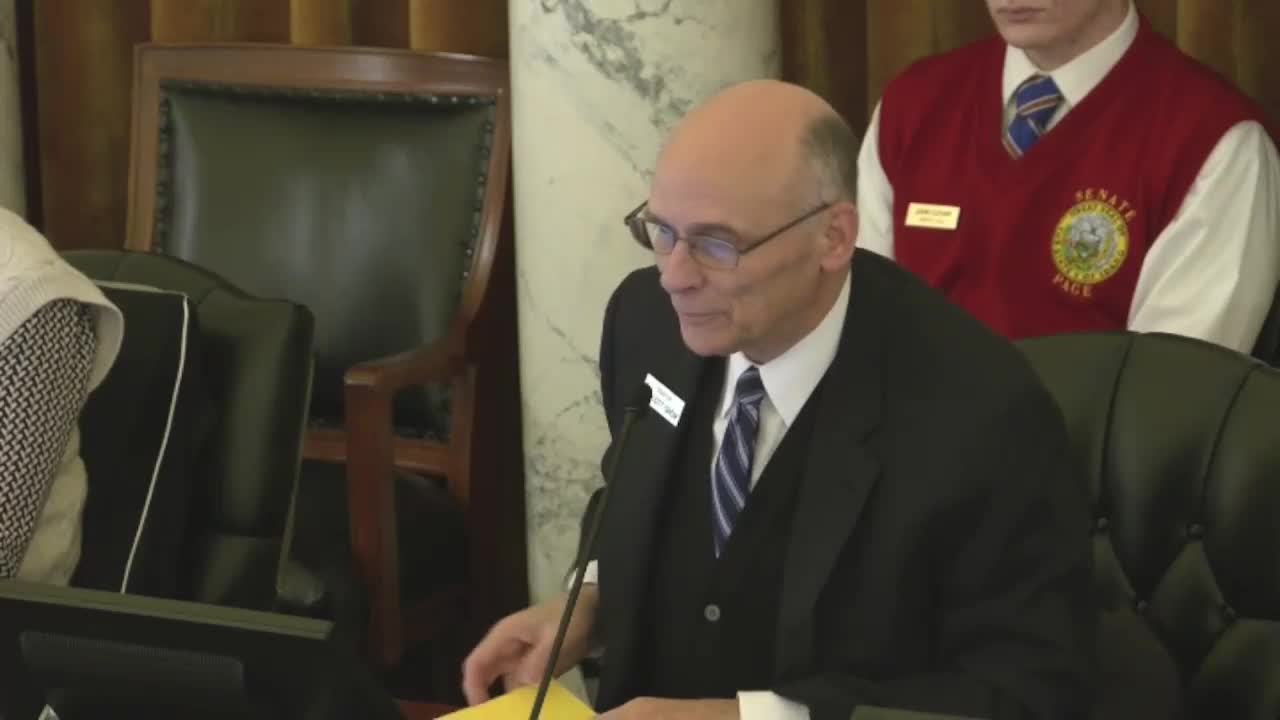
Keith Bybee, Division Manager for Budget Policy Analysis, told JFAC the program maintenance work is organized into 10 functional areas of state government and will include items between the legislative budget book's Benchmark 4 and Benchmark 5. He said maintenance bills will include benefit cost adjustments (including the full CEC package this year), contract inflation (ongoing contracts and leases), statewide cost allocation (services charged across agencies) and similar ongoing adjustments. Bybee said enhancement bills will be used for replacement items, population forecast adjustments (formerly labeled "non-discretionary") and growth requests so the committee can separately examine those spending drivers.
Bybee said the committee will have an initial hearing on the maintenance adjustments and statewide fiscal impact the week following the presentation and decision-making on the program maintenance bills is planned later in the same week. He illustrated the scope of the work with a hypothetical: "if you were to follow exactly the governor's plan, you would see a total of 10 appropriations bills equaling $12,859,224,200" (program maintenance total under the governor's proposal as presented in the packet).
On replacement items, staff said they have separated regular replacement requests from IT replacement requests so the committee has transparency into cyber and systems funding versus routine equipment and furniture requests.
Bybee also presented a new sales tax distribution table and emphasized that while gross sales tax collections have grown, statutory distributions have reduced the portion flowing to the general fund. He said revenue sharing to local governments is 11.5% of net collections and that Techum currently receives 4.5% of net sales tax revenues with an $80 million earmark of that amount designated for bonding. The presentation noted the creation of a tax relief fund that reroutes online-retailer sales tax receipts and that those transfers have materially changed the general fund share; Bybee said the general fund's portion of sales tax distributions was about two-thirds (65%) in the current projection and has been higher historically.
Committee members discussed the policy implications: several members said growing earmarks reduce the flexible general fund base and increase the challenge of balancing the budget in a downturn. Co-chair Horman and staff reminded members the committee can add or subtract items from program maintenance bills during deliberations and gave examples from prior sessions where the committee reallocated or separated programs for oversight and transparency.
Committee business also included unanimous consent to reorder the agenda earlier in the session to accommodate presenters who had limited availability.
Bybee closed by distributing the General Fund Daily Update and reminding members the maintenance/enhancement cadence is intended to preserve committee time to scrutinize new spending requests.