Get Full Government Meeting Transcripts, Videos, & Alerts Forever!
Get email alerts on the Graduation Requirements topic
No spam. Unsubscribe anytime.
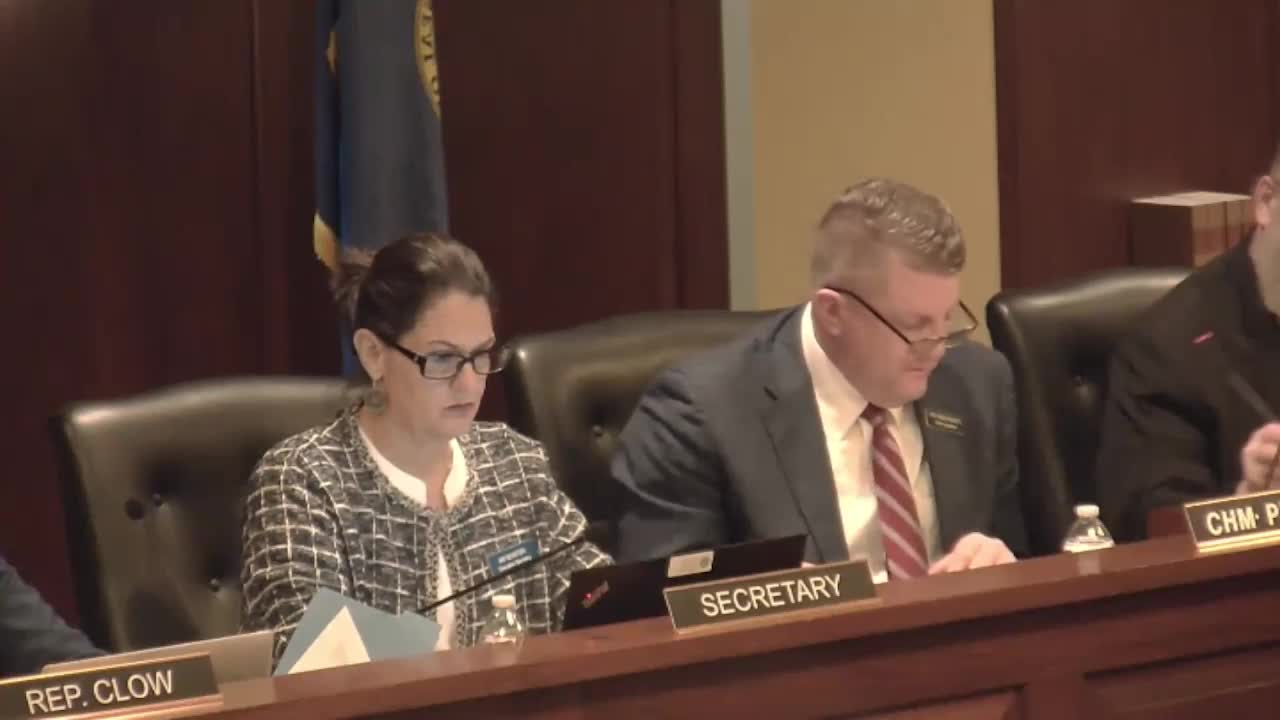
House Education Committee reviews proposed graduation rule changes including digital literacy credit and new future readiness project
Summary
The House Education Committee on Monday continued review of a package of pending administrative rule changes to statewide graduation requirements and related materials, with State Department of Education chief of staff Greg Wilson outlining the proposed changes and implementation timeline.
The House Education Committee on Monday continued review of a package of pending administrative rule changes to statewide graduation requirements and related materials, with State Department of Education chief of staff Greg Wilson outlining the proposed changes and implementation timeline. The committee did not take final action on the rules during the meeting.
Wilson, the department’s chief of staff, told the committee the state’s minimum diploma requirement remains 46 credits — 29 core academic credits and 17 electives — and that most districts and charter schools currently require more than the state minimum. “There are districts and charter schools varying or adding on to the state minimum anywhere from 3 to 6 to sometimes 8 additional localized graduation requirements,” Wilson said.
The department proposed four principal updates to the graduation rules: add credit flexibility for core academic requirements to allow work-based and other outside learning to satisfy core credits; establish digital literacy as a one-credit core academic requirement; require districts and charter schools to develop and publicly post at least two localized pathways; and replace the existing senior project with a revised “future readiness project.”
On digital literacy, Wilson said the proposed one-credit requirement would cover foundational computer science concepts (algorithms, coding, artificial intelligence), internet safety and social media practices, and “citizenship in a digital world,” including how to evaluate online news and information. “This requirement would apply for students graduating after 01/01/2028,” Wilson said, noting the department plans a three-year implementation window so districts and charter schools can prepare.
The department explained it is keeping the statewide total at 46 credits. To accommodate the new digital literacy credit without increasing the statewide total, the proposal removes the standalone communications credit from the core academic list and instead directs that communications concepts be integrated across courses; districts that offer a standalone speech or communications course may continue to use it as an elective. Wilson said the change reflects that there are no statewide standalone communications content standards and that many districts already deliver speech through local or Idaho Digital Learning Academy offerings.
The “future readiness project” would replace the senior project beginning with the class of 2028 but remains available for early local adoption. The department described the future readiness project as a culminating, experiential demonstration of board-adopted college- and career-ready competencies; acceptable experiential components include work-based internships, apprenticeships, service learning, research, or portfolios. Wilson said the department will provide templates and professional learning supports to help districts implement the requirement.
The rules package also clarifies course counting: engineering and computer science courses aligned to state standards may count as mathematics (with limits to prevent double-counting the same course as both math and science), science language was updated to reflect laboratory-based courses, and the humanities label was replaced with “fine arts or world languages” to match current course groupings.
The committee heard that the proposed rules remove a duplicated section of special education administrative rule because the updated Idaho Special Education Manual now contains the same material. The department proposed temporary rules to incorporate by reference the 2024-reviewed Idaho content standards and the Idaho Special Education Manual to ensure continuity of operations while the legislature considers the pending rules.
Committee members asked about public comment and local reaction. Wilson said the negotiated rulemaking and outreach produced a small number of formal comments — “there might have been 7 or 8 total comments” — and that the Idaho Speech and Drama Teachers Association expressed concern at its conference about removing a standalone communications credit. Several legislators urged keeping or strengthening in-person communication and debate instruction, and others asked for details about teacher endorsements, professional development, and how districts without existing capacity would meet the new requirements. Wilson said the department will provide meeting minutes, attendance lists from its outreach, templates, and professional learning supports and will follow up with committees about endorsements and implementation specifics.
Representative Tanner moved to approve minutes from Jan. 16 and Jan. 20 at the start of the meeting; the chair announced the motion carried by voice vote and the minutes were entered as approved. No further formal votes on the pending rules were recorded in the transcript.
The department emphasized the rules are intended to preserve local flexibility while adding statewide guardrails and supports so students pursuing college, workforce training, military service, or direct entry to careers receive clearer guidance and aligned course sequences. The committee did not vote on the pending rule dockets during this session; members were reminded the legislature will later consider the pending rules and the department will return with additional documentation and redline summaries when formal action is scheduled.
The committee invited additional questions and requested more documentation from the department before any action date is set. The meeting was adjourned after the presentation and committee Q&A.