Get Full Government Meeting Transcripts, Videos, & Alerts Forever!
Get email alerts on the Personnel Benefits topic
No spam. Unsubscribe anytime.
Committee deadlocks on health insurance and personnel benefit-cost recommendations after debate over reserves and risk
Summary
Staff and committee members debated proposals to set the FY2026 health insurance base per eligible full-time position. The governor-backed $14,300 figure and a lower CEC committee recommendation ($13,960) were both considered; neither motion secured the required cross-house majorities in committee and both efforts failed.
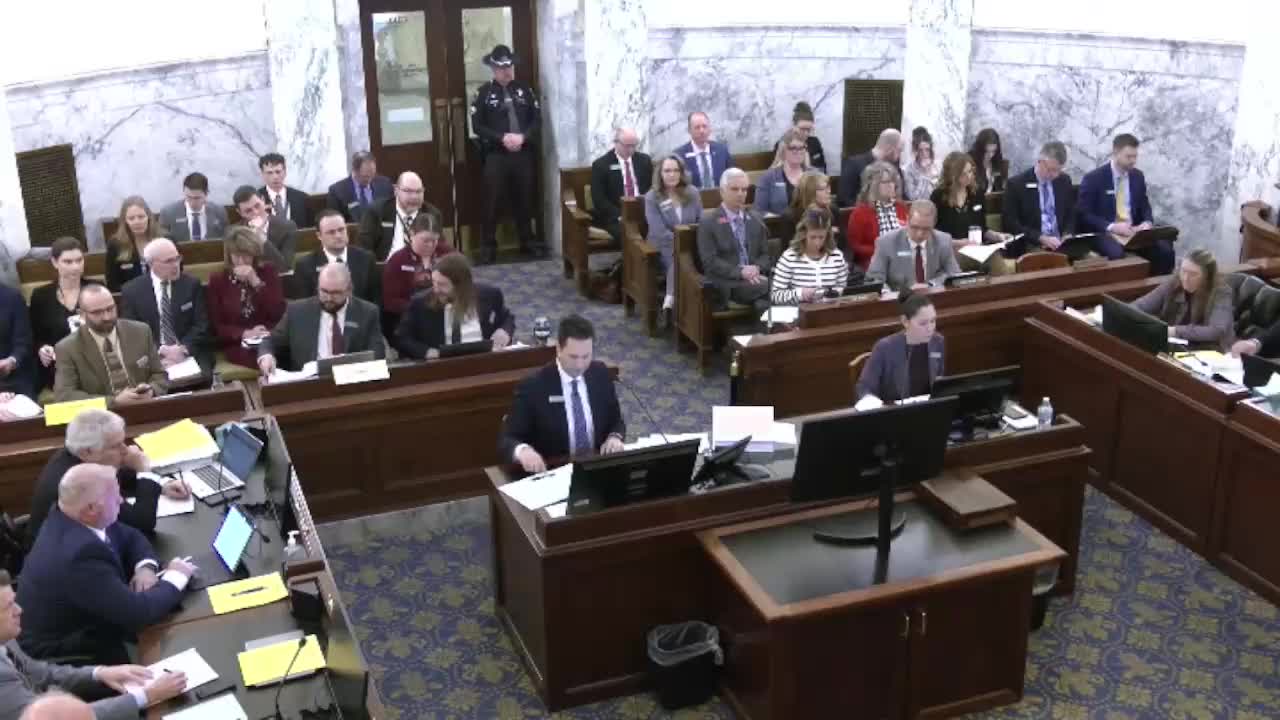
The Joint Finance-Appropriations Committee heard a detailed presentation on personnel benefit-cost adjustments, with a focus on the state's health insurance base per eligible full-time position and the contingency reserve for the plan.
Keith Bybee, Division Manager of the Budget Policy Analysis Division, summarized two competing figures: the Change in Employee Compensation (CEC) committee recommendation to set health-insurance funding at $13,960 per eligible full-time position (a smaller increase), and the governor's recommended funding level of $14,300 per eligible position. Bybee said the governor's number would increase the total base and leave more cushion in the insurance reserve.
Bybee presented Milliman projections showing that adopting the CEC recommendation would reduce the reserve to roughly the contractual minimum of 10% of plan costs; he said the projected reserve under the CEC figure would be $51,600,000 against a projected total plan cost of about $482,000,000. "With the CEC recommendation of changing that to 13,960, it would pull the reserve balance down to, effectively, the statutory minimum of 10% of the total plan amount," Bybee said.
Laurie Wolf, administrator for the Division of Financial Management, and Faith Knowlton, administrator for the Office of Group Insurance (within the Department of Administration), told the committee that falling below the 10% contingency reserve could trigger a risk charge from the carrier. "If we fall below the 10% contingency reserve, then a risk charge can be assessed to the state," Knowlton said. She said the carrier uses percentiles (e.g., ninetieth percentile) to advise reserve levels and that the governor's recommendation would provide roughly a $10 million cushion above the projected minimum.
Representative Furnace (mover) and others argued for the CEC recommendation, citing an $80.5 million current reserve and a desire not to overfund the reserve. Furnace said the CEC recommendation draws down a high reserve and helps schools and agencies by lowering near-term premiums. Opponents, including Senator Cook and others, argued that the higher governor recommendation reduces contractual risk and preserves a cushion so unanticipated large claims do not trigger additional state costs or penalties.
The committee considered a motion to adopt the governor's recommendation ($14,300). Representative Miller moved that the committee adopt that recommendation; Senator Woodward seconded. Representative Furness then offered the CEC substitute motion to adopt $13,960. Committee roll-call votes on the substitute and on the original were split between chambers and, under committee practice requiring a majority from both chambers, neither motion secured the cross-house majority needed to move forward.
Outcome: Neither the substitute motion (CEC figure) nor the original motion (governor's figure) passed the committee: the substitute failed after a 9-11 combined vote and the original motion later also failed to secure a majority in both chambers. Committee members discussed risks of underfunding the reserve and the possibility of larger increases the following year if a smaller increase is chosen now.
No further committee action on the FY2026 health insurance base was completed during the session; staff said the issue may be revisited.