Get Full Government Meeting Transcripts, Videos, & Alerts Forever!
Get email alerts on the Able Accounts topic
No spam. Unsubscribe anytime.
Senate committee advances bill allowing Idaho to join interstate ABLE account consortium
Summary
State Treasurer Julie Ellsworth urged the Senate Health and Welfare Committee to approve House Bill 26, a bill that would authorize the state to join a multi-state consortium that administers ABLE accounts, savings accounts that let people with disabilities save for qualified expenses without jeopardizing eligibility for public benefits.
State Treasurer Julie Ellsworth urged the Senate Health and Welfare Committee to approve House Bill 26, a bill that would authorize the state to join a multi-state consortium that administers ABLE accounts, savings accounts that let people with disabilities save for qualified expenses without jeopardizing eligibility for public benefits.
ABLE accounts allow people with disabilities to set aside funds for health care, housing, assistive technology and other qualified expenses while protecting access to Medicaid and Supplemental Security Income. Ellsworth told the committee that Idaho created enabling statute in 2017 but did not launch a standalone program because of the overhead costs; HB 26 would let the state join an existing interstate program to lower administrative costs and allow Idaho-focused outreach.
"By joining a consortium ... it will take it down to 19 to 33% basis points, a huge savings to them," Ellsworth said, describing a reduction from the higher fee rates some Idaho account holders now pay in out-of-state programs. She said the state would not pay a general-fund cost to join and would require legal review before entering any contract.
Advocates and account holders gave the panel first-hand accounts of how ABLE accounts affect daily life. Lisa Anderson, advocacy director for AARP Idaho, told senators the accounts “permit Idahoans with disabilities to save and manage their money without worrying about losing the critical benefits they need.” Tara Rowe, an ABLE account holder from Twin Falls who uses an out-of-state account, described the practical difficulties of accessing funds and a $2,000 asset limit on Medicaid that can penalize people who transfer money into regular bank accounts. "Disability is expensive," Rowe said, adding that having an Idaho program would simplify access and local oversight.
Other witnesses supporting the bill included the Idaho Council on Developmental Disabilities and individual family members and advocates, who said an Idaho program could lower fees for account holders and provide stronger consumer protections and outreach.
Committee members asked for clarifications about two recurring points: advisory-board appointments and the Medicaid “clawback.” Ellsworth noted the bill includes an unpaid advisory council; she read a provision that members "shall serve without honorarium compensation or expense reimbursement of any kind." On the clawback question, Ellsworth said state law requires repayment of Medicaid expenditures from remaining funds in an ABLE account after the account-holder’s death and that states vary in how they apply that rule; under HB 26, any remaining ABLE account funds in an Idaho account would be subject to Idaho’s statutory requirement.
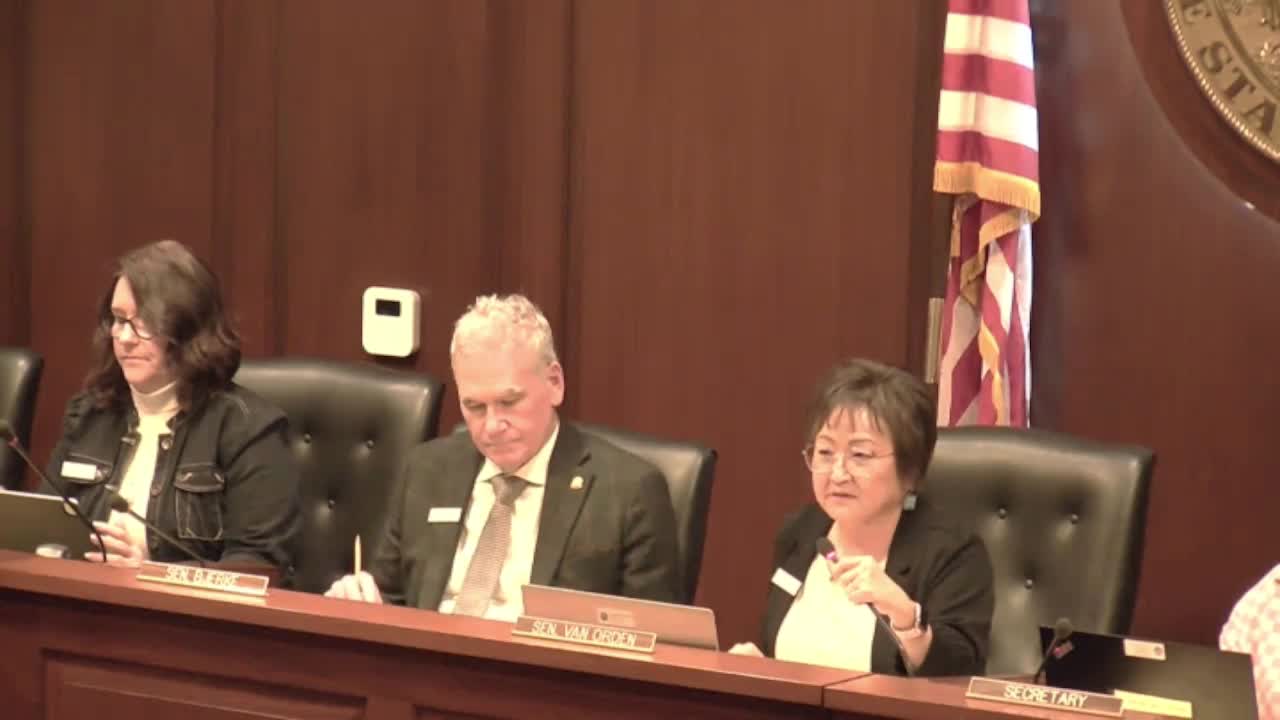
Senator Shippey moved and Senator Wintrow seconded that the committee send House Bill 26 to the Senate floor with a due-pass recommendation. The committee approved the motion by voice vote.
The bill now goes to the full Senate for consideration.